Imagine driving across the golden plains of the Maasai Mara just after sunrise. The morning mist slowly disappears, revealing a pride of lions resting beneath an acacia tree. A few meters away, a herd of elephants moves gracefully through the grassland. Tourists raise their cameras, safari vehicles stop, and everyone eagerly waits for the perfect photograph. It is a moment that many wildlife enthusiasts dream of experiencing.
But while visitors admire the beauty of the African wilderness, there is another side of this experience that often goes unnoticed.
Behind every memorable safari photograph is an environment that must accommodate human presence. Every safari vehicle, camera flash, tourist conversation and movement across the landscape has the potential to influence the natural world. Although wildlife tourism plays an important role in conservation and supports thousands of livelihoods, its effects on animals are not always as positive as they appear.
This raises an important question: Are we protecting wildlife through tourism, or are we sometimes placing additional pressure on the very animals we travel thousands of kilometers to see?
The invisible cost of wildlife tourism is a subject that deserves greater attention, particularly in Kenya, where iconic destinations such as the Maasai Mara National Reserve, Amboseli National Park and Tsavo National Parks attract visitors from across the world.
Wildlife tourism should be more than an opportunity to observe animals in their natural habitats. It should also be about understanding their needs, respecting their space and ensuring that future generations can experience the same natural beauty.
The Pressure of Too Many Safari Vehicles
One of the most noticeable yet frequently overlooked effects of wildlife tourism is vehicle congestion.
Picture a leopard resting on a tree branch in the Maasai Mara. What begins as a peaceful moment can quickly attract several safari vehicles. Within minutes, tourists gather around the tree, cameras are positioned, engines remain running and guides communicate through radios to direct other vehicles towards the sighting.
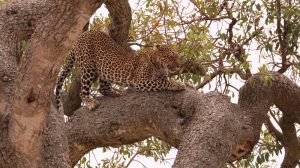
For visitors, this may be an exciting opportunity to photograph one of Africa’s most elusive predators. For the animal, however, the experience may involve constant human activity and limited opportunities to move freely.
Repeated vehicle presence can interrupt resting, feeding and other natural activities. Animals may become more vigilant, change their direction of movement or move away from crowded areas.
A 2025 study examining tourist accommodation and lion conservation in the Maasai Mara found that lion densities were highest in areas without tourist camps. The research also identified a significant decline in maximum lion density as camp density increased. Although this does not mean every tourist camp harms wildlife, it demonstrates why tourism development and animal habitats must be carefully managed.
The challenge is therefore not to eliminate safari vehicles, but to ensure that wildlife viewing does not become an overwhelming experience for the animals themselves.
The Disruption of Natural Feeding and Hunting Behavior
Wild animals depend on their natural instincts to survive. Predators must hunt, herbivores must graze, and many species rely on specific daily routines to conserve energy and avoid danger.
Unfortunately, wildlife tourism can sometimes interfere with these essential activities.
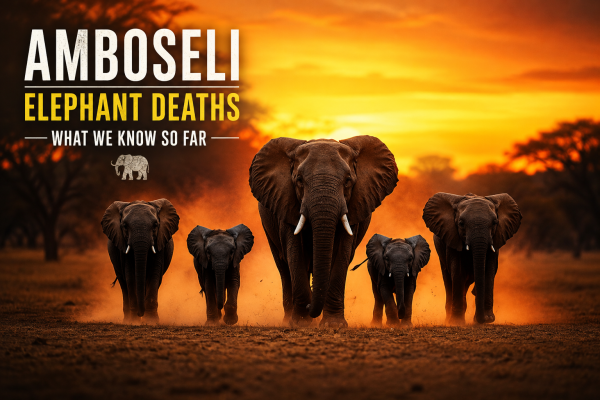
In Amboseli National Park, visitors travel from different parts of the world hoping to witness the famous elephant herds moving across the open plains beneath Mount Kilimanjaro. These encounters provide extraordinary photographic opportunities, but elephants also need uninterrupted time to feed, interact with their families and move between feeding grounds and water sources.
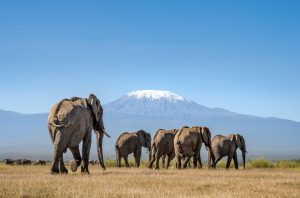
Imagine an elephant herd approaching a waterhole only to find several tourist vehicles positioned around it. Even when the animals do not immediately move away, their access to the resource may become uncomfortable or restricted.
Similar situations can occur in Tsavo East and Tsavo West National Parks, where elephants, buffaloes, zebras and other wildlife depend on different habitats and water sources.
Predators may also experience interruptions when vehicles gather around a hunting scene. The excitement of witnessing a lion stalking its prey can easily encourage tourists to demand closer views. However, chasing or crowding predators can interfere with their behaviour.
A responsible safari should allow animals to continue their natural activities without being forced to perform for an audience.
Noise Pollution in the African Wilderness
The African wilderness is often imagined as a place of tranquility, where birds sing, leaves rustle and distant animal calls echo across the landscape.
However, the growing popularity of wildlife tourism introduces another soundscape.
Engines, camera shutters, mobile phones, conversations and radio communication can disturb the natural quiet of protected areas. Although an individual tourist may not consider their voice or camera noise harmful, repeated exposure to human activity can create unnecessary disturbance.
In the Maasai Mara, for example, the excitement surrounding a lion or cheetah sighting can sometimes result in shouting, cheering and conversations between visitors in different vehicles.
For wildlife, these sounds are unfamiliar interruptions to an environment where silence and natural communication play important roles.
Noise can also make it more difficult for visitors to appreciate the wilderness itself. After all, a safari should offer an opportunity to listen to nature, not recreate the noise of a busy city.
Kenya Wildlife Service visitor guidance for Amboseli and Tsavo encourages tourists to move slowly and quietly, use sound devices sparingly and avoid unnecessary noise around animals.
The message is simple: sometimes, the best way to experience wildlife is to remain quiet.
Habitat Damage Caused by Off-Road Driving
While most safari visitors focus on the animals they encounter, the condition of the surrounding landscape is equally important.
Wildlife habitats are delicate ecosystems. Grasslands, wetlands, riverbanks and woodlands support countless species, and their survival depends on maintaining healthy natural environments.
When safari vehicles leave designated tracks to get closer to wildlife, they can damage vegetation, compact soil and create new vehicle tracks. Repeated movement over the same areas may gradually change the appearance and condition of the landscape.
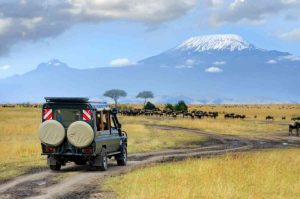
This is particularly concerning in destinations such as the Maasai Mara, where extensive grasslands provide essential grazing grounds for wildebeest, zebras and other herbivores.
Research examining tourist impacts in the Maasai Mara identified uncontrolled off-road driving as a significant source of vegetation damage, particularly in areas experiencing high vehicle pressure.
The consequences may extend beyond the immediate tire tracks. Damaged vegetation can affect grazing opportunities, while soil disturbance can contribute to erosion and changes in water movement.
In Tsavo, where vast landscapes and different vegetation zones support diverse wildlife populations, protecting natural habitats is equally important.
Remaining on authorized roads is therefore not simply a park regulation. It is an essential part of protecting the environment that makes wildlife tourism possible.
The Stress of Constant Human Observation
Imagine spending every day surrounded by people who want to photograph you, follow your movements and watch everything you do.
For wildlife, this can sometimes be the reality of living in heavily visited tourism destinations.
Animals may gradually become accustomed to vehicles, but habituation should not automatically be interpreted as comfort. An animal that continues feeding while tourists observe it is not necessarily unaffected by their presence.
Repeated human encounters may influence how animals respond to their surroundings. Some may become more alert, change their movement patterns or avoid particularly busy areas.
This concern is especially relevant for vulnerable animals, including mothers protecting their young.
In Amboseli National Park elephant families are an important attraction. Watching a mother elephant guide her calf across the plains is an unforgettable experience. However, these family groups need adequate space to move, feed and interact without unnecessary interference.
Similarly, in the Maasai Mara, predators with young cubs require opportunities to rest and care for their offspring without being constantly surrounded by vehicles.
Tourists must understand that wild animals do not owe visitors a perfect photograph. Their welfare should always come before the desire for a closer encounter.
Waste and Pollution: What Tourists Leave Behind
A safari experience may last only a few days, but the waste generated by tourism can remain in the environment long after visitors have departed.
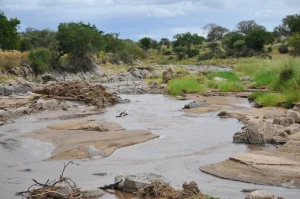
Plastic bottles, food packaging, discarded tissues and other rubbish can threaten wildlife when improperly managed.
Animals may accidentally ingest plastic materials or become entangled in waste. Rubbish can also contaminate natural surroundings and reduce the quality of habitats.
This challenge is not limited to national parks. Tourism accommodation facilities, roads, picnic areas and surrounding communities must also manage the environmental pressures associated with increased visitor numbers.
Destinations such as Tsavo East National Park and Tsavo West cover extensive landscapes, making environmental management an important responsibility for conservation authorities, tourism operators and visitors.
Water consumption is another concern. Safari lodges require water for guest accommodation, kitchens, swimming pools, laundry and other services. In areas where communities and wildlife already depend on limited water resources, responsible water management becomes particularly important.
Sustainable wildlife tourism must therefore consider more than what happens during a game drive. It must also examine how tourism facilities use resources and manage their environmental footprint.
When Tourism Development Competes With Wildlife Space
Perhaps one of the most complicated aspects of the invisible cost of wildlife tourism is the expansion of tourism infrastructure.
Safari lodges, camps, access roads and other facilities provide employment, generate income and support conservation. However, their location and development must be carefully planned to avoid disrupting important wildlife habitats.
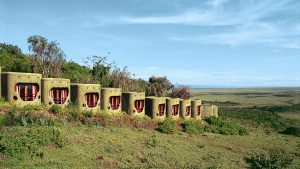
The Maasai Mara offers an important example of this challenge. Its popularity has encouraged the development of numerous accommodation facilities around wildlife-rich areas. While tourism generates economic opportunities, excessive infrastructure development can create pressure on the natural environment.
Research published in 2025 examining tourist camps and lion conservation in the Maasai Mara highlighted the relationship between accommodation density and lion distribution.
This raises an important consideration for the future of safari tourism: how many facilities can a destination accommodate without compromising the wildlife that makes it attractive?
In Amboseli, protecting the wider ecosystem is equally important because wildlife movements are not restricted to the boundaries of the national park. Community lands and surrounding habitats also contribute to the survival of animal populations.
In Tsavo, maintaining connected habitats and protecting wildlife movement corridors are important considerations in conservation planning.
Tourism development should therefore be guided by ecological priorities, not simply the desire to accommodate more visitors.
Can Wildlife Tourism Become More Responsible?
Recognizing the invisible cost of wildlife tourism does not mean that safaris should be discouraged. On the contrary, responsible tourism can become one of the strongest tools for supporting wildlife conservation.
Tourism revenue can contribute to protected-area management, anti-poaching initiatives, habitat protection and community development. It can also create employment for guides, drivers, hospitality workers and local conservation teams.
The challenge is ensuring that these benefits do not come at the expense of animal welfare.
There are several ways to make wildlife tourism more responsible:
- Respect wildlife viewing distances: Avoid approaching animals too closely or surrounding them with vehicles.
- Choose responsible safari operators: Work with companies that priorities conservation, professional guiding and ethical wildlife encounters.
- Avoid unnecessary noise: Keep conversations low, silence mobile phones and avoid playing music around wildlife.
- Remain on authorized tracks: Do not encourage off-road driving where it is prohibited.
- Never feed wild animals: Feeding can interfere with natural diets and encourage unhealthy dependence on humans.
- Reduce plastic waste: Carry reusable water bottles and dispose of rubbish responsibly.
- Support local communities: Choose tourism experiences that create meaningful economic opportunities for people living alongside wildlife.
- Prioritize animal welfare: Accept that some sightings require distance, patience or even leaving an area entirely.
Kenya’s protected-area guidelines already provide important foundations for responsible visitor behaviour. For example, Amboseli National Park advises visitors to respect wildlife privacy, remain quiet, avoid feeding animals and keep to established roads.
These simple actions can help ensure that safari experiences remain enjoyable while reducing unnecessary pressure on the environment.
A Safari Should Leave Memories, Not Damage
Kenya’s wildlife is one of its greatest natural treasures. From the breathtaking wildebeest migration in the Maasai Mara to the magnificent elephant herds of Amboseli and the expansive wilderness of Tsavo, the country offers some of the world’s most memorable wildlife experiences.
However, the true success of wildlife tourism should not be measured only by the number of visitors, photographs taken or animals spotted during a game drive.
It should also be measured by the condition of the habitats, the freedom of animals to behave naturally and the ability of future generations to experience these extraordinary ecosystems.
The invisible cost of wildlife tourism reminds us that even activities designed around conservation can create unintended consequences when they are not properly managed.
As travelers, we have a responsibility to look beyond the excitement of seeing a lion, elephant or leopard. We must also consider the space that animal needs, the environment it depends on and the human activities taking place around it.
Ultimately, the best safari is not necessarily the one that brings us closest to wildlife. It is the one that allows us to witness nature without taking away its freedom.
Travel responsibly. Respect wildlife. Protect the experience for generations to come.
Discover Kenya’s Wilderness with Bison Safaris
At Bison Safaris, we believe that exploring Kenya’s spectacular wildlife destinations should go hand in hand with respecting and protecting nature. Whether you dream of witnessing the Great Migration in the Maasai Mara, photographing Amboseli’s iconic elephants against Mount Kilimanjaro or discovering the vast wilderness of Tsavo, we invite you to experience Kenya through memorable safari adventures.
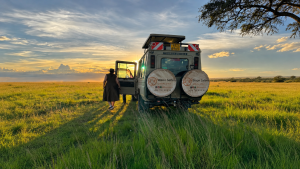
Choose a safari that celebrates wildlife, supports responsible tourism and leaves you with unforgettable memories. Explore Kenya with Bison Safaris, where every journey is an opportunity to appreciate the beauty of the wild.