Black leopards in Kenya are among the rarest and most fascinating wildlife sightings on the African continent. While Kenya is famous for its lions, elephants, cheetahs, and the Great Migration, a much more elusive predator moves silently through some of the country’s wildest landscapes. With a dark coat that allows it to disappear into the shadows, the black leopard represents one of nature’s most extraordinary variations.
For decades, stories of black leopards in Kenya existed mostly as whispered accounts from wildlife guides, local communities, and conservationists. Some people claimed to have seen unusually dark leopards moving through the bush, but confirmed evidence was extremely difficult to obtain. Leopards are naturally secretive animals, and a melanistic individual is even harder to detect.
That changed when a black leopard in Laikipia gained international attention. Known as Giza Mrembo, meaning “Beautiful Darkness” in Swahili, this rare leopard became one of the most remarkable wildlife discoveries in modern Kenya. Her story revealed that even in a country celebrated worldwide for its safari experiences, there are still hidden wonders waiting to be discovered.
The story of Kenya’s black leopards is not only about a rare animal with a striking appearance. It is also a story about genetics, conservation, scientific discovery, and the importance of protecting the landscapes that allow extraordinary species to survive.
What Are Black Leopards in Kenya?
Black leopards in Kenya are not a separate species of big cat. They are ordinary leopards (Panthera pardus) that have developed a rare genetic condition known as melanism.
Melanism occurs when an animal produces an unusually high amount of melanin, the pigment responsible for dark colouring. In a melanistic leopard, this results in fur that appears almost completely black, especially when viewed from a distance or in low light.
However, a black leopard is not completely without markings. When sunlight falls on the animal at the right angle, or when photographs are taken using certain lighting conditions, the leopard’s familiar rosette patterns can often be seen beneath the dark coat.
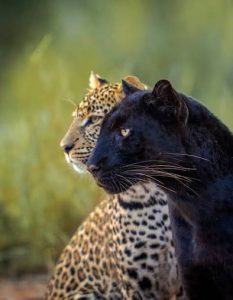
These hidden markings are important because they distinguish a black leopard from other dark-coloured animals. The animal is still unmistakably a leopard, with the same powerful build, hunting behaviour, and solitary lifestyle as its spotted relatives.
Melanism occurs naturally in several species, but black leopards are particularly rare in Africa. Their scarcity is one of the reasons sightings in Kenya attract so much attention from wildlife enthusiasts, researchers, and photographers.
Why Are Black Leopards So Rare in Kenya?
The rarity of black leopards in Kenya is linked to a combination of genetics, habitat, and survival advantages.
For a leopard to develop a melanistic coat, it must inherit the genetic variation responsible for producing excess pigmentation. This is a natural occurrence, but it does not happen frequently within leopard populations.
Leopards across Kenya have evolved to survive in a variety of environments, including savannahs, woodlands, rocky landscapes, and semi-arid regions. Their spotted coats provide excellent camouflage in these habitats, allowing them to blend into grass, shadows, and vegetation while stalking prey.
A darker coat may provide advantages in some environments, particularly dense forests where light levels are lower. This may help explain why melanistic leopards are recorded more frequently in some forested regions of Asia compared with the open landscapes where many African leopards live.
However, the exact reasons behind the rarity of black leopards in Africa are still being studied. Wildlife genetics is complex, and many factors influence whether a rare trait becomes common or remains unusual.
Another challenge is simply finding them.
Leopards are among Africa’s most elusive predators. Unlike lions, which often live in visible prides, leopards spend much of their lives alone. They are skilled hunters that rely on stealth, spend much of their active hours at night, and can move through landscapes without being noticed.
A black leopard’s dark colouring makes an already secretive animal even more difficult to observe.
Giza Mrembo: The Black Leopard That Put Laikipia on the Map
The story of black leopards in Kenya changed when Giza Mrembo became one of the country’s most famous wild animals.
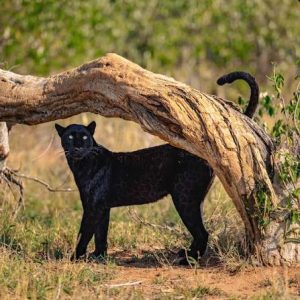
Before her documentation, black leopard sightings in Kenya were often treated with curiosity but also uncertainty. Guides and communities had reported seeing unusually dark leopards, but reliable photographic evidence was rare.
Giza Mrembo’s appearance in Laikipia provided an opportunity for researchers and wildlife photographers to study a melanistic leopard in Africa with greater detail.
Her discovery attracted international attention because African black leopards are exceptionally uncommon. For many wildlife lovers around the world, seeing images of a black leopard in Kenya challenged the idea that such animals were mainly associated with Asian forests.
But Giza Mrembo’s importance goes beyond her unusual appearance.
Her story highlighted the importance of Laikipia as a conservation landscape. The region is not just home to rare predators; it represents a different model of wildlife protection where conservation, communities, research, and tourism work together.
The attention surrounding Giza Mrembo also created greater awareness of Kenya’s lesser-known wildlife stories. While the country’s famous species continue to attract millions of visitors, rare discoveries like the black leopard remind us that Kenya’s wilderness still holds many secrets.
Laikipia: The Home of Kenya’s Most Famous Black Leopard
When discussing black leopards in Kenya, one region stands out above all others: Laikipia.
Located north of Mount Kenya, Laikipia is one of Kenya’s most unique wildlife landscapes. Unlike the country’s famous national parks, which are often defined by clear boundaries and large concentrations of visitors, Laikipia is a patchwork of private conservancies, community lands, ranches, and protected areas that together create an important refuge for wildlife.
The region’s landscape is incredibly diverse. Open grasslands stretch across the plains, rocky hills rise above valleys, rivers cut through dry landscapes, and pockets of woodland provide shelter for many species. This variety creates the perfect conditions for predators that depend on both cover and access to prey.
Leopards are particularly well suited to this environment. They are adaptable cats that can survive in different habitats, provided there is enough food, water, and shelter. Laikipia’s mixture of natural habitats allows leopards to move, hunt, and raise their cubs away from some of the pressures found in more heavily developed areas.
The region is also home to an impressive range of wildlife, including elephants, lions, African wild dogs, giraffes, Grevy’s zebras, buffaloes, and numerous bird species. Protecting the landscape for these animals also protects the complex ecosystem that supports rare species such as melanistic leopards.
The discovery of Giza Mrembo brought global attention to Laikipia, but the region’s importance had been recognised by conservationists long before the famous black leopard appeared in photographs. Its success demonstrates how protecting large connected landscapes can create opportunities for wildlife discoveries that might otherwise never happen.
Where Are Black Leopards Found in Kenya?
The most reliable and documented sightings of black leopards in Kenya have come from Laikipia. This region has become the country’s best-known location for encountering these rare cats, largely because of its strong conservation programs and long-term wildlife monitoring.
However, it is important to understand that black leopards are not animals that can be found in a specific location like a landmark or attraction. They are wild, solitary predators that move across large territories.
Even in areas where black leopards have been recorded, sightings remain extremely rare.
Leopards generally avoid unnecessary contact with humans, and their ability to move silently through thick vegetation makes them difficult to track. A black leopard is even more challenging to locate because its dark coat can blend into shadows, especially during the early morning, evening, and night hours when leopards are most active.
For visitors interested in seeing a black leopard in Kenya, the focus should not be on a guaranteed encounter. Instead, it should be on visiting ecosystems where these animals naturally live and supporting responsible wildlife experiences that contribute to conservation.
Are There Other Black Leopards in Kenya?
Giza Mrembo remains the most famous documented black leopard in Kenya, but she may not be the only melanistic leopard in the country.
Because leopards are solitary and cover large territories, researchers still have limited knowledge about the total number of black leopards living in Kenya. Unlike animals that gather in large groups, individual leopards can remain hidden for years without being recorded.
Over time, there have been reports of other unusually dark leopards from different parts of Kenya. Some sightings come from experienced guides and local communities who spend years observing wildlife. However, without clear photographs or scientific documentation, many reports remain difficult to verify.
This uncertainty is part of what makes black leopards so fascinating. Their rarity means every confirmed sighting adds valuable information to what scientists know about leopard populations and genetics.
The continued use of camera traps in Kenya’s conservation areas may reveal more about these elusive cats in the future. These devices allow researchers to monitor wildlife activity without disturbing animals, increasing the chances of documenting rare species that would otherwise remain unseen.
How Researchers Study Black Leopards in Kenya
Studying a black leopard requires patience, technology, and careful observation. Unlike more visible wildlife species, leopards cannot easily be counted or monitored through simple surveys.
Researchers use several methods to understand these rare cats, including:
Camera Trap Monitoring
Camera traps have transformed wildlife research in Kenya. These motion-sensitive cameras can operate for weeks or months in remote areas, capturing images of animals as they move through their natural habitats.
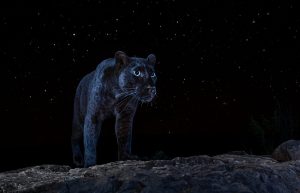
For black leopards, camera traps are especially valuable because they are active mostly at night when direct observation is difficult.
Individual Identification
Every leopard has unique characteristics that researchers can use for identification. These include:
- Facial markings.
- Body shape.
- Scar patterns.
- Behavioural differences.
Even though a black leopard’s coat appears uniform at first glance, photographs can reveal details that help researchers determine whether sightings involve the same individual.
Long-Term Observation
Understanding rare wildlife requires time. A single photograph proves that an animal exists, but long-term monitoring reveals much more, including movement patterns, habitat use, and interactions with other species.
This research is important because protecting rare animals requires understanding how they live.
The Conservation Story Behind Kenya’s Black Leopards
The survival of black leopards in Kenya depends on the same conservation efforts that protect all wildlife.
A rare animal cannot survive without a healthy ecosystem around it. Leopards need enough prey, safe habitats, and landscapes where they can move freely. Protecting only individual animals is not enough; conservation must focus on entire environments.
In Laikipia, conservation has developed through partnerships between landowners, local communities, researchers, and tourism operators. Many conservancies work to maintain wildlife corridors, reduce human-wildlife conflict, and support communities living alongside wildlife.
This approach has helped create spaces where predators such as leopards can survive.
Leopards play an important role in maintaining ecological balance. As predators, they influence prey populations and contribute to the health of the ecosystems where they live. Protecting them also protects countless other species that share the same environment.
The story of black leopards in Kenya is therefore not only about a rare colour variation. It is about the importance of preserving wild landscapes where nature can continue to produce unexpected discoveries.
Experiencing Black Leopard Country on Safari
For travellers visiting Kenya, the possibility of seeing a black leopard adds an element of mystery to the safari experience. However, wildlife encounters are never guaranteed, and responsible operators will always be honest about the unpredictable nature of the wild.
A safari in Laikipia is not only about searching for one rare predator. The region offers some of Kenya’s most rewarding wildlife experiences, from watching elephants move across open plains to encountering species that are difficult to find elsewhere in the country.
The best safari experiences are built around understanding the ecosystem as a whole. A leopard sighting is special, but so is watching a landscape where countless relationships between animals, plants, and people continue to exist.
For travellers interested in exploring Kenya’s rare wildlife stories, destinations like Laikipia offer a chance to experience a side of the country that goes beyond the traditional safari routes.
Black leopards in Kenya represent one of the country’s most extraordinary wildlife mysteries. Their rarity, beauty, and elusive nature have made them symbols of the hidden wonders that still exist within Kenya’s wilderness.
From the landscapes of Laikipia to the conservation efforts that protect its wildlife, the story of these rare cats shows why preserving natural habitats remains so important. Giza Mrembo may be Kenya’s most famous black leopard, but her story represents something larger: the incredible diversity and resilience of the ecosystems that support her.
For travellers hoping to discover Kenya’s wild places, Bison Safaris offers carefully planned safari experiences that go beyond simply searching for famous animals. Exploring destinations such as Laikipia provides an opportunity to encounter remarkable wildlife while learning about the conservation stories that make Kenya one of Africa’s most inspiring safari destinations.
A black leopard sighting may be one of the rarest moments a visitor can experience, but the true reward lies in witnessing the landscapes that allow such extraordinary animals to survive.