Beneath Kenya’s forests, volcanic hills and coral coastline lies a world that many travellers never see. It is a world of echoing chambers, ancient lava tunnels and weathered limestone caves, where every rock face tells a story shaped over thousands, sometimes millions, of years. Some of these underground spaces were created by powerful volcanic eruptions, while others bear witness to defining moments in the country’s history. Together, they reveal a quieter, often overlooked side of Kenya that is just as captivating as its famous wildlife reserves and beaches.
While millions of visitors come to Kenya each year for safari adventures and coastal holidays, the caves in Kenya offer a completely different way to experience the country. They invite you to walk through landscapes carved by nature, discover places where communities once sought refuge, and explore environments that continue to shelter unique wildlife. Whether hidden beneath extinct volcanoes or tucked along the Indian Ocean coast, each cave has a story worth telling.
This guide explores seven of Kenya’s most remarkable caves. Rather than simply listing destinations, we’ll uncover what makes each one special, how they became part of Kenya’s natural and cultural heritage, and why they deserve a place on your travel itinerary.
Why the Caves in Kenya Deserve More Attention
For many travellers, caves are little more than a stop between better-known attractions. In Kenya, they deserve far more than that.
Some preserve evidence of the immense volcanic forces that shaped the Great Rift Valley. Others remind us of difficult chapters in the country’s past, from the East African slave trade to the struggle for independence. A few continue to surprise scientists, particularly those where wildlife has adapted in extraordinary ways.
What makes Kenya’s caves especially fascinating is their diversity. On the southern coast, limestone caves formed from ancient coral reefs tell stories of life beside the Indian Ocean. Hundreds of kilometers away, volcanic caves beneath Mount Elgon and Mount Suswa reveal a completely different landscape, one sculpted by molten lava rather than the sea. Exploring them isn’t simply about venturing underground; it’s about understanding the natural processes and human experiences that have shaped Kenya over countless generations.
Unlike a game drive, where the destination often revolves around spotting wildlife, cave exploration encourages a slower pace. You begin to notice the texture of volcanic rock, the cool change in temperature as you step inside, the echo of dripping water, and the silence that settles once the outside world disappears behind you. It’s a different kind of adventure, one that rewards curiosity as much as it does exploration.
Kitum Cave: Where Elephants Still Shape the Landscape
On the slopes of Mount Elgon, one cave has earned worldwide attention for a reason unlike any other. Kitum Cave is among the few places on Earth where wild elephants regularly enter an underground chamber in search of mineral-rich salts hidden within the volcanic rock.
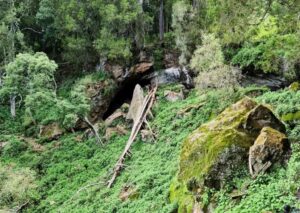
For generations, elephants and buffaloes have chipped away at the cave’s soft walls, slowly enlarging the chamber as they satisfy a nutritional need. It’s an extraordinary example of wildlife shaping its environment, and one that has fascinated conservationists, geologists and photographers alike.
Standing at the entrance, it’s easy to appreciate why the cave leaves such a lasting impression. Sunlight spills across the rugged rock before fading into darkness, while the surrounding montane forest muffles almost every sound. Even if you don’t see elephants during your visit, they’re most active at night. The knowledge that they regularly pass through the same space transforms the experience.
Kitum Cave is found within Mount Elgon National Park in western Kenya, making it easy to combine with forest walks, waterfalls and hiking trails. If your itinerary allows, spending a full day in the park offers a much richer experience than simply visiting the cave and leaving again.
Shimoni Caves: Where Stone Walls Hold the Memory of the Past
Not every cave is remembered for the way it was formed. Some are remembered for the lives that passed through them.
The Shimoni Caves, on Kenya’s south coast, are among the country’s most significant historical sites. Formed naturally from coral limestone over thousands of years, they became closely associated with the East African slave trade during the eighteenth and nineteenth centuries. Historical records indicate that enslaved people were held here before being transported across the Indian Ocean, making the caves a place of remembrance as much as a natural attraction.
Walking through the caves today is a reflective experience. Narrow passages open into larger chambers where the cool air contrasts sharply with the tropical heat outside. Small openings in the rock allow sunlight to filter through, creating an atmosphere that feels peaceful despite the weight of the stories connected to the site.
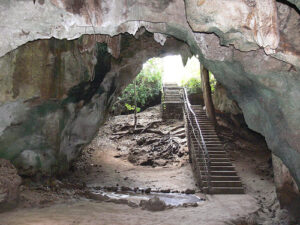
Most visits begin in the coastal town of Shimoni, about an hour’s drive south of Diani Beach. Local guides lead visitors through the caves, sharing both the geological history of the limestone formations and the human stories that continue to shape the site’s identity. Many travellers combine the experience with a boat trip to Wasini Island or a day exploring the coral reefs of Kisite-Mpunguti Marine National Park, making it one of the most rewarding excursions along Kenya’s southern coastline.
Mount Suswa Lava Caves: Following the Path of Ancient Lava
At first glance, Mount Suswa looks like any other extinct volcano rising from the Great Rift Valley. Only after reaching its slopes do you discover that much of its story lies underground.
Thousands of years ago, rivers of molten lava flowed beneath the mountain. As the surface cooled and hardened, the lava beneath continued moving until it drained away, leaving behind a network of tunnels that still winds through the volcanic landscape today. Exploring these lava tubes feels less like entering a cave and more like stepping inside the mountain itself.
The experience is very different from visiting Kitum or Shimoni. There are no historical exhibits or dramatic cave entrances. Instead, the attraction lies in the landscape as a whole. The hike to the caves passes open grasslands where zebras and giraffes are often seen grazing, while the volcanic crater offers sweeping views across the Rift Valley.
The caves are also closely connected to Maasai culture, and many local guides enrich the experience by sharing stories about the mountain’s significance to surrounding communities. Their knowledge turns what could be a simple hike into a much deeper understanding of the landscape.
Mount Suswa is best explored with a guide, particularly if you plan to venture beyond the main trails. The terrain can be rugged in places, but the combination of hiking, wildlife and volcanic geology makes the journey one of the most distinctive outdoor experiences in Kenya.
Chyulu Hills Lava Tubes: An Underground World Beneath Rolling Green Hills
The Chyulu Hills have often been described as one of Kenya’s most beautiful volcanic landscapes. Stretching between Tsavo and Amboseli, the hills appear almost gentle from a distance, covered in green vegetation that gives little hint of what lies beneath.
Hidden below the surface is an extensive system of lava tubes created by ancient volcanic eruptions. Some of these tunnels form part of one of the longest lava tube systems ever recorded, a reminder of the immense geological forces that shaped this region thousands of years ago.
Unlike more developed tourist attractions, the caves of the Chyulu Hills remain relatively untouched. Reaching them usually requires travelling with experienced guides who know the terrain, and that sense of remoteness is part of the appeal. There are no crowds, ticket queues or souvenir stalls, only quiet landscapes where nature still feels wonderfully wild.
The surrounding hills are equally rewarding. Elephants move through the forests, birds thrive in the volcanic ecosystem, and on a clear day the snow-capped peak of Mount Kilimanjaro appears on the horizon, creating one of the most memorable backdrops in southern Kenya.
Mau Mau Caves: Hidden Shelters That Became Symbols of Resistance
Deep within the forests of the Aberdare Range and the slopes of Mount Kenya are caves that tell a story far removed from geology. During Kenya’s fight for independence in the 1950s, these natural shelters became hiding places for Mau Mau freedom fighters as they organised, recovered and evaded colonial forces.
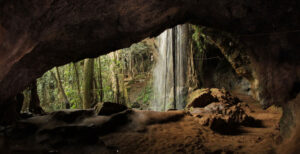
Today, visiting a Mau Mau Cave is less about exploring an underground formation and more about connecting with a defining chapter in the nation’s history. The caves themselves are modest compared to the vast lava tunnels of Mount Suswa or the impressive chambers of Kitum, but their historical significance gives them a powerful presence.
Many of the guided tours begin with a walk through indigenous forest, where towering trees and birdsong create a peaceful setting that contrasts with the hardships once endured here. Along the way, local guides recount stories of resilience, sacrifice and the determination that shaped Kenya’s journey to independence. These personal narratives often leave as lasting an impression as the caves themselves.
A visit here offers a reminder that some of Kenya’s most meaningful attractions are not measured by their size or beauty, but by the stories they preserve for future generations.
Macking’eny Cave: Mount Elgon’s Quiet Companion
While Kitum Cave attracts visitors from around the world, another cave within Mount Elgon National Park quietly rewards those who choose to explore a little further.
Macking’eny Cave may not enjoy the same international reputation, yet it offers a fascinating glimpse into the volcanic history of the mountain. Formed by the same geological forces that created Kitum, the cave features broad chambers carved into ancient volcanic rock, surrounded by one of Kenya’s most biodiverse montane forests.
The walk to the cave is part of the experience. Forest trails wind beneath giant trees draped with moss and ferns, while colourful birds call from the canopy above. Depending on the season, visitors may also encounter monkeys or other forest wildlife before reaching the cave entrance.
Because it receives far fewer visitors, Macking’eny has a quieter atmosphere. There is no rush to move through its chambers, allowing time to appreciate the textures of the rock, the cool stillness of the interior and the remarkable landscape that has developed around Mount Elgon over millions of years.
For travellers already exploring the national park, pairing Mackinge’ny with Kitum creates a fuller appreciation of why Mount Elgon is one of Kenya’s most remarkable volcanic landscapes.
Paradise Lost Cave: A Natural Escape Just Outside Nairobi
Kenya’s caves are often associated with remote forests and national parks, but Paradise Lost proves that you don’t have to travel far from the capital to enjoy an underground adventure.
Located on the outskirts of Nairobi in Kiambu County, Paradise Lost combines a cave, a waterfall and forest walking trails within a peaceful recreational park. The cave itself was discovered during quarrying in the early 1990s, revealing a space that had remained hidden beneath the landscape for centuries. Archaeological discoveries made within the cave, including Late Stone Age artefacts, suggest that people found shelter here long before modern Nairobi existed.
Today, Paradise Lost attracts a different kind of visitor. Families come for picnics, photographers linger near the waterfall, and walkers follow shaded paths that offer a welcome break from the city’s pace. The cave is easy to access, making it an excellent introduction for anyone curious about cave exploration but not ready for more demanding hikes in places like Mount Suswa or Mount Elgon.
It serves as a reminder that memorable experiences are not always measured by distance. Sometimes, one of Kenya’s most interesting natural attractions is waiting just beyond the city’s edge.
Exploring Kenya’s Caves Responsibly
The appeal of caves lies partly in their sense of discovery. Unlike busy viewpoints or popular safari tracks, they often feel quiet and undisturbed. Keeping them that way depends on every visitor.
Simple choices make a meaningful difference. Staying on designated paths helps protect fragile vegetation around cave entrances, while avoiding litter ensures that wildlife is not harmed. Inside the caves, resisting the temptation to scratch names into rock walls or remove stones helps preserve features that have taken thousands of years to form.
Some caves are also places of cultural and historical importance. Sites such as the Shimoni Caves and the Mau Mau Caves are woven into Kenya’s collective memory, and approaching them with respect allows future generations to learn from their stories just as we do today.
Whenever possible, explore with local guides. Beyond helping you navigate safely, they offer insights that transform a simple visit into a richer understanding of the landscape, its history and the communities that continue to care for it.
Planning Your Visit to the Caves in Kenya
Exploring Kenya’s caves is not about rushing from one destination to another. They are spread across different parts of the country, and each offers a completely different experience. The best approach is to include a cave visit as part of a wider itinerary rather than making it the sole purpose of your trip.
If you’re heading to western Kenya, Mount Elgon National Park offers enough attractions to fill several days, with Kitum Cave and Macking’eny Cave complementing hiking trails, waterfalls and rich birdlife. Along the south coast, the Shimoni Caves fit naturally into an excursion that includes Wasini Island and the marine life of Kisite-Mpunguti. Travellers exploring the Great Rift Valley can combine the lava caves of Mount Suswa with hiking, wildlife viewing and spectacular views across the escarpment.
Before travelling, it’s worth checking whether your chosen cave requires a guide or special permission to visit. Some sites lie within protected areas, while others are managed by local communities or conservation organizations. Wearing sturdy walking shoes, carrying a reliable torch and packing enough drinking water will make the experience more comfortable, especially if your visit involves hiking through forests or volcanic terrain.
The beauty of these destinations lies in their authenticity. Unlike many heavily commercialized attractions, Kenya’s caves have retained much of their natural character. Exploring them patiently, and with respect for the environment, is often what makes the experience so memorable.
Frequently Asked Questions About the Caves in Kenya
Which is the most famous cave in Kenya?
Kitum Cave in Mount Elgon National Park is the country’s best-known cave. It is internationally recognized because wild elephants regularly enter the cave to obtain mineral-rich salts from its walls, a behaviour observed in very few places around the world.
Are Kenya’s caves safe to visit?
Yes, provided you follow local guidance and explore responsibly. Many caves are located within protected areas or are visited with experienced guides who are familiar with the terrain and any safety considerations.
What should I carry when visiting a cave?
Comfortable walking shoes with good grip, a torch or headlamp, drinking water and light outdoor clothing are usually sufficient for most cave visits. If you’re hiking to more remote caves, carrying a small first-aid kit and checking the weather forecast beforehand is also advisable.
Can children visit the caves?
Some caves, such as Paradise Lost, are suitable for families with children. Others, particularly lava tube systems like those at Mount Suswa, involve uneven terrain and are better suited to older children and adults who are comfortable walking longer distances.
What is the best time of year to explore caves in Kenya?
Caves can be visited throughout the year, but the dry seasons generally provide better hiking conditions and easier access to remote areas. During the rainy months, some forest trails and volcanic paths may become slippery.
The caves in Kenya reveal a side of the country that many travellers overlook. Hidden beneath forests, volcanic hills and coastal landscapes are places that preserve millions of years of geological history alongside stories of resilience, exploration and cultural heritage.
Each cave offers something different. Kitum showcases one of nature’s most extraordinary wildlife behaviours, while Shimoni invites visitors to reflect on a difficult chapter in East African history. The lava tubes of Mount Suswa and the Chyulu Hills highlight the immense forces that shaped the Great Rift Valley, and the Mau Mau Caves stand as enduring reminders of Kenya’s journey to independence. Even a short visit to Paradise Lost demonstrates that remarkable places are sometimes found just beyond the edge of a busy city.
Travelling through these underground landscapes isn’t simply about seeing another attraction. It’s about understanding Kenya from a different perspective, one where every chamber, tunnel and rock face contributes to the country’s remarkable story.
The next time you plan a journey through Kenya, consider looking beyond the familiar safari routes. You may discover that some of the country’s most unforgettable experiences are waiting beneath your feet.