There is something satisfying about travelling with everything you need on your back and no perfectly packaged itinerary telling you where to be next.
One morning, you could be watching the Great Rift Valley unfold beneath you. By evening, you might be sitting in a small café in Naivasha with a plate of nyama choma and a cup of tea, listening to locals discuss football. A few days later, you could be walking through the narrow streets of Mombasa Old Town or waking up near the Indian Ocean.
That freedom is a big part of the appeal of backpacking in Kenya.
Kenya is often introduced to travellers through luxury safari lodges, private game drives and beach resorts, but there is another side of the country that is much more spontaneous. With public transport connecting towns, budget accommodation in many popular destinations, inexpensive local food and a huge variety of landscapes, it is possible to explore Kenya without turning every day into an expensive organized excursion.
The trick is knowing where to go, how to move between destinations and where spending a little more is worthwhile.
Why Go Backpacking in Kenya?
Kenya is unusually varied for a country that can be explored over a relatively manageable route.
In the same trip, you can experience a busy African capital, walk through highland countryside, hike a volcanic mountain, cycle among wildlife, explore forests and finish beside the Indian Ocean.
The country’s tourism infrastructure also gives independent travellers several ways to move around. Buses and matatus connect major towns, while the Madaraka Express provides a comfortable rail connection between Nairobi and Mombasa. Kenya Railways currently lists economy fares between Nairobi and Mombasa at Ksh.1,000 one way, with several passenger services operating on the route.
And you do not necessarily need to spend every day inside a national park to experience Kenya’s landscapes.
Places such as Hell’s Gate National Park offer hiking, cycling and rock climbing alongside dramatic cliffs and gorges. Mount Longonot provides a more demanding hiking experience, while the coast offers an entirely different rhythm of beaches, Swahili culture and warm water adventures.
Where Should You Go Backpacking in Kenya?
The best route depends on how much time you have. Rather than trying to squeeze the entire country into one trip, it makes more sense to choose a few places that fit naturally together.
Nairobi
For many international travellers, Nairobi is the starting point.
Give yourself enough time to experience the city instead of treating it purely as a place to sleep before heading to the countryside. You can explore its food scene, visit cultural attractions, spend time in green spaces and use the city as a base for nearby adventures.
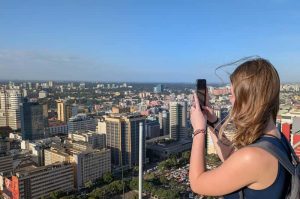
Nairobi is also useful for planning the rest of your trip. It has a wider choice of accommodation, transport connections and tour operators than many smaller destinations.
For a backpacker, however, the city requires the same awareness you would use in any large city. Keep valuable belongings discreet, stay aware in crowded places and avoid walking alone late at night in unfamiliar areas. Kenya’s National Tourism Service Portal specifically advises visitors to be cautious in crowded areas and to use reputable taxis or verified ride hailing services.
Naivasha and Hell’s Gate
From Nairobi, the Great Rift Valley makes an excellent next stop.
Naivasha is particularly useful for travellers who want outdoor experiences without committing to a multi-day safari. Nearby Hell’s Gate National Park is one of the country’s most unusual parks because visitors can experience its landscape on foot or by bicycle in designated areas.
The park is characterized by towering cliffs, gorges, volcanic scenery and geothermal features. Hiking, cycling and rock climbing are among its major attractions, and public transport services operate towards the park.
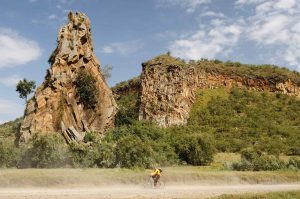
For someone carrying a backpack rather than travelling with a safari vehicle, this makes Hell’s Gate an especially interesting stop.
You can spend the morning exploring the landscape, take in the views around Lake Naivasha and return to town without needing to organize a traditional game drive itinerary.
Mount Longonot
If you want to challenge yourself physically, Mount Longonot is another option along the Rift Valley route.
The mountain rises dramatically from the surrounding landscape and is known for its steep slopes, ridges and crater. The hike takes you around the crater rim, where the views stretch across the Rift Valley.
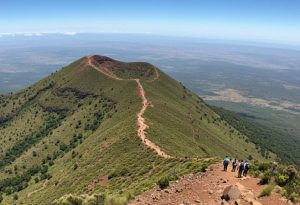
Kenya Wildlife Service describes the park as a destination for guided hikes and rim walks, making it a natural addition to an adventure focused backpacking trip.
It is also the sort of experience that reminds you why backpacking is not simply about travelling cheaply. Sometimes the memorable part of a trip is the thing that leaves your legs aching the next morning.
Nakuru and the Rift Valley
Nakuru works well as another stop for travellers heading further into the Rift Valley.
Lake Nakuru National Park is known for its wildlife and scenery, but travellers should remember that a national park visit can change the budget considerably. Current KWS rates list an East African citizen adult entry fee of Ksh.1,500 and a Kenya resident adult fee of Ksh.2,025, while non-resident adults are charged US$90.
This is an important part of backpacking in Kenya, not every attraction will fit a shoestring budget.
Instead of trying to avoid every expensive experience, decide which ones matter most to you and save specifically for them.
The Kenyan Coast
After spending time inland, heading towards the coast can feel like entering another country.
Mombasa brings together beaches, Swahili architecture, history and a distinctive food culture. From there, travellers can continue towards destinations such as Diani, Kilifi or Watamu depending on their interests.
The coast is particularly appealing after several days of hiking and travelling overland. You can slow down, spend a morning at the beach, explore local food and allow yourself a few days without constantly packing and unpacking.
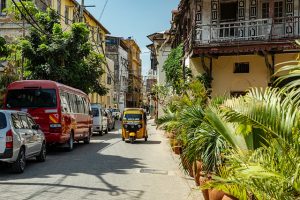
If your budget allows, the coast is also a good place to spend a little longer rather than rushing through several beach towns.
How Do You Get Around Kenya While Backpacking?
Transport is one of the biggest decisions you will make.
For shorter and medium distance journeys, public buses and matatus are widely used by locals and can be considerably cheaper than arranging private transfers. However, prices and schedules vary by route, so it is sensible to confirm the fare and departure point locally rather than relying on an old blog post.
For longer journeys, buses can be practical, while the Madaraka Express is particularly useful between Nairobi and Mombasa.
Kenya Railways currently lists Nairobi–Mombasa economy fare at KSh 1,000 one way, with the passenger service also stopping at places including Voi, Mtito Andei, Kibwezi and Emali. The 2026 timetable includes inter-county, express and night services.

The train can therefore become part of the journey rather than simply a way of getting from one city to another.
Within towns, ride hailing services can be useful when travelling with luggage or when public transport is inconvenient. Boda bodas may be practical for short journeys in some places, but travellers should consider road conditions, helmet use and their own comfort before choosing one.
How Much Does Backpacking in Kenya Cost?
There is no single backpacking budget that works for everyone.
Accommodation, transport, food and activities vary considerably between destinations. Recent 2026 travel guides place budget backpacking expenses broadly around a few thousand Kenyan shillings per day when using simple accommodation, local food and public transport, while costs rise quickly when private rooms, organized excursions or safari days are added.
The important thing is to separate your everyday backpacking expenses from your major activities.
A cheap day travelling between towns might involve a local breakfast, public transport and an inexpensive guesthouse. A safari or national park visit can cost substantially more because of park entry fees, transport, guides and accommodation.
That does not mean you need to remove wildlife experiences from your trip. It simply means you should budget for them separately.
For accommodation, look beyond conventional hotels. Hostels, campsites, guesthouses and simple budget lodges can all work for backpackers. Camping can reduce accommodation costs further, although travellers should check whether a campsite is officially permitted and what facilities are available before setting up.
Food is another area where travelling like a local can make a noticeable difference.
Instead of eating every meal in tourist restaurants, try local cafés and small eateries where appropriate. Chapati, beans, rice, ugali, vegetables, nyama choma and other everyday Kenyan dishes can make the trip feel much more connected to the places you are visiting.
What Should You Pack?
The best backpack is not necessarily the one with the most things in it.
Light, versatile clothing is more useful than packing an outfit for every possible situation. Comfortable walking shoes are essential if your route includes Hell’s Gate, Mount Longonot or other outdoor activities.
Depending on your itinerary, consider carrying:
- A comfortable backpack
- Lightweight clothing
- A warm layer for cooler highland evenings
- Comfortable walking or hiking shoes
- Reusable water bottle
- Sunscreen and sunglasses
- Insect repellent
- Basic first aid supplies
- Power bank
- Copies of important travel documents
- Waterproof protection for electronics
- A small daypack
If you plan to camp, your equipment list will obviously be longer. Some travellers choose to rent or hire equipment locally rather than carrying camping gear throughout the entire journey.
Is Backpacking in Kenya Safe?
Backpacking requires independence, but independence should not mean ignoring common sense precautions.
Keep copies of important documents, avoid carrying unnecessary amounts of cash and pay attention to your surroundings in busy transport terminals, markets and city centers. The National Tourism Service Portal recommends avoiding walking alone late at night in unfamiliar or poorly lit areas and using reputable transport services.
Wildlife destinations require an additional level of caution.
Remember that you are entering natural habitats, not conventional recreational parks. At Hell’s Gate, for example, KWS advises visitors to remain on established trails, respect wildlife and follow park rules.
Do not let the idea of backpacking make you feel that you have to do everything alone either. A local guide can be worthwhile for hikes, remote areas and activities where local knowledge genuinely improves safety and the experience.
A Simple Backpacking Route Through Kenya
If you have around 10 days, you could build a trip around a relatively straightforward route:
Days 1–2: Nairobi
Arrive, recover from your journey and explore the city.
Days 3–4: Naivasha and Hell’s Gate
Head into the Rift Valley, explore Hell’s Gate and spend time around Lake Naivasha.
Day 5: Mount Longonot
Take on the mountain and return to the Rift Valley area.
Days 6–7: Nairobi and onward to the coast
Return to Nairobi and take the Madaraka Express towards Mombasa.
Days 8–10: Mombasa or the South Coast
Slow down, explore the coast, experience Swahili culture and enjoy some time beside the Indian Ocean.
This is only a framework. A longer trip could take you towards western Kenya, Mount Kenya, the northern regions or safari destinations.
The beauty of backpacking is that the itinerary does not have to look perfect on paper.
How to Make Backpacking in Kenya More Meaningful
One of the best parts of travelling independently is that you can spend your money more intentionally.
Eat at locally owned restaurants. Buy from small businesses. Use community run experiences where appropriate. Choose accommodation that treats local communities and the environment responsibly.
And when visiting natural areas, leave them as you found them. Kenya’s tourism authorities encourage visitors to support local communities, sustainable accommodation and conservation efforts.
You may also find that some of your best memories have nothing to do with the attractions you researched before leaving home.
It could be a conversation with someone you meet on a bus. A roadside tea stop. Getting slightly lost in a new town and discovering a tiny restaurant. Watching the landscape change through a train window. Or sitting quietly beside the ocean after several days of moving from one place to another.
Those are the moments that make backpacking feel different from simply ticking destinations off a list.
Experience Kenya at Your Own Pace
Backpacking in Kenya is not about proving that you can travel with the smallest possible budget or visit the largest number of places.
It is about having the freedom to experience the country differently.
You can hike through the Rift Valley, travel between towns by public transport, take the train towards the coast, eat food prepared for locals rather than tourists and spend a few days simply enjoying the scenery. You can also combine that independence with carefully chosen organized experiences when they add something you cannot easily arrange yourself.
For travellers who want to discover Kenya beyond the traditional safari circuit, that combination can be incredibly rewarding.
And when you are ready to turn your backpacking plans into a more structured Kenyan adventure, Bison Safaris can help you bring together the transport, destinations and experiences that fit your trip.