The first Kenya safari quote looks reasonable. The second is noticeably more expensive. Then the third arrives, and suddenly you are staring at three different prices for what appears to be almost the same trip.
This is where planning a safari can become surprisingly confusing. You may have given every tour operator the same travel dates, number of travellers and destinations, yet the Kenya safari quotes you receive can be hundreds or even thousands of dollars apart. One quote may look like a bargain, another may seem unnecessarily expensive, and the most expensive one may actually be offering the better value.
So, which one should you choose? The answer is not to find the cheapest Kenya safari quote. It is to find out what each quotation is actually buying you.
A safari quotation is more than a final figure at the bottom of a page. Behind that number are accommodation choices, park fees, transport, vehicle type, guide services, meals, internal flights, activities and dozens of smaller details that can change the experience considerably. Two Kenya safari quotes can therefore look similar on the surface while describing very different holidays.
If you have several quotations in front of you, this guide will show you exactly how to compare them without getting lost in the numbers.
Why Kenya Safari Quotes Can Be So Different
Imagine that you are planning a five-day Kenya safari covering Amboseli and the Maasai Mara. You send the same itinerary to three reputable safari companies.
The first company comes back with a quote of $2,600 per person. The second quotes $3,150, while the third asks for $3,700. Your first instinct might be to eliminate the $3,700 option and book the $2,600 safari. After all, why pay another $1,100 if all three companies are taking you to the same parks?
But there is a problem with that comparison, you have compared the prices before comparing the trips.
The $2,600 quotation might use a simpler camp, a shared safari vehicle and a different transport arrangement. Park fees might not be included, or some activities may be optional extras. The $3,150 quote could include a private 4×4, a better located camp, park fees and airport transfers. The $3,700 option might include domestic flights, a luxury property, private transfers and additional activities.
Suddenly, the three prices make much more sense.
This is the first rule when comparing Kenya safari quotes, never assume that the lowest price represents the best deal, and never assume that the highest price represents the best safari. First establish whether you are actually comparing like with like.
Start by Making the Quotes Comparable
The easiest way to make Kenya safari quotes confusing is to compare the final totals without checking whether the itineraries are identical.
Take your quotations and look at the basic structure of each trip. Are the travel dates the same? Are you staying the same number of nights? Are the same national parks or conservancies included? Is the safari private or shared? Are the accommodation categories genuinely comparable? Even a small difference can affect the price considerably.
For example, a four-night safari with three full nights in the Maasai Mara is not necessarily equivalent to a five-night itinerary that includes the same destination. Likewise, a quote that includes two nights in Amboseli and three in the Mara cannot be compared directly with one offering only two nights in the Mara.
Write down the itinerary from each quote before you compare the prices. If one operator has quietly changed the number of nights, added a destination or removed an activity, the price comparison is already misleading.
This simple step turns several confusing Kenya safari quotes into something much easier to understand.
Look at the Accommodation, Not Just the Name
Accommodation is one of the biggest reasons Kenya safari quotes differ, and it is also one of the easiest details to overlook.
A quotation might simply say “Maasai Mara camp” or “Amboseli lodge,” leaving you to assume that every property in the destination offers roughly the same experience. It does not.
Location matters. A property inside or close to a wildlife area may offer a very different experience from one farther away. Room category matters too. A standard tent, family tent, suite and private villa can all carry very different prices even within the same property.

Meal plans can also affect the quotation. One operator may include full board while another includes only breakfast or certain meals. Drinks, laundry and other extras may be treated differently from one property to another.
When comparing Kenya safari quotes, ask yourself a more useful question than “Which hotel is cheaper?” Ask, “What kind of accommodation am I getting for this price?”
Check the exact property, room or tent category, number of nights, meal plan and location. If the operator has not named the accommodation, ask for the specific property before making a decision.
A lower quote can be perfectly legitimate if it uses simpler accommodation. That does not make it a bad quotation. It simply means you should know what you are choosing.
Check Whether Park Fees Are Included
Park and conservancy fees can make a substantial difference to the final cost of a safari, so this is one of the first things you should check in Kenya safari quotes.
Do not assume that “safari package” automatically means every park related charge has been included. Look at the quotation carefully and see whether the relevant entry fees are listed.
The cost can also depend on where you are travelling and when you are travelling. For example, published 2026 guidance for the Maasai Mara lists different non-resident adult rates for different periods of the year, while other protected areas have their own fee structures. Because park and conservancy charges can change, your quotation should make clear which fees have been calculated for your particular itinerary and travel dates.

This is especially important when comparing a suspiciously cheap quote with a more detailed one. The cheaper operator may not necessarily be offering a discount, they may simply have left certain costs outside the headline price.
A good Kenya safari quote should make it reasonably clear whether park fees are included, excluded or payable separately. If you cannot tell, do not guess. Get clarification before paying a deposit.
The Safari Vehicle Can Change the Entire Experience
Two Kenya safari quotes can take you to exactly the same parks and still provide very different safari experiences because of the vehicle arrangement.
Are you travelling in a private vehicle reserved for your group, or will you share it with other travellers? Is the safari vehicle a 4×4 Land Cruiser, a safari van or another type of vehicle? How many people will be travelling together? These details matter more than they might seem when you are sitting at home comparing quotations.

A private vehicle gives your group greater flexibility over how you spend your game drive time. A shared vehicle may reduce the cost, but your schedule and preferences will also have to accommodate other travellers.
Neither option is automatically better. A solo traveller or budget conscious couple may be perfectly happy sharing. A family, photographer or group with particular interests may prefer the flexibility of a private vehicle.
The mistake is not choosing one over the other. The mistake is paying for one while believing you are getting the other. When reviewing Kenya safari quotes, find the vehicle arrangement and group size before comparing the totals.
Find Out Who Is Driving You
The driver-guide is another part of the safari that can disappear into a single line on a quotation.
Yet your guide will be one of the people who has the greatest influence on the experience. A knowledgeable guide does far more than drive between sightings. They understand the terrain, wildlife behaviour, routes and practical rhythm of a game drive, while also helping you navigate the many small decisions that arise during a safari.
When comparing Kenya safari quotes, check whether a professional driver-guide is included and whether the guide is dedicated to your group or shared with other travellers.
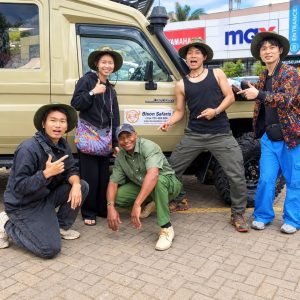
It is also worth asking what language the guiding service is provided in if that matters to your group. If you have specific interests, photography, birds, conservation, cultural experiences or particular wildlife species, mention them before the itinerary is finalized rather than assuming every guide will structure the safari around them.
The cheapest quotation is not necessarily saving money on the guide, but you should know exactly what guiding service you are paying for.
Read the Fine Print on Transport
Transport is another area where Kenya safari quotes can look deceptively similar.
A quotation may include transfers from the airport, transport between destinations and game drives, but the exact arrangement can differ. Some itineraries are entirely road based, while others combine road travel with domestic flights. That difference can have a major impact on both price and travel time.
For instance, flying between safari destinations can save hours of road travel and may make sense when you have limited time. A road transfer, meanwhile, may cost less and allow you to see more of the countryside along the way.
Neither approach is universally better. It depends on what you value.
Look through the itinerary and identify every major transfer. Then ask whether it is included in the quoted price, whether it is private or shared, and whether there are any additional transfer charges.
A quote that includes more flights may naturally cost more. That does not mean the operator is overcharging, you may simply be buying more time in the destination and less time on the road.
Compare What Is Included, and What Is Missing
This is where many travellers make their biggest mistake.
They compare the “included” section of one quotation with the “included” section of another, but they never investigate what has been left out.
Most Kenya safari quotes will clearly identify major components such as accommodation, meals, transport, game drives and guiding. However, other expenses can vary. International flights, travel insurance, entry requirements, tips, premium drinks, laundry and certain optional activities may not be part of the safari quotation.
The important question is not simply, “What does this quote include?” It is also, “What will I still have to pay after accepting this quote?”
Suppose one operator quotes $3,000 and another quotes $3,350. The first looks cheaper until you discover that several hundred dollars of expected expenses are excluded. The second quotation may already include charges that you would otherwise have to pay separately.
At that point, the $350 difference is no longer a $350 difference. This is why the real cost of a safari should be calculated by looking at the complete trip, not just the headline figure.
Watch for Optional Extras
Optional activities are another reason Kenya safari quotes can become difficult to compare.
One company may include a cultural visit, guided nature walk or other experience within the main itinerary. Another may list the same activity separately. A third may not mention it at all because it is not part of their standard package.
If you want a particular activity, find out whether it is included before comparing prices.
The same applies to experiences such as hot air balloon flights in the Maasai Mara, where applicable. An operator who has included a costly optional experience will naturally produce a higher quotation than one who has left it out.
This does not mean the more expensive quote is poor value. It simply means the two quotes are selling different experiences.
When comparing Kenya safari quotes, separate the things you genuinely want from the extras you do not need. There is little value in paying more for inclusions you never intended to use.
Look at the Number of Game Drives
A safari itinerary can say Maasai Mara for three nights without telling you exactly how much time you will spend on game drives. That distinction matters.
One operator might offer morning and afternoon game drives on most days. Another might structure the itinerary around longer full day drives. A third might have arrival and departure logistics that leave little time for wildlife viewing on certain days.

Read the daily itinerary rather than relying on the destination names alone.
Think about when you arrive, when you leave, and how much time you realistically have inside the wildlife area. A three-night stay does not automatically mean three full days of game viewing.
This is one of the most useful ways to compare Kenya safari quotes because you are no longer asking only how much the safari costs. You are asking how much safari time you are receiving for that price.
Do Not Ignore the Small Details
Sometimes the difference between Kenya safari quotes comes down to details that look insignificant individually but become important once added together.
Airport transfers are a good example. So are bottled water arrangements, meals on travel days, additional transfers, accommodation before or after the safari and fees for particular activities.
You should also check whether taxes or service charges are already reflected in the quotation. If the operator uses a foreign currency, confirm the currency and understand whether the final payment can change because of exchange rate movements.
None of these details should automatically make you distrust a quotation. The goal is simply to remove surprises.
A professional operator should be comfortable explaining the quotation rather than making you feel awkward for asking questions.
How to Spot a Kenya Safari Quote That Needs More Questions
A quotation does not have to be expensive to be trustworthy, and a beautifully designed quotation is not automatically a good one. What you want is clarity.
Be cautious when a quotation gives you a very low total but provides almost no information about what you are actually receiving. If accommodation is unnamed, park fees are unclear, transport arrangements are vague or important exclusions are missing, you do not yet have enough information to compare the price properly.
The same applies to a quote that keeps adding costs after you ask basic questions. If the initial price seems attractive but every important part of the safari turns out to be an additional charge, the headline figure is not telling the whole story.
On the other hand, a detailed quotation is not necessarily expensive simply because it contains more line items. In many cases, greater detail is exactly what makes a quote easier to evaluate.
You should be able to understand where your money is going.
The Cheapest Kenya Safari Quote Is Not Always the Best Value
Price matters. There is no point pretending otherwise.
If you have a fixed budget, your safari needs to fit within it. But budget should be treated as a starting point rather than the only measure of value.
Think back to the three hypothetical quotations: $2,600, $3,150 and $3,700.
If the $2,600 option uses shared transport and simpler accommodation, while the $3,150 option gives you a private vehicle, better accommodation and included park fees, the middle quotation may actually offer the strongest value for your needs.
Meanwhile, if you do not care about luxury accommodation or domestic flights, paying $3,700 may make little sense. Value is personal.
A photographer may value a private vehicle above a larger room. A family may care more about accommodation and comfortable transfers. A first time safari traveller with limited time may prefer flying between destinations. A budget traveller may happily accept simpler accommodation to spend more days in the parks.
The best Kenya safari quote is therefore not the cheapest or most expensive one. It is the one that matches what matters most to you without hiding the real cost.
A Simple Way to Compare Kenya Safari Quotes
Once you have gathered your quotations, go through them in the same order rather than jumping from one price to another.
First, confirm that the travel dates, number of travellers, destinations and number of nights are identical. Then compare the accommodation property and room category, followed by the vehicle arrangement, driver-guide, meals, park fees and major transfers.
After that, look specifically for exclusions and optional activities. Finally, calculate what you would actually pay if you accepted each quotation and added the costs that are currently outside the package.
You can reduce the whole comparison to a simple question: “What would this safari cost me from the moment I arrive until the moment I leave?” That is a much more useful figure than the number printed at the top of the quotation.
If two Kenya safari quotes are still close after you have normalized all those details, then look at the less obvious differences: accommodation location, vehicle quality, flexibility, reputation, communication and how clearly the operator has answered your questions.
Sometimes that final comparison makes the decision surprisingly easy.
Questions to Ask Before Choosing a Safari Quote
Before you pay a deposit, make sure you can answer these questions from the quotation or from the operator:
- What exact accommodation is included?
- What room or tent category will I receive?
- Are park and conservancy fees included for my travel dates?
- Is the safari vehicle private or shared?
- How many travellers will be in the vehicle?
- Is a professional driver-guide included?
- Which meals are included?
- Are airport and inter-destination transfers included?
- Are domestic flights included if they appear in the itinerary?
- Which activities are optional and how much do they cost?
- What expenses are specifically excluded?
- Are taxes and other applicable charges included?
- What deposit is required, and when is the balance due?
- What happens if I need to change or cancel the trip?
You do not need to interrogate a safari operator with twenty questions before you can make a decision. But you do need enough information to know what you are buying.
A good operator should be able to explain the quotation clearly and help you understand why their price differs from another company’s.
What You’re Really Paying For
At the end of the comparison, the numbers themselves become less important.
You are not simply paying for five nights in Kenya. You are paying for where you sleep, how you move between destinations, how much time you spend watching wildlife, who guides you, which fees have already been covered and how much flexibility you have once the safari begins.

That is why Kenya safari quotes should be compared line by line rather than ranked from cheapest to most expensive.
If one quotation costs more, find out what that extra money buys. If another costs less, find out what has been removed. Sometimes the difference will be something you genuinely value. Sometimes it will be an upgrade you do not need. And sometimes the cheaper price will only look cheaper because important costs have been left outside the quotation. Once you learn to look past the final number, comparing Kenya safari quotes becomes much less intimidating.
You can see the safari rather than just the price.
For travellers planning a Kenya safari, this is ultimately the goal. Not to spend as little as possible, but to know exactly what you are paying for and feel confident that the experience matches the money you are putting into it. Working with an experienced safari company such as Bison Safaris can also help when you need an itinerary explained, adjusted or built around your priorities rather than simply choosing a package from a price list. You can also view how prices vary from one safari to another on our page on the tour section.
So when those three quotations arrive in your inbox, do not immediately circle the lowest number. Open all three. Compare the nights. Compare the camps. Compare the vehicle. Compare the fees. Compare the transfers. Compare what is missing. Then choose the safari that makes the most sense, not merely the quotation that costs the least.