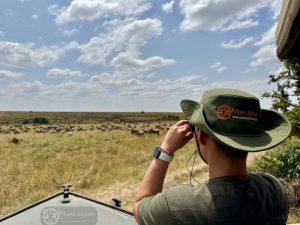
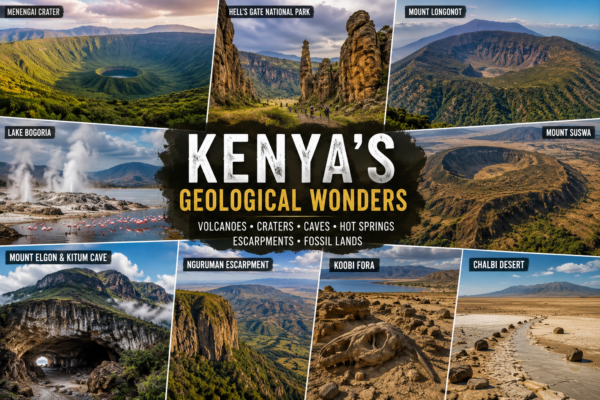
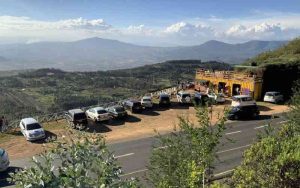
The first time you stand at the Great Rift Valley Viewpoint along the Nairobi–Nakuru highway, it’s difficult to grasp the sheer scale of what lies before you. The escarpment drops away into a vast landscape of shimmering lakes, extinct volcanoes, rolling plains, and distant hills that seem to disappear into the horizon. From this vantage point, the valley stretches as far as the eye can see, offering a glimpse of one of Earth’s greatest geological wonders.
For many travelers, this viewpoint is more than just a photo stop. It marks the beginning of an unforgettable journey through a region where nature, wildlife, culture, and history come together. As you descend into the valley, the scenery constantly changes. Dense forests give way to open savannahs, freshwater lakes transform into alkaline wetlands teeming with flamingos, and towering volcanic peaks stand as reminders of the powerful forces that shaped this landscape millions of years ago.
The Great Rift Valley in Kenya is not simply a destination, it is a collection of extraordinary experiences. It is where rhinos roam beneath acacia trees in Lake Nakuru National Park, where hippos surface beside boats on Lake Naivasha, where hikers walk through dramatic gorges in Hell’s Gate National Park, and where thousands of birds gather around shimmering lakes recognized as UNESCO World Heritage Sites.
Whether you are planning your first safari, looking for the best viewpoints in Kenya, or simply curious about the remarkable landscape that divides the country from north to south, this guide will help you discover everything the Great Rift Valley has to offer. From its fascinating geological origins to its most iconic attractions, you’ll learn why this remarkable region continues to captivate travelers from around the world.
What Makes the Great Rift Valley in Kenya So Special?
The Great Rift Valley is one of the most remarkable natural features on Earth. Rather than being a single valley, it is part of a massive geological system known as the East African Rift System, which extends for approximately 6,000 kilometers from the Middle East through eastern Africa to Mozambique. Kenya is fortunate to host one of its most dramatic and accessible sections, making the country one of the best places in the world to experience this extraordinary landscape.
What makes the Kenyan Rift Valley truly unique is the incredible diversity found within its boundaries. Within a single day’s drive, visitors can travel from towering escarpments to tranquil freshwater lakes, alkaline soda lakes painted pink by thousands of flamingos, dormant volcanoes, fertile farmlands, and wildlife-rich national parks. Few places offer such a striking combination of geological wonders and thriving ecosystems.
The valley is also one of Kenya’s most important wildlife regions. Protected areas such as Lake Nakuru National Park, Hell’s Gate National Park, and Mount Longonot National Park shelter an impressive variety of animals, including black and white rhinos, lions, leopards, giraffes, zebras, buffaloes, antelopes, and hundreds of bird species. The lakes scattered throughout the valley support internationally significant populations of water birds, making the region a paradise for birdwatchers.
Beyond its natural beauty, the Great Rift Valley holds immense scientific importance. Some of the world’s most significant archaeological discoveries have been made here, offering valuable insights into the origins and evolution of early humans. Sites around Lake Turkana and other parts of the Rift have helped scientists piece together chapters of human history dating back millions of years.
The valley is equally rich in culture. Communities such as the Maasai, Samburu, Kalenjin, Turkana, and Pokot have lived within this landscape for generations, each contributing traditions, stories, and ways of life that continue to shape the region today. Visitors often have opportunities to experience local cultures alongside wildlife adventures, creating a deeper appreciation of Kenya’s heritage.
It is this remarkable blend of geology, wildlife, biodiversity, history, and culture that makes the Great Rift Valley one of Kenya’s most unforgettable destinations.
The Story Behind the Great Rift Valley
Long before humans walked the Earth, powerful forces deep beneath the planet’s surface began reshaping eastern Africa. Over millions of years, movements within the Earth’s crust caused enormous cracks to form as tectonic plates slowly pulled apart. These movements created the vast depression now known as the Great Rift Valley.
This geological process is still taking place today, although at an incredibly slow pace measured in millimeters each year. Scientists believe that the African continent is gradually splitting into two tectonic plates, the Nubian Plate to the west and the Somali Plate to the east. While this transformation will take millions of years to complete, visitors to Kenya can already witness the dramatic landscapes produced by these ongoing forces.
The Rift Valley’s volcanic history is equally fascinating. Numerous volcanoes once erupted across the region, shaping the surrounding landscape with lava flows and volcanic ash. Some, like Mount Longonot, remain dormant and attract adventurous hikers eager to climb to their crater rims. Others, such as Menengai Crater, reveal the immense scale of ancient volcanic activity, with one of the world’s largest surviving calderas offering breathtaking views across the valley floor.
Volcanic activity also played a vital role in forming the Rift Valley’s many lakes. Some became freshwater lakes that support fish, hippos, and aquatic plants, while others developed into alkaline soda lakes rich in minerals that attract thousands of flamingos and other specialized bird species.
The geological significance of the Great Rift Valley extends beyond its landscapes. The sediment layers preserved within the valley have protected fossils of ancient animals and early human ancestors, making the region one of the world’s most important centres for paleontological research. Discoveries made in Kenya have contributed significantly to our understanding of human evolution and continue to attract scientists from across the globe.
Today, visitors don’t need to be geologists to appreciate the Rift Valley’s remarkable story. Every escarpment, volcanic crater, lake, and cliff tells part of an ancient narrative that has been unfolding for millions of years, transforming an ordinary road trip through Kenya into a journey through Earth’s history.
Where Is the Great Rift Valley in Kenya?
The Great Rift Valley runs almost the entire length of Kenya, entering the country near Lake Turkana in the north before continuing south through some of Kenya’s most famous landscapes and eventually crossing into Tanzania.
One of the reasons the Rift Valley is so popular with travellers is its accessibility. From Nairobi, it takes less than an hour to reach the famous Great Rift Valley Viewpoint, where visitors enjoy sweeping panoramic views over the valley below. This makes it one of the easiest natural wonders to experience, even on a short day trip.
As the valley stretches southward, it encompasses many of Kenya’s best-known destinations, including:
- Lake Naivasha
- Hell’s Gate National Park
- Mount Longonot National Park
- Lake Elementaita
- Lake Nakuru National Park
- Menengai Crater
- Lake Bogoria
- Lake Baringo
- Kerio Valley
- Lake Turkana
Together, these destinations showcase the extraordinary diversity of the Rift Valley. Some are famous for wildlife safaris, others for hiking, boating, birdwatching, or spectacular landscapes, making the region suitable for every type of traveller.
The valley is well connected by major highways, allowing visitors to combine several attractions into a single itinerary. Many travellers begin with Lake Naivasha before continuing to Lake Nakuru and, if time allows, venturing farther north to Lake Bogoria and Lake Baringo. Others include the Rift Valley as part of longer safari circuits to the Maasai Mara, creating one of Kenya’s most rewarding travel experiences.
Unlike many destinations that offer only one highlight, the Great Rift Valley rewards travellers at every stage of the journey. Even the drive itself becomes part of the adventure, with changing scenery, dramatic escarpments, and countless viewpoints making every kilometer memorable.
The Most Beautiful Places to Visit in the Great Rift Valley
One of the greatest strengths of the Great Rift Valley in Kenya is the variety of experiences it offers. No two destinations are exactly alike. One day you could be watching rhinos grazing on open plains, the next hiking to the rim of an ancient volcano or gliding across a freshwater lake while fish eagles soar overhead.
Here are the destinations that make the Great Rift Valley one of Kenya’s most rewarding regions to explore.
Lake Nakuru National Park
Nestled against the floor of the Rift Valley, Lake Nakuru National Park is one of Kenya’s most celebrated wildlife destinations. Although it is one of the country’s smaller national parks, it packs an incredible amount of biodiversity into a relatively compact area, making it ideal for first-time safari-goers and seasoned wildlife enthusiasts alike.
The park is internationally recognized as one of Kenya’s leading rhino sanctuaries. It provides a safe habitat for both endangered black rhinos and southern white rhinos, giving visitors one of the best chances of seeing these magnificent animals in the wild. Alongside rhinos, the park is home to lions, leopards, Rothschild’s giraffes, buffaloes, zebras, waterbucks, baboons, and more than 450 recorded bird species.
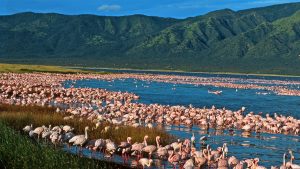
Lake Nakuru itself has long been famous for attracting vast numbers of flamingos. While their populations naturally fluctuate depending on changing water levels and food availability, the lake remains an exceptional destination for birdwatching throughout the year. Pelicans, African fish eagles, herons, cormorants, and countless other water birds add to the spectacle.
Scenic viewpoints such as Baboon Cliff, Lion Hill, and Out of Africa Lookout offer breathtaking panoramas of the lake and surrounding landscapes, making the park as rewarding for photographers as it is for wildlife lovers.
Lake Naivasha
Unlike many of the Rift Valley’s alkaline lakes, Lake Naivasha is a freshwater lake surrounded by lush vegetation, towering yellow-barked acacia trees, and an abundance of wildlife. Its calm waters create a peaceful contrast to the dramatic escarpments that frame much of the valley.
Boat safaris are among the most popular activities here. As visitors cruise across the lake, they often encounter pods of hippos resting just beneath the surface, while African fish eagles swoop down to catch fish with remarkable precision. Giraffes, zebras, waterbucks, and antelopes are frequently seen grazing along the shoreline.
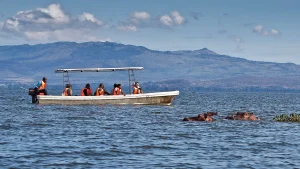
One of Lake Naivasha’s highlights is Crescent Island, a privately managed wildlife sanctuary where visitors can enjoy guided walking safaris among freely roaming giraffes, zebras, wildebeest, impalas, and gazelles. Without predators present, it offers a rare opportunity to experience African wildlife on foot.
The surrounding area is also known for its flourishing flower farms, luxury lodges, nature reserves, and excellent birdwatching opportunities, making Lake Naivasha a favourite stop for both relaxation and adventure.
Hell’s Gate National Park
Few national parks in Africa allow visitors to cycle, hike, or walk through landscapes surrounded by wild animals, but Hell’s Gate National Park offers exactly that.
Named after a dramatic narrow gorge carved by ancient volcanic activity, the park features soaring cliffs, towering rock formations, geothermal steam vents, and expansive grasslands that create one of Kenya’s most distinctive landscapes.
Cycling through the park has become one of its signature experiences. Visitors often pedal alongside zebras, giraffes, warthogs, buffaloes, elands, and gazelles while taking in spectacular scenery that inspired landscapes featured in Disney’s The Lion King.
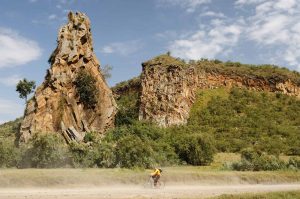
The dramatic Fischer’s Tower and Central Tower provide popular stops for rock climbers and photographers, while guided walks through sections of the gorge reveal fascinating geological formations sculpted over thousands of years.
Hell’s Gate also plays an important role in Kenya’s renewable energy sector. Nearby geothermal plants harness underground heat generated by the Rift Valley’s volcanic activity, demonstrating how the region’s geology continues to benefit the country today.
Mount Longonot National Park
Rising dramatically from the Rift Valley floor, Mount Longonot is one of Kenya’s most iconic volcanic peaks. Though dormant today, its perfectly formed crater reminds visitors of the powerful eruptions that once shaped the surrounding landscape.
The hike to the summit is challenging but immensely rewarding. The trail gradually ascends through scrubland before reaching the crater rim, where panoramic views stretch across Lake Naivasha, the Rift Valley escarpments, and the vast plains beyond.
For adventurous hikers, walking the entire crater rim offers an even more spectacular experience. Dense forest has flourished inside the crater itself, creating a striking contrast between the green interior and the surrounding dry landscapes.
Early morning hikes are particularly recommended, as cooler temperatures and clearer skies provide the best conditions for both climbing and photography.
Lake Elementaita
Often overshadowed by its more famous neighbours, Lake Elementaita is one of the Rift Valley’s hidden treasures. This shallow alkaline lake forms part of the Kenya Lake System UNESCO World Heritage Site, recognized for its outstanding ecological importance.
Its quiet shores provide vital breeding and feeding grounds for flamingos, pelicans, and numerous migratory birds, making it a paradise for birdwatchers seeking a less crowded experience.
The surrounding conservancies are home to giraffes, gazelles, zebras, elands, and other wildlife, while luxury lodges overlooking the lake offer peaceful escapes surrounded by spectacular scenery.
Because of its tranquil atmosphere, Lake Elementaita appeals particularly to photographers, honeymooners, and travellers looking to slow down and appreciate nature away from busier safari destinations.
Lake Bogoria
Lake Bogoria is unlike anywhere else in Kenya. Known for its steaming geothermal springs, bubbling hot springs, and powerful geysers, it offers visitors a glimpse into the volcanic forces that continue to shape the Rift Valley.
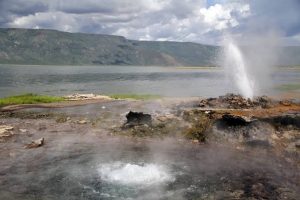
The lake’s mineral-rich waters have historically attracted enormous flocks of lesser flamingos, creating breathtaking pink ribbons along the shoreline when conditions are favourable. Although flamingo numbers vary naturally throughout the year, the lake remains one of East Africa’s premier birdwatching destinations.
Walking near the steaming geothermal fields is an unforgettable experience. The sight of boiling water erupting from beneath the Earth’s surface serves as a dramatic reminder that the Great Rift Valley remains geologically active.
Lake Baringo
Further north lies Lake Baringo, one of the few freshwater lakes in Kenya’s Rift Valley. Its rich biodiversity makes it especially popular among birdwatchers, with more than 470 bird species recorded in the area.
Boat excursions allow visitors to explore the lake’s islands, observe crocodiles basking along the shoreline, and occasionally spot hippos feeding in shallow waters. The surrounding communities also offer cultural experiences that introduce visitors to the traditions of local pastoralist groups.
Lake Baringo provides a completely different atmosphere from the southern Rift Valley lakes, rewarding travellers who venture further north.
Menengai Crater
Towering above Nakuru, Menengai Crater is one of the largest surviving volcanic calderas in the world, measuring approximately 12 kilometers across.
The crater’s viewpoint offers spectacular panoramic views over Nakuru City, Lake Nakuru, and the surrounding Rift Valley landscapes. On clear days, visitors can appreciate the immense scale of the ancient volcanic collapse that created this geological wonder.
The area has become increasingly popular for hiking, nature walks, photography, and even paragliding events, while local legends surrounding the crater add an intriguing cultural dimension to every visit.
Kerio Valley
Located between the Elgeyo Escarpment and the Tugen Hills, Kerio Valley is one of Kenya’s most scenic yet least-visited Rift Valley destinations.
The valley is characterized by dramatic cliffs, winding rivers, waterfalls, fertile farms, and breathtaking viewpoints that rival some of the country’s better-known landscapes.
Its quieter atmosphere makes it ideal for travellers seeking authentic experiences away from the more popular tourist circuit, while nearby escarpments provide outstanding opportunities for hiking, birdwatching, and landscape photography.
Wildlife You Can Expect to See
The Great Rift Valley is one of Kenya’s richest wildlife regions, supporting an astonishing diversity of habitats that range from freshwater lakes and alkaline wetlands to forests, grasslands, volcanic slopes, and rocky escarpments.
Depending on where you visit, you may encounter:
- Black rhinos
- Southern white rhinos
- Lions
- Leopards
- Buffaloes
- Rothschild’s giraffes
- Masai giraffes
- Zebras
- Warthogs
- Waterbucks
- Impalas
- Elands
- Hippos
- Hyenas
- Olive baboons
- Vervet monkeys
- Rock hyraxes
Bird enthusiasts are equally well rewarded. The Rift Valley supports hundreds of bird species, including flamingos, great white pelicans, pink-backed pelicans, African fish eagles, crowned cranes, kingfishers, herons, cormorants, African spoonbills, sacred ibises, and numerous migratory species.
This remarkable diversity means every visit offers something different, whether your interest lies in photographing iconic mammals, observing rare birds, or simply experiencing Kenya’s extraordinary natural heritage.
The Spectacular Rift Valley Lakes and Why They Matter
The chain of lakes scattered throughout the Great Rift Valley is one of the region’s defining features. Together, they create ecosystems that support millions of birds, countless mammals, thriving fisheries, and local communities that have depended on these waters for generations.
The lakes also tell a fascinating geological story. Some are freshwater, while others are alkaline soda lakes formed through volcanic processes over millions of years. These varying conditions create unique habitats that support different plants and animals.
Three of the Rift Valley’s lakes; Lake Nakuru, Lake Bogoria, and Lake Elementaita, form the Kenya Lake System UNESCO World Heritage Site, recognized globally for its exceptional biodiversity and its importance to migratory birds.
Beyond their ecological significance, these lakes sustain tourism, agriculture, research, conservation, and local livelihoods. Protecting them is therefore not only vital for wildlife but also for the communities and industries that rely on them.