Few animals in Kenya have captured the hearts of visitors and conservationists quite like Baraka the blind rhino. His story is one of resilience, survival, and the enduring importance of wildlife conservation. Living at Ol Pejeta Conservancy in Laikipia County, Baraka became one of the most recognized black rhinos in Africa and an ambassador for his species.
Born in the wild and later faced with life-changing challenges, Baraka’s journey demonstrated how conservation efforts can transform tragedy into hope. For thousands of visitors, meeting Baraka was more than a wildlife encounter, it was a lesson in determination and the value of protecting endangered species.
Early Life in the Wild
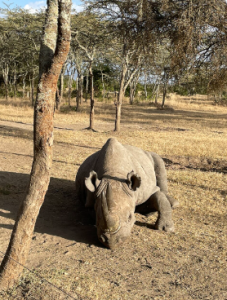
Baraka was born on 20 November 1994 on the plains of what is now Ol Pejeta Conservancy. He was among the first black rhinos born within the conservancy and spent his early years roaming freely across the landscape. As a young rhino, he established his own territory and displayed the strong, independent behavior typical of black rhinos.
Named “Baraka,” the Swahili word for blessing, he grew into a healthy and powerful male. During his years in the wild, he defended his territory against rival rhinos and thrived in the protected environment of Ol Pejeta.
The Accident That Changed Everything
Life took a dramatic turn in 2008.
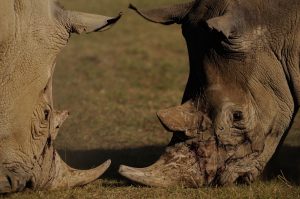
While defending his territory during a confrontation with another male rhino, Baraka suffered a severe injury that resulted in the loss of sight in his right eye. Although he continued to survive in the wild, the injury placed him at a disadvantage. Unfortunately, a cataract later developed in his remaining eye, eventually leaving him completely blind.
For a wild black rhino, blindness is an enormous challenge. Although rhinos naturally have poor eyesight, losing both eyes significantly reduces their ability to navigate safely, avoid danger, and locate resources. Conservationists realized that Baraka would struggle to survive on his own.
A New Home at Ol Pejeta Conservancy
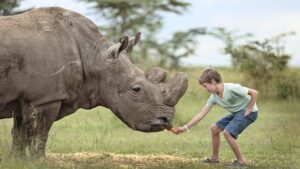
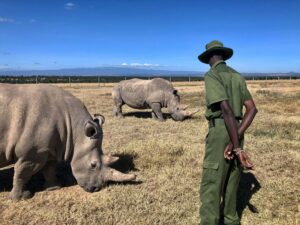
To ensure his survival, Ol Pejeta Conservancy relocated Baraka to a protected 100-acre enclosure where he could receive constant care and protection. There, he was monitored by dedicated keepers and protected from predators and other threats.
Rather than becoming a symbol of loss, Baraka became a symbol of hope.
His keepers helped him adapt to his new surroundings, and he quickly learned to navigate his enclosure using his other senses. According to Ol Pejeta Conservancy, Baraka developed a close bond with some of his caregivers and adjusted remarkably well to his new life.
Becoming an Ambassador for Conservation
Baraka soon became one of the most visited animals at Ol Pejeta Conservancy. Visitors could safely meet him, learn his story, and even feed him carrots from a specially designed platform. His gentle nature and remarkable resilience made him a favorite among tourists, students, and conservation enthusiasts.
Through these interactions, Baraka helped educate thousands of people about the threats facing black rhinos, including habitat loss and poaching. Conservation organizations frequently described him as an ambassador for his species because his story created a powerful connection between humans and wildlife.
His presence reminded visitors that every rhino matters, especially since black rhinos remain critically endangered.
Why Baraka Became So Famous
Several factors contributed to Baraka’s popularity:
- His remarkable survival despite complete blindness.
- His calm temperament around visitors.
- His role in conservation education.
- His inspiring relationship with his caregivers.
- His status as one of Kenya’s most recognizable rhinos.
For many visitors to Ol Pejeta Conservancy, meeting Baraka became one of the highlights of their trip. His story demonstrated that wildlife conservation is not only about protecting species but also about caring for individual animals.
Baraka’s Final Years
In his later years, Baraka continued to live under the care of Ol Pejeta Conservancy. Despite his blindness, he enjoyed a peaceful life within his secure enclosure, where he received veterinary attention, proper nutrition, and around-the-clock protection.
He remained an important educational figure, helping raise awareness about rhino conservation and inspiring support for wildlife protection efforts across Kenya and beyond. Visitors continued to meet him and hear his remarkable story.
The Death of Baraka the Blind Rhino
Baraka passed away in 2025 at the age of 30 after spending many years as one of Ol Pejeta Conservancy’s most beloved residents. His death marked the end of an extraordinary chapter in Kenya’s conservation history. Conservationists, wildlife lovers, and countless visitors mourned the loss of an animal that had inspired so many people through his resilience and gentle spirit.
Although his life was marked by adversity, Baraka’s story ultimately became one of triumph. He transformed from a vulnerable blind rhino into a global conservation icon whose legacy continues to encourage support for endangered wildlife.
Baraka’s Legacy Lives On
The legacy of Baraka extends far beyond the boundaries of Ol Pejeta Conservancy.
His story has helped educate thousands of people about the importance of protecting black rhinos and preserving Africa’s wildlife heritage. Through conservation programs, educational visits, and public awareness campaigns, Baraka continues to inspire action even after his passing.
Today, he remains a powerful symbol of resilience, compassion, and conservation success.
As Kenya continues its efforts to protect endangered wildlife, the story of Baraka the blind rhino serves as a reminder that every animal has a story worth preserving and every conservation effort can make a lasting difference.
To discover more inspiring conservation success stories, read our article on endangered wildlife conservation in Kenya.
Frequently Asked Questions
Who was Baraka the blind rhino?
Baraka was a black rhino living at Ol Pejeta Conservancy in Kenya. He became blind after losing one eye in a territorial fight and the other to cataracts.
When was Baraka born?
Baraka was born on 20 November 1994 in the wild at Ol Pejeta Conservancy.
Why was Baraka famous?
He became famous for overcoming blindness and serving as an ambassador for black rhino conservation.
Where did Baraka live?
He lived in a protected 100-acre enclosure at Ol Pejeta Conservancy in Laikipia County, Kenya.
How did Baraka die?
Baraka passed away in 2025 after living under the care of Ol Pejeta Conservancy for many years. His death was widely mourned within the conservation community.