Nature’s striking black is one of the most rewarding experiences for any traveller. In this guide, we share expert tips and insights.
The distinctive black and white stripes of zebras are the most unique feature, making them easily recognized on the open plains of the jungle. With the shape of a body resembling that of a donkey, given a name in Swahili “Punda Milia” which translate into “striped donkey”. These beautiful amazing creatures have two subspecies; the Plain zebra and Gravy’s zebra which can be found in both Kenya’s wildlife conservancies and national parks.
Witnessing the zebra, with its iconic stripes, truly embodies the spirit of nature’s striking black. These magnificent creatures are a highlight for anyone embarking on a Kenyan safari, offering a visual spectacle unlike any other.
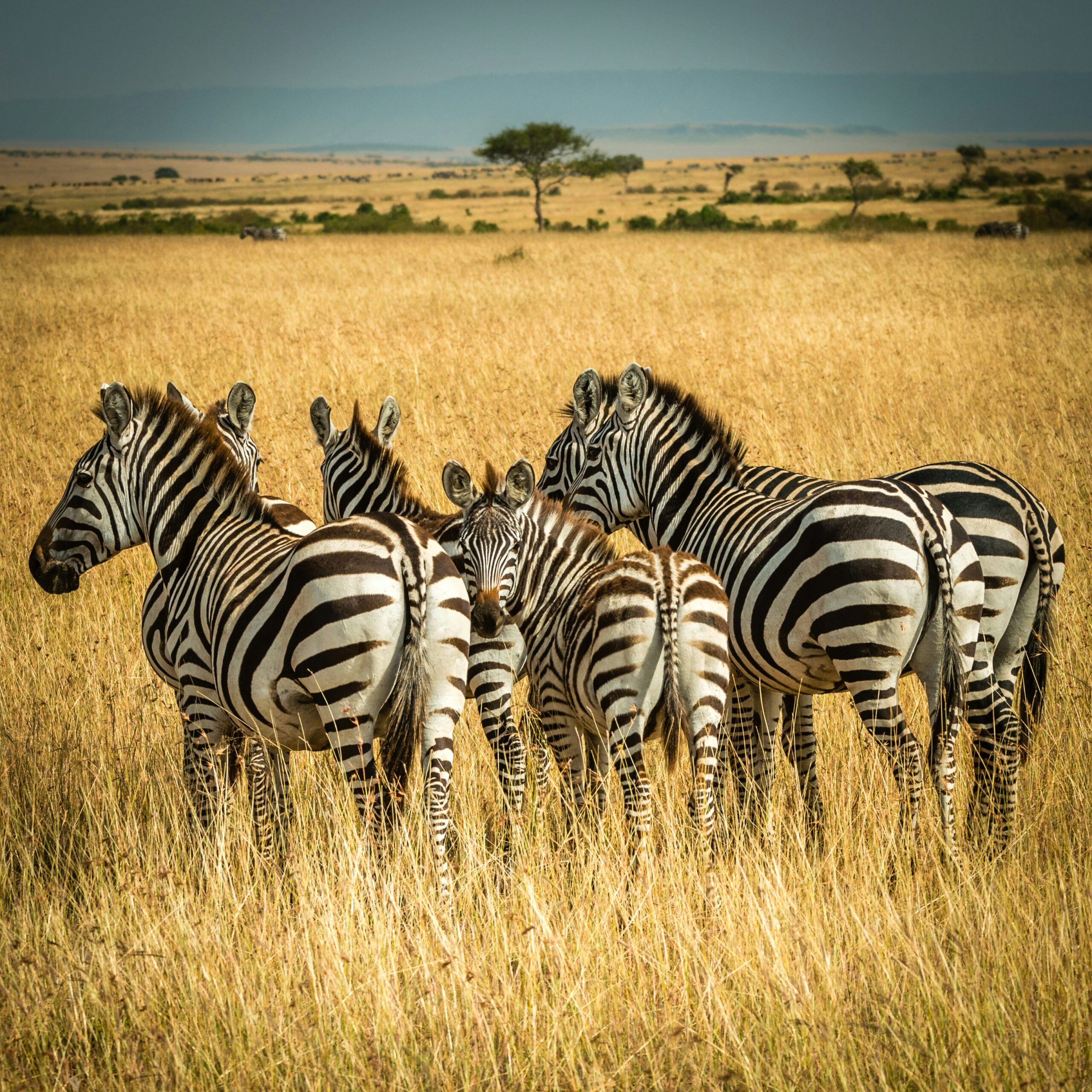
The sight of a zebra herd grazing peacefully is a quintessential African safari moment, a powerful reminder of nature’s striking black and its enduring beauty.
What’s the difference between the plain zebra and gravy’s zebra?
The two species of zebras; plain zebra and gravy’s zebra are the only species that can be found in Kenya and Tanzania. The plain zebra is commonly seen in national parks in Kenya while gravy’s zebra is found in the northern part of Kenya, Samburu.
The gravy’s zebra is typically larger than the plain zebra, with a taller shoulder height and a longer body with narrower and more delicate stripes that do not extend to the belly.
Both species, however, contribute to the breathtaking tapestry of Kenya’s wildlife, each a unique representation of nature’s striking black.
The plain zebras’ stripes are broader and wrap all the way around the belly. Each stripe pattern in each individual is entirely unique to that of a specific zebra. Much like a humans’ fingerprint not two zebras will have the same stripe pattern.
Why do zebras have stripes?: Nature’s Striking Black
Zebras have stripes primarily to detect biting flies and confusing predators with their dazzling stripes while in motion and providing thermoregulatory elements through the black and white stripes of the zebras.
This intricate design, a true marvel of evolution, showcases nature’s striking black in its most functional and beautiful form.
However, the most revolving theory is about flies, making it harder for them to land on the surface of the zebras’ skin and bite or sting due to the sharp and thin lining. The unique stripe act’s as a protection for zebras since predators get difficulties in spotting out one of the zebras in a group while in motion.
The collective movement of a herd, with each individual displaying nature’s striking black, creates a mesmerizing optical illusion that protects them from danger.
Zebras camouflage
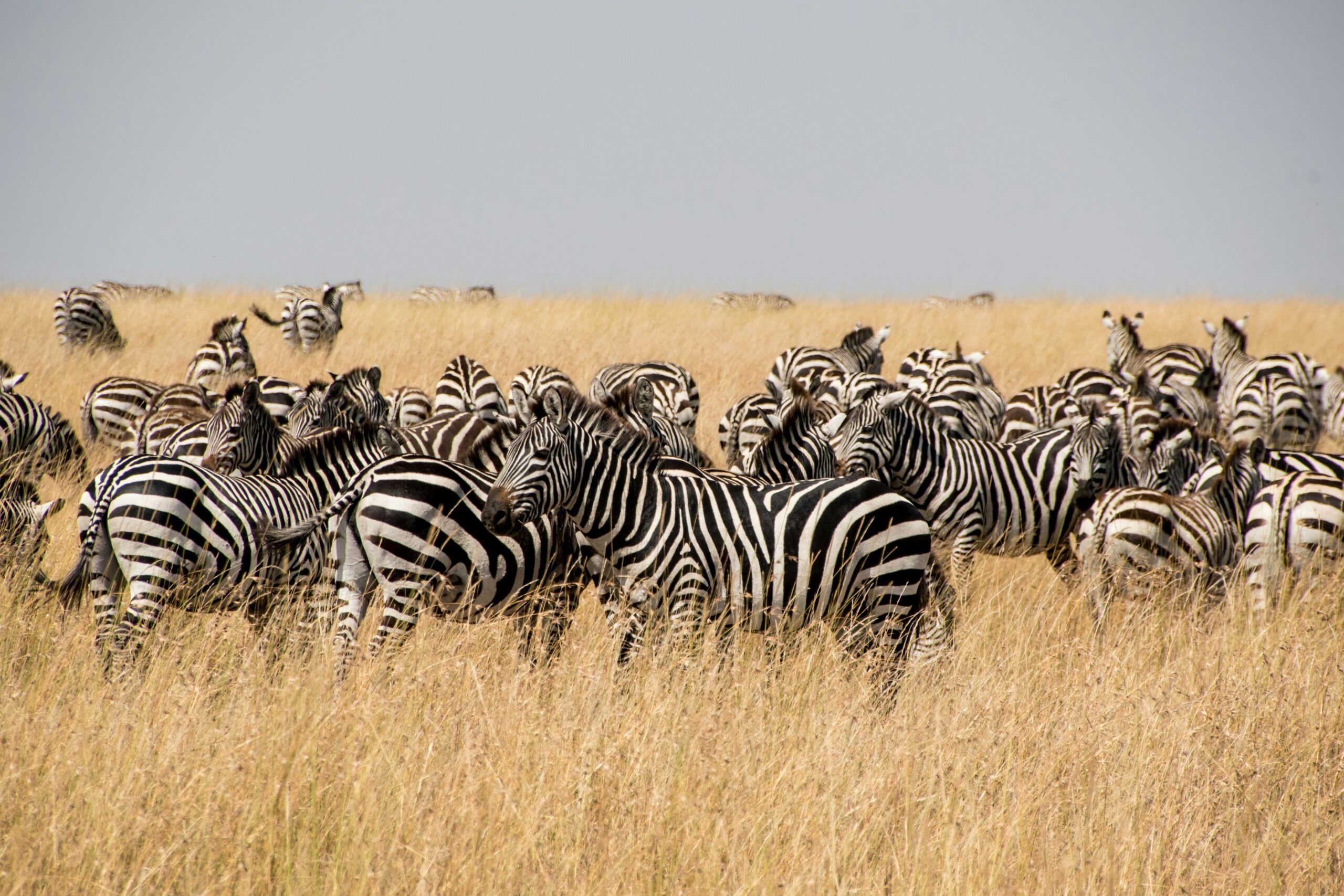
A zebra’s stripe is like a human’s finger print, with each Zebra having a unique stripe pattern. Zebras walk in large groups of herds in which they stay very close to each other, so as to blend their stripes and confuse predators from attacking. Every zebra has a slightly different pattern. The white stripes of the zebra are caused by lack of a melanin pigment in the zebra’s body that results to the black and white stripe.
Understanding the science behind these patterns helps us appreciate the complexity of nature’s striking black and its role in survival.
The Rare Albino zebra
Albino zebras are among the rarest wildlife wonders in Africa. Albino zebras exhibit partial albinism which is a genetic condition that affects melanin production leading to lack of pigmentation in their fur and skin. The partial albinism results to a golden white coat and faint black stripes. The albino zebra is a rare species, whereas they have been spotted in parts of Kenya and Tanzania. Their lack of natural camouflage makes them more vulnerable to predators.
While rare, the albino zebra offers a fascinating contrast to the typical display of nature’s striking black, highlighting genetic diversity within the species.
Tira, the polka dotted zebra
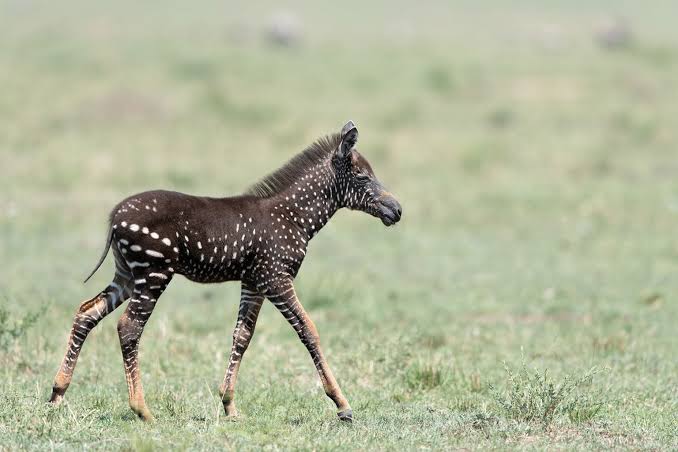
Nicknamed after the driver guide that spotted the stunning dark-skinned zebra with black spotted polka dots, Tira was such an eye – catching sight. Tira’s black spots are due to pseudo – melanism – a rare genetic mutation in the stripes pattern.
Tira’s unique appearance, a deviation from the classic stripes, still captivated observers, proving that even variations can embody nature’s striking black in an unexpected way.
Instead of black and white stripes, Tira has white dotted marks on a brownish coat, which gave him a polka-dotted appearance. While still resembling a zebra, the foal has a short hairless tail with no strips. This zebra’s distorted genetic mutation, makes it vulnerable to predators. Tira was spotted in Masai Mara on the year 2019.
The science behind the black and white stripes
Zebras stripes stand out among the African grazers. The black and white stripes seem so out of place in the plain savannahs. People ask, if the zebra is black with white stripes or its white with black stripes, but it absolutely the opposite. Zebras have long been known to be black with white stripes.
This fundamental understanding deepens our appreciation for the intricate details that make up nature’s striking black.
The white fur of the zebras represents the absence of melanin which is a pigment generated by the cells found in the hair. These cells are responsible to providing color in hair and skin to animals.
The interplay of melanin and its absence perfectly illustrates the artistry of nature’s striking black, creating a pattern that is both functional and aesthetically pleasing.
Where to see Gravy’s zebras
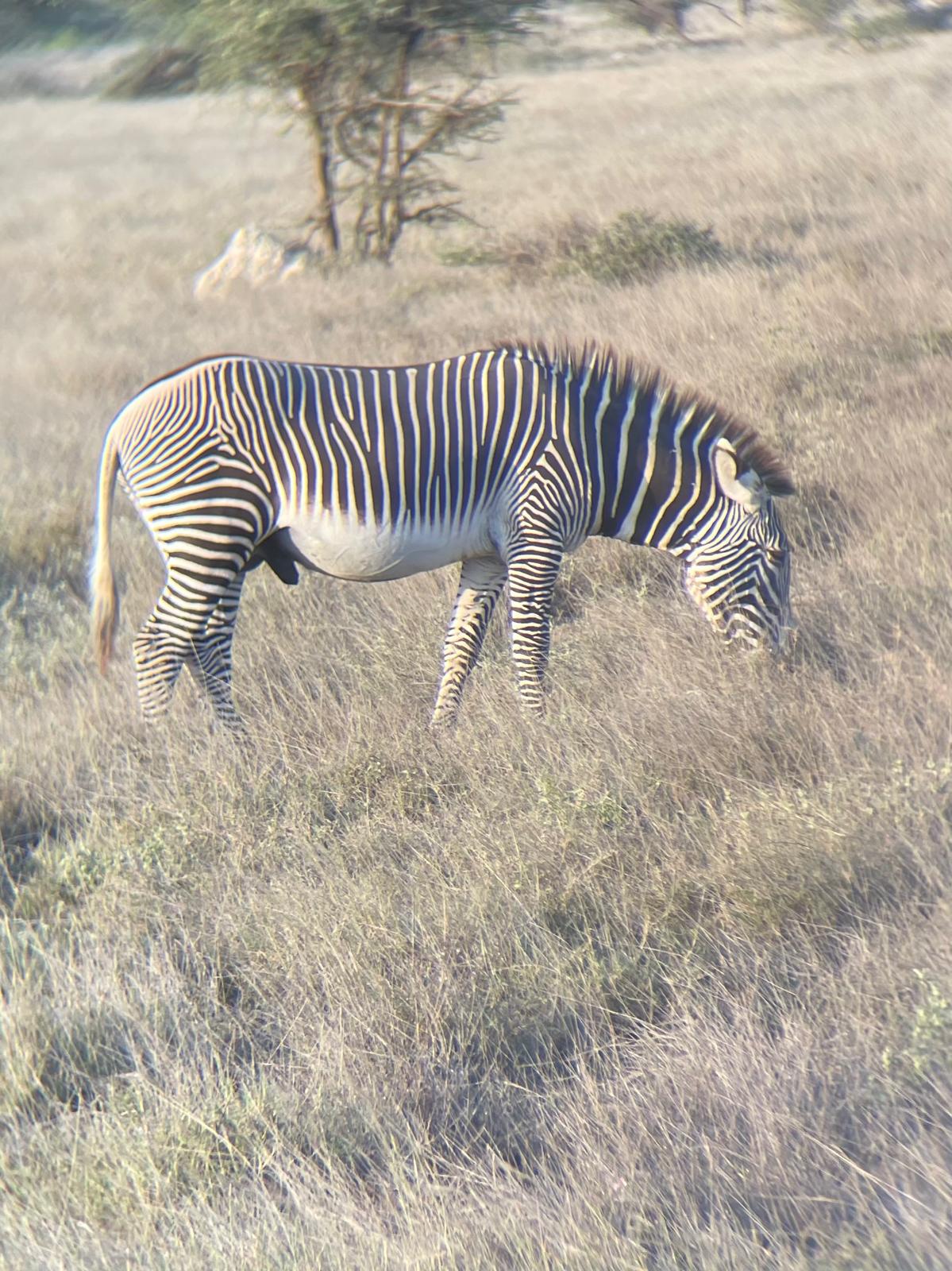
The northern part of Kenya: Samburu National Reserve is home to the endangered animals, renowned for the special five, Beisa Oryx, Reticulated giraffe, Somali ostrich, Generuk and the Gravy’s zebra. Samburu National Reserve boasts as the home to the gravy’s zebra. They can easily be spotted while on a Kenya safari in the northern part as they are adapted to dry semi-arid areas.
A safari to Samburu offers an unparalleled opportunity to witness this specific manifestation of nature’s striking black in its natural habitat.
Where to see Plain zebras
Mara; the epitome of Kenya’s safaris and wildlife, a home for the big five and a conservancy for some of the endangered species like the Masai giraffe and the rare species like the pangolin is also a home to a large number of the plain zebras, which migrate together with the wildebeest. They are the widest spread species, in parts of Kenya, Tanzania and Ethiopia, easily spotted in savannahs, grasslands and shrub land.
Observing these vast herds, a dynamic display of nature’s striking black, is an unforgettable highlight of any Masai Mara safari.