Use of technology in the tourism industry has undergone a remarkable transformation over the past two decades transforming travel ideas. What was once an industry heavily dependent on travel agents, paper maps, and printed brochures has evolved into a digitally connected ecosystem powered by artificial intelligence, mobile applications, big data, virtual reality, and smart digital travel guides. As technology continues to advance, it is not only making travel more convenient, accessible than ever and personalized but also reshaping how tourism businesses operate and compete in an increasingly digital world.
Artificial Intelligence (AI) Technology Use in Tourism Industry.
Artificial Intelligence (AI) is one of the most significant technological developments influencing the tourism sector. AI-powered chatbots and virtual assistants can answer customer inquiries instantly, recommend destinations, suggest travel itineraries and provide support 24/7. Airlines, hotels, and tour operators increasingly use AI to improve customer service, predict demand, optimize pricing, and streamline operations. Personalized travel suggestions based on user behavior and interests help travelers discover destinations, activities, and accommodations that match their preferences more accurately than ever before.
Online Booking Has Made Travel Easier.
Gone are the days when travelers had to visit travel agencies physically and rely on them to make reservations. Today, online boking platforms allow tourists to compare prices, check availability and book flights, hotel, tours and transportation within minutes. Websites and mobile applications have eliminated many of the traditional barriers to travel planning, giving consumers greater control over their decisions. This shift has increased transparency, competition, and accessibility across the tourism sector.
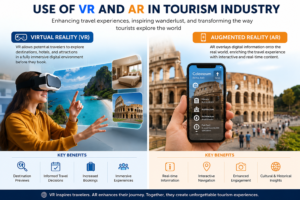
Use of Virtual Reality (VR) and Augmented Reality (AR).
Virtual tours is another use of technology in tourism industry that has transformed tourism sector, becoming increasingly popular among travelers researching destinations before making travel decisions. Through 360 degree videos, interactive maps and virtual reality experiences, tourists can explore hotels, national parks, museums and attractions from any corner of the world. Augmented reality enhances visitor experiences by overlaying digital information onto physical environments, enabling travelers to access historical facts, navigation assistance, and interactive content through their smartphones or smart devices.
Virtual tours help visitors gain confidence in their travel choices while providing tourism businesses with an effective marketing tool that showcases destinations in an engaging way.
Use of Mobile Technology in Tourism industry.
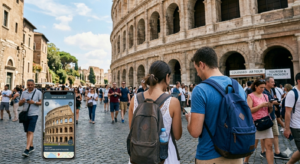
Mobile technology has become an essential travel companion. Smartphones now serve as travel guides, booking platforms, navigation tools, cameras, translation devices, and digital wallets all in one. Travelers can access maps, weather updates, transportation schedules, and destination information in real time. Mobile applications have made it easier to book accommodation, order transportation, find nearby attractions, and stay connected while traveling. The widespread use of mobile technology has significantly improved convenience, safety, and accessibility for tourists worldwide.
Use of Digital Guides to Enhance Visitor Experience.
Traditional paper guidebooks are gradually being replaced by digital travel guides and mobile applications. These digital tools provide real-time information about attractions, restaurants, accommodation, transportation, weather conditions and local events. Some of these digital guides include: GPS navigation, interactive maps, multilingual support and real time updates. This has enhanced the overall travel experience while reducing stress and uncertainty, particularly for international visitors.
Social Media Influence on Travel Decisions.
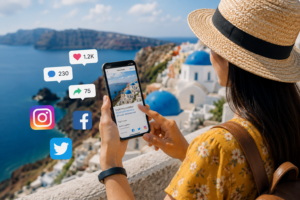
Social media platforms have become powerful forces in modern tourism. Platforms such as Instagram, YouTube, TikTok, and Facebook have become powerful tourism marketing tools. influence travel decisions by showcasing destinations through user-generated content, travel influencers, and visual storytelling. Travelers increasingly rely on social media for inspiration, reviews, recommendations, and travel tips. A single viral video or photograph can transform a previously unknown destination into a global tourism hotspot. For tourism businesses, social media has become a critical marketing channel for reaching audiences, building brand awareness, and engaging directly with potential customers.
The Future of Tourism Industry.
The future of tourism industry is expected to feature even more advanced innovations, including augmented reality experiences, smart hotels, autonomous transportation and increasingly sophisticated AI-powered travel assistants. Use of technology in tourism industry will continue to improve convenience, personalization and sustainability across the travel sector.
Use of Data Technology Analytics in Tourism Industry
Big data and analytics are enabling tourism businesses to better understand customer behavior and market trends. Hotels, airlines, tour operators, and destination managers can analyze travel patterns, customer preferences, seasonal demand, and booking behaviors to make informed decisions. This data-driven approach allows businesses to personalize services, improve customer satisfaction, optimize pricing strategies, and enhance operational efficiency. Tourism destinations can also use data to manage visitor flows, reduce overcrowding, and support sustainable tourism initiatives.
Improved Travel Safety and Security
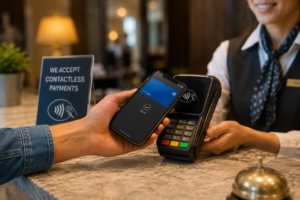
Technology is also improving safety and security within the tourism industry. Travelers can access emergency information, health updates, weather alerts, and travel advisories in real time. Contactless payments, digital identification systems, and mobile ticketing have streamlined transactions while reducing physical contact. Advanced monitoring systems and communication technologies help tourism providers respond more effectively to emergencies and ensure visitor safety.
Hotels, airlines, lodges, camps, tourism stakeholders including national governments and private sectors work together to provide security and safety for all visitors and ensure a safe and secure environment. There is use of CCTV surveillance systems, 24-hour security personnel, emergency response procedures measures to create a comfortable and secure environments for visitors.
Technology is transforming the tourism industry from a largely transactional industry into a highly connected, personalized, and data-driven experience. It has empowered travelers with information, convenience, and flexibility while providing tourism businesses with new tools to improve efficiency and customer satisfaction. As innovations such as artificial intelligence, virtual reality, smart destinations, and sustainable tourism technologies continue to evolve, the future of travel will become even more immersive, intelligent, and accessible. For travelers and tourism businesses alike, embracing technology is no longer optional, it is essential for success in the modern tourism landscape.
While use of technology in tourism industry makes trip planning easier than ever, partnering with experienced operators such as Bison Safaris ensures a seamless safari experience, combining digital convenience with expert local knowledge.