When tourists plan their journey to Kenya, their attention often turns to five magnificent animals famously known as the Big five: the lion, the giant elephant, the formidable buffalo, the powerful rhinoceros and the elusive leopard. Historically these animals earned their reputation as some of Africa’s most challenging and dangerous species to hunt on foot. Today, they remain among the most sought-after wildlife encounters for visitors exploring the African wilderness. Yet beyond these celebrated icons, there is an extraordinary world waiting to be discovered.
Meet the ugly five: the warthog, spotted hyena, wildebeest, marabou stork and vulture. Although their appearances may not win beauty contests, their distinctive features, fascinating behaviors and ecological contributions make them equally worthy of admiration.
Every creature has a story to tell and offers a different perspective on the wonders of wildlife. These remarkable animals remind us that the value of nature extends far beyond physical appearance, and that sometimes,
the most extraordinary beauty is found where we least expect it.
The Five Species
The Spotted Hyena- The Laughing Hunter
Often recognized by its distinctive laughing calls, the spotted hyena is one of Africa’s most misunderstood predators. Its unusual body structure, characterized by powerful forelimbs and shorter hind limbs, gives it a distinctive sloping back.
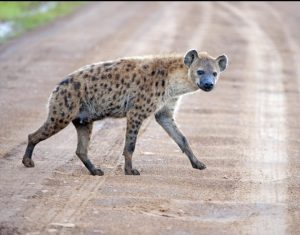
Females are generally larger than males and dominate the complex social hierarchy of their clans. contrary to popular belief, the spotted hyena is not simply a scavenger. It is an accomplished hunter with powerful jaws and specialized
teeth capable of crushing bones, allowing it to utilize almost every part of its prey.
As a predator and scavenger, it plays an important ecological role by helping regulate prey populations and removing carcasses from the environment. Perhaps one of its most fascinating characteristics is the unusual reproductive anatomy of females, which posses an elongated clitoris resembling a male reproductive organ. This remarkable adaptation make this species particularly interesting to wildlife enthusiasts.
The Warthog- More Than Just a Funny Face
Often recognized by its unusual facial appearance, the warthog is one of the most entertaining characters of the African savannah. Popularly associated with the name pumba from the famous lion king film, this remarkable mammal has prominent facial warts, an elongated snout and curved tusks that give it a distinctive appearance.
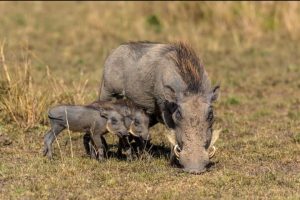
Its coarse mane, extending along the neck and back, adds to its unusual look. One of its most amusing feeding behaviors is kneeling on its front legs to graze on short grasses, almost as though bowing in gratitude for its meal. Warthogs are also remarkably adapted to survival, frequently occupying abandoned aardvark burrows. When entering these shelters, they often reverse inside, positioning their tusks towards potential predators.
When threatened in the open, their speed and agility help them escape predators such as lions. Imagine a family of warthogs running across the open savannah, their tails held upright like little antennas. This distinctive behavior makes them particularly entertaining to watch during a game drive.
The Marabou Stork- Nature’s Environmental Minister
With its imposing appearance and a wingspan that can exceed two meters, the marabou stork is one of Africa’s most distinctive birds. Its largely featherless head and neck, enormous bill and dangling throat pouch give it an unusual appearance that has earned it a place among the ugly five. An opportunistic feeder, the marabou stork consumes a variety of food, including carrion, fish, insects and small vertebrates.
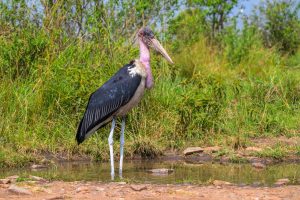
Its powerful bill allows it to handle different food sources, while its scavenging habits make it an important contributor to ecosystem health. Often regarded as nature’s environmental minister, this remarkable bird helps remove carcasses from the environment, contributing to nutrient recycling and reducing the persistence of decaying animal remains.
Its bare head and neck are also thought to be useful adaptations for feeding on carcasses, as they reduce the amount of contaminated material that can cling to feathers. Visitors to Kenya may encounter marabou stock in urban environments such as Nairobi, as well as suitable wetlands and wildlife areas, including the Maasai Mara and lake Nakuru region.
The Vulture- The Unsung Guardian of The African Savannah
Often misunderstood and frequently overlooked, vultures are among Africa’s most important scavenging birds. Their bald or sparsely feathered heads, powerful hooked bills and broad wings are distinctive adaptations that make them highly efficient at locating and consuming carcasses.
Their impressive flight abilities allow them to soar over vast landscapes, exploiting rising warm air currents known as thermals to remain airborne for extended periods with minimal effort. Combined with exceptional eyesight, this enables them to locate carcasses from considerable distances, sometimes using the movement of other scavengers as clues to the location of food. Interestingly different vulture species occupy specialized feeding niches. For instance, the powerful-billed lappet-faced vulture can tear through tough hides and tendons, while the white backed vultures commonly feed on softer internal tissues.
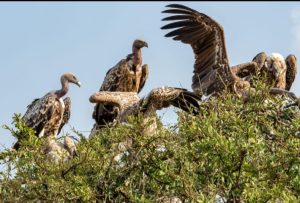
Smaller species such as the hooded vulture, can access scraps and feed in areas that larger birds may find difficult to reach. This ecological arrangement, known as resource partitioning, allows different species to utilize the same food resource while reducing some competition. Beyond their unusual appearance, vultures are essential to ecosystem health. By rapidly consuming carcasses, they help remove decaying organic matter and reduce opportunity for certain disease-causing organisms to persist and spread. Unfortunately these remarkable birds face serious conservation challenges, particularly poisoning, habitat loss, electrocution and illegal trade in their body parts.
Poisoned carcasses can kill numerous vultures at once, making this one of the most devastating threats to their
populations. Through conservation initiatives led by organizations such as Kenya Wildlife Service and its partners, efforts are being made to protect these indispensable birds. Their survival is not simply about preserving another bird species, its about maintaining the ecological balance of the African wilderness.
The Blue Wildebeest- The Great Traveller of The African Plains
Recognized by its massive head, distinctive beard, curved horns and sloping back, the blue wildebeest, also known as the bearded gnu, is one of the most iconic grazers of the African savannah. Its coat, which carries bluish-grey and silvery tones, gives it the name blue wildebeest, distinguishing it from its close relative, the black wildebeest.
Primarily a grazer, the wildebeest favours short, fresh and nutritious grasses. It often shares grazing grounds with zebras whose preference for taller and coarser grasses can help expose shorter vegetation for other grazers.
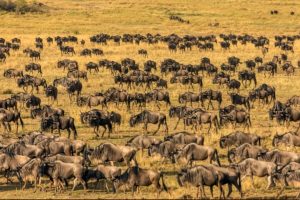
One of natures greatest wildlife spectacles is the annual great migration, during which vast herds move across the Serengeti-Mara ecosystem in search of fresh grazing and water. Driven largely by seasonal rainfall and changing vegetation, this remarkable journey brings the herds into Kenya’s Maasai Mara , generally between July and October, although the timing varies each year. Their movements sustains an extraordinary ecological relationship, providing seasonal feeding opportunities for predators such as lions and hyenas.
At the Mara River, hungry Nile crocodiles also await opportunities to catch wildebeest attempting to cross. Beyond the spectacle, the migration is a powerful reminder of how closely wildlife survival is connected to the rhythms
of nature.
Beyond the Animals: Discovering Kenya’s Wildlife Destinations
Kenya’s wildlife is spread across a remarkable variety of habitats, and each destination offers a different opportunity to appreciate nature. From the sweeping grasslands of the Maasai Mara to the wetlands of Amboseli and the bird-rich shores of lake Nakuru, the country offers much more that encounters with the famous Big five.
Maasai Mara National Reserve- The Theatre of Wildlife
The Maasai Mara is one of the Kenya’s most celebrated wildlife destinations and an excellent
place to explore the world of the ugly five. Its open grasslands support spotted hyenas, warthogs,
vultures and large populations of blue wildebeest.
Between roughly July and October, depending on seasonal rainfall and migration patterns, the reserve may host enormous herds of wildebeest arriving from Serengeti ecosystem. Their movement attracts predators and creates some of the Africa’s most dramatic wildlife encounters.
Amboseli National Park- Wildlife Beneath Kilimanjaro
Amboseli is widely recognized for its large elephant herds and spectacular views of Mount
Kilimanjaro.
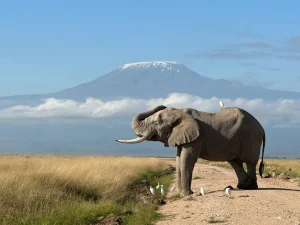
Its open plains, seasonal wetland and surrounding habitats support a variety of wildlife, including hyenas, warthogs and scavenging birds. It offers visitors an opportunity to appreciate how wildlife adapts to an ecosystem shaped by seasonal water availability.
Lake Nakuru National Park- A Paradise for Birdlife
Lake Nakuru is particularly famous for its birdlife and its important role in Rhino conservation.
Its lake , woodlands and surrounding grasslands create habitats for a wide range of birds and
mammals. It is also a useful destination for introducing visitors to scavenging birds such as
vultures and marabou stock, while keeping an eye out for warthogs and other wildlife.
Nairobi National Park- The Wilderness Beside the City
Just outside Kenya’s capital lies Nairobi National Park where open grasslands and riverine
habitats support wildlife against a backdrop of the city’s skyline. It provides a fascinating
contrast between urban development and the natural world. Visitors can enjoy a game drive
without travelling far from the city, while also encountering interesting birdlife in and around
Nairobi.
Why The Ugly Five Matter to The Ecosystem
Beyond their unusual appearances and fascinating bahaviors, the ugly five play important roles in maintaining the health and balance of African ecosystems. Each species contributes differently, reminding us that nature depends on more than its most celebrated animals.
Nature’s Cleanup Crew
Spotted hyenas, vultures and marabou stocks are important scavengers. By consuming carcasses and animal remains, they help remove decaying organic matter from the environment and accelerate nutrient recycling. This also limits the time carcasses remain available to certain disease causing organisms. Without these natural cleaners, the ecosystem would lose an important part of its waste processing system.
Maintaining the Balance of Nature
Spotted hyenas are not merely scavengers, they are skilled predators by hunting and feeding on different prey species, they contribute to natural population regulation. Their presence is part of the complex relationship between predators, prey and other scavengers that help sustain healthy wildlife communities.
Shaping the African Grasslands
The blue wildebeest is more than an iconic traveller of the Great Migration. Through grazing, wildebeest influences grass growth, vegetation structure and nutrient distribution. Their movements across vast landscapes also transports nutrients and supports other organisms within the ecosystem.
The Importance of Every Species
Even the warthog, often remembered for its funny appearance and amusing feeding habits, has an ecological contribution. Through grazing, digging and using burrows, it influences the ground around it and creates opportunities for other animals to benefit from modified habitats or abandoned shelters.
Ultimately, the ugly five reminds us that every species has a place in nature. Their ecological importance is not determined by their appearance, popularity or ability to attract tourists. Protecting Africa’s wildlife means protecting the entire web of life, from the magnificent lion to the often overlooked scavenge.
Beyond Beauty: Every Creature Has a Story
Africa’s wilderness is not defined by the beauty of its most famous animals alone. It is a living world where every creature, regardless of size, appearance or reputation, contributes to the greater story of nature. The ugly five challenges us to look beyond first impressions and appreciate the extraordinary adaptations, behaviors and ecological roles that make these animals special.
So, on your next Kenyan safari, take a moment to look beyond the big five. Watch a warthog kneel to feed, listen to the calls of the spotted hyena, admire the soaring flight of vulture or witness the incredible movement of wildebeest across the plains. You may discover that some of Africa’s most unforgettable wildlife encounters come from the animals you never expected to admire. Come to Kenya, explore its wilderness and discover the beauty beyond appearance with Bison Safaris.
Contact us to plan your next adventure.