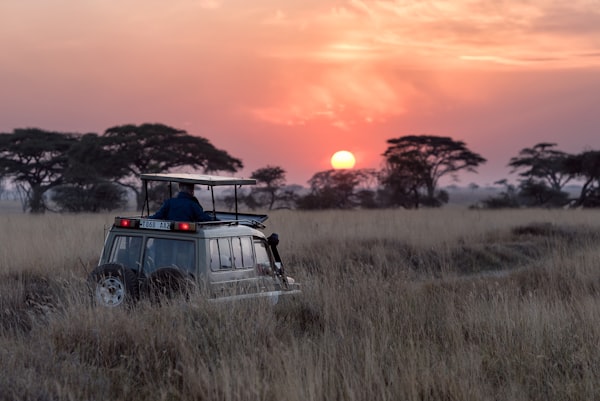
scavengers are often overlooked during African safaris with visitors most focused on iconic wildlife such as the big five. However, the role of scavengers in the African ecosystem is as important as that of predators and herbivores. These animals perform a vital ecological role by feeding on dead animals and organic waste, helping maintain healthy ecosystems across Africa’s savannahs, forests, wetlands, and deserts. They are usually referred as nature`s clean up crew.
From vultures soaring in the sky to jackals and hyenas patrolling the plains, scavengers are essential to health of Africa diverse ecosystem. Understanding their contribution helps appreciate wildlife but also highlights why their conservation is important.
What are Scavengers?
Scavengers are animals that feed primarily on dead or decaying organic matter rather than hunting live preys. They consume carcasses and help in removing dead animals from the environment before they became a breeding ground for bacteria and diseases.
While some scavengers occasionally hunt, many rly on carrion as a food source. These animals are sometimes viewed negatively due to their feeding habits, but they perform essential functions that support the survival of countless other species. Their feeding habits play a crucial role in keeping the ecosystem clean and healthy.
The Role of Scavengers in the African Ecosystem.
The role of scavengers in the African ecosystem extends far beyond simply eating dead animals.
-
1. Preventing the Spread of Diseases.
- One of the most important role of scavengers in the African ecosystem play is preventing the spread of diseases. Animal carcasses left to decompose can harbor harmful bacteria, viruses, and parasites that pose risks to wildlife, livestock, and humans. By rapidly consuming carcasses, scavengers remove potential breeding grounds for disease-causing organisms.
- Vultures, for instance, are effective in this role as they possess acidic digestive stomachs capable of destroying harmful pathogens such as anthrax and botulism. This unique adaptation allows them to safely consume carcasses that might be hazardous to other animals.
2. Recycling Nutrients.
- Another role of scavengers in African ecosystem is they help recycle nutrients back to the soil. When they consume dead animals, organic matter is broken down and returned to the environment. These nutrients return to the soil through waste products and decomposition, supporting plant growth and maintaining healthy food chains and completing the natural cycle of life. This process helps sustain the productivity of grasslands, forests, and other habitats that support Africa’s rich biodiversity.
-
3.Supporting Ecological Balance.
- Every species plays a role in maintaining ecological balance and scavengers are no exception. Predators such as lions, leopards, cheetahs, and wild dogs often leave behind remains after feeding. Scavengers then utilize these leftovers, ensuring that little is wasted. They prevent waste from accumulating and ensures that valuable nutrients remain with the ecosystem.
Common Scavengers Found in Africa Ecosystem.
Vultures.
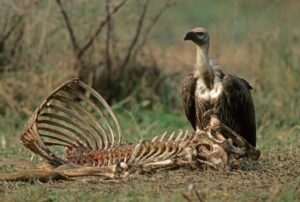
Vultures are among the most efficient scavengers in the world. They include species such as White-backed Vulture, Ruppell’s Vulture, and Lappet-faced Vulture can locate carcasses from great distances using their exceptional eyesight. Once a carcass is found, vultures can strip it clean within a remarkably short period, preventing decomposition and reducing disease risks.
Spotted Hyenas.
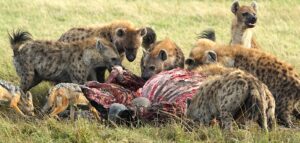
Although often misunderstood as pure scavengers, spotted hyenas are skilled hunters capable of catching their own preys and are effective scavengers. . Their powerful jaws can crush bones and consume parts of carcasses that many other animals cannot utilize. This ability ensures that nutrients contained within bones and tough tissues are returned to the ecosystem rather than going to waste. Hyenas therefore contribute significantly to nutrient cycling and ecological efficiency.
Black-Backed Jackal: The Opportunistic Cleaner.
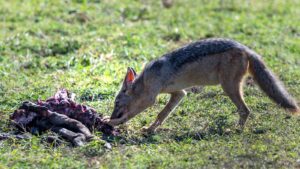
The Black-backed Jackal is one of Africa’s most adaptable scavengers. Found across savannahs, grasslands, and semi-arid regions. Jackals are often among the first animals to arrive at a carcass after vultures have located it. Their keen sense of smell allows them to detect food sources from considerable distances. By consuming meat scraps and remains that larger scavengers leave behind, jackals help ensure that little organic matter goes to waste. Beyond scavenging, black-backed jackals also help control populations of rodents and other small animals, making them valuable contributors to ecosystem balance.
Marabou Storks: Nature Garbage Collector.
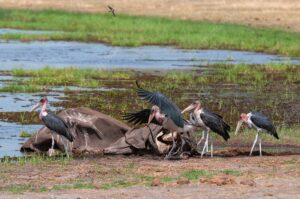
The Marabou Stork is one of Africa’s most recognizable scavenging birds. Often seen near carcasses, wetlands, rubbish dumps, and riverbanks. Their bald heads, similar to those of vultures, are an adaptation that helps keep them clean while feeding inside carcasses. Marabou storks consume a wide variety of food, including carrion, fish, insects, small animals, and food waste. This flexible diet allows them to thrive in both natural ecosystems and areas influenced by human activity.
Why Scavengers Matters to Safari Tourism.
Many visitors overlook scavengers during game drives yet these animals provide fascinating wildlife viewing opportunities. Watching vultures descend from the sky, a marabou stork silhouetted against a sunset, observing hyenas competing over carcass offers valuable insight into the natural processes that keep African ecosystem functioning. Observing scavengers at work allows visitors to appreciate the interconnected relationships that keep ecosystems healthy and balanced.
Threats Facing African Scavengers.
- Despite scavenges having a vital role in the African ecosystem, their numbers are declining due to human activities. Major threats include:
- Poisoning from contaminated carcasses
- Habitat loss
Illegal wildfire poisoning - Electrocution from power lines
- Human wildlife conflicts
- Climate change
Vultures have experienced particularly severe declines in several African countries making conservation urgent.
Conservation Efforts.
Due to various reason that threatens the extinction of the role of scavengers in African ecosystem, wildlife organization, governments, and conservation groups are working together to ensure that the role of scavengers in the African ecosystem is protected through:
- Anti-poisoning awareness campaigns
- Habitat protection
- Wildlife monitoring programs
- Community education initiatives
- Research and conservation partnerships.
Protected areas and national parks also play a crucial role in scavenger conservation. Parks such as Maasai Mara National Reserve, Amboseli National Park, and Meru National Park provide safe habitats where scavengers can feed, breed, and move freely. Responsible tourism helps generate funding that supports wildlife protection and habitat conservation and ensuring the role of scavengers in the African ecosystem is not neglected.
The role of scavengers in the African ecosystem is indispensable. These over-looked animals ensure Africa ecosystem remains healthy and vibrant. Whether its a soaring vulture, a resourceful jackal, a strong powerful hyena or a marabou stork, every scavenger contributes to the survival of countless other species.
The next time you embark on a safari, take a moment to appreciate natures cleanup crew work. Their work may happen behind the scenes but it is essential for sustaining the breathtaking landscapes and extraordinary wildlife that make Africa one of the best world`s greatest natural treasures.