M-Pesa for tourists in Kenya can sound more complicated than it actually is. You may have read that Kenyans use mobile money for almost everything and started wondering whether you need a Kenyan SIM card, an M-Pesa account, or both before you can comfortably travel around the country.
The short answer is that you do not have to arrive in Kenya with M-Pesa already set up. You can use international cards, cash, roaming or an eSIM, depending on your itinerary. However, M-Pesa for tourists in Kenya can be extremely convenient when you are making smaller local payments, travelling independently or staying in the country for more than a few days.
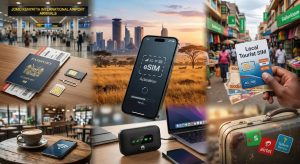
The important thing is understanding what you actually need before you spend your first hour in Kenya standing at an airport counter trying to arrange a service you may barely use.
What Is M-Pesa and Why Is It So Common in Kenya?
M-Pesa is a mobile money service that allows people to send, receive and store money through their mobile phones. It has become deeply woven into everyday life in Kenya, which means you will encounter it in places where a visitor might normally expect to see a card machine.
A restaurant may display a till number. A small shop may ask for a mobile payment. A driver or local service provider may give you a mobile number or payment details rather than asking for cash. Even when larger hotels and businesses accept international cards, smaller everyday transactions can work differently.
That is why searches for M-Pesa for tourists in Kenya are so common. Visitors see how extensively Kenyans use mobile money and naturally wonder whether they are missing something by not having it.
You are not. M-Pesa is useful, but it is not a requirement for entering Kenya or going on safari.
Do Tourists Need M-Pesa in Kenya?
No. Tourists can visit Kenya without registering for M-Pesa.
For someone arriving for a short, organized safari, the need may be surprisingly small. Your airport transfer may already be arranged, accommodation may have been paid for, safari transport may be included and major activities may already be covered by your tour operator. In that situation, you may only need money for personal purchases, drinks, meals outside your package, tips and souvenirs.
For an independent traveller, the calculation is different. If you are moving around Nairobi on your own, using local services, buying from smaller businesses and making frequent everyday payments, M-Pesa for tourists in Kenya can become much more useful.
The length and style of your trip therefore matter more than the fact that M-Pesa is popular in Kenya.
You do not need to copy the payment habits of a local resident simply because you are visiting the country. Instead, look at how you will actually spend your days.
Do You Need a Kenyan SIM Card for M-Pesa?
This is where M-Pesa for tourists in Kenya connects directly with the question of SIM cards.
A traditional M-Pesa account is connected to a Kenyan mobile line, so a visitor who wants to use M-Pesa will generally need to obtain and register a local SIM that supports the service. Kenya’s current telecommunications regulations require foreign visitors registering a SIM to provide identification such as a valid passport or Foreign National Registration Certificate.
The passport requirement is important because you should not expect to walk into an informal roadside stall, buy an anonymous SIM and immediately use it for mobile money. Registration is part of the process.
For travellers who want M-Pesa for tourists in Kenya, the practical sequence is therefore straightforward: obtain a local SIM through an authorized outlet, register it using the required identification and then arrange the M-Pesa service.
But there is an important second part to this answer.
You do not need a Kenyan SIM simply because you are visiting Kenya.
If your existing mobile plan provides affordable roaming, or your phone supports an eSIM and you have arranged a suitable data plan, you can stay connected without changing your physical SIM.
That distinction can save you unnecessary hassle when you arrive.
Should You Get a Kenyan SIM at the Airport?
This is one of the most useful things for a first time visitor to understand.
Getting a Kenyan SIM at the airport can be convenient, especially if you want a local number immediately. But convenience does not mean that it should automatically be your first task after landing.
Imagine arriving at Jomo Kenyatta International Airport after a long international flight. You have collected your luggage, your safari driver is waiting outside and you are eager to get to your hotel. You then remember that you were told you absolutely need a Kenyan SIM for M-Pesa.
You join a queue, complete registration and spend time setting everything up before you have even left the airport.
For some travellers, that is perfectly worthwhile. For others, it is unnecessary.
If you already have roaming or an eSIM, you can contact your driver, access maps, message your family and use the internet without immediately getting a Kenyan number. Once you reach your hotel or begin your safari, you can decide whether M-Pesa for tourists in Kenya would actually make your trip easier.
This is particularly relevant for Bison Safaris travellers. If your airport pickup and safari arrangements are already confirmed, there is usually little reason to make SIM registration the thing that delays your departure from the airport.
Can Foreign Tourists Register for M-Pesa?
Yes. Foreign visitors can register for M-Pesa using an accepted identification document, with a valid passport being one of the accepted documents.
The registration process requires the customer to be physically present for identification and registration. This is why you should use an authorized mobile operator shop, agent or customer care point rather than relying on someone offering to register a line on your behalf.
For M-Pesa for tourists in Kenya, keeping control of your own registration is particularly important. Your mobile number and M-Pesa account should be registered in your name and your PIN should remain private.
Once the account is active, you can use it for the types of mobile payments supported by the service. How useful that becomes depends on where you are travelling and what you are buying.
What Can Tourists Pay for With M-Pesa?
M-Pesa can be useful for everyday expenses rather than just major travel purchases.
You might use it to pay a small local business, settle a bill, purchase something from a shop or pay an individual service provider. It can be especially convenient when a business does not have a card terminal or when you want to avoid handling small amounts of cash.
This is one reason M-Pesa for tourists in Kenya can be particularly attractive to independent travellers. The more you interact with everyday local businesses, the more situations you may encounter where mobile money is convenient.
A safari traveller staying mainly in lodges may have fewer reasons to use it. A visitor spending two weeks exploring Nairobi, travelling independently and using local services may find it much more valuable.
There is no single answer that applies to every tourist.
M-Pesa, Cards or Cash: What Should You Use?
The smartest approach is not to choose one payment method and completely abandon the others.
Think of your payment options as layers.
Your international debit or credit card can be useful for larger purchases and established businesses. Kenyan shillings are useful for smaller transactions and places where cards are not accepted. M-Pesa can provide another convenient option for local mobile payments.
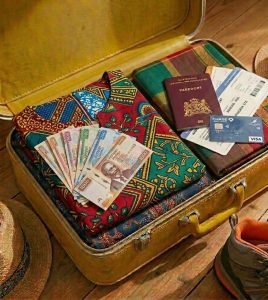
Having several options also gives you a backup.
A card may not work because of a bank restriction. A mobile connection may temporarily fail. A small business may accept M-Pesa but not cards. Another business may accept cash but have no mobile payment option.
Travelling with more than one payment method means one inconvenience does not become a major problem.
This is particularly important when travelling beyond Nairobi. Payment options can vary as you move between cities, towns, rural areas, safari destinations and remote camps.
Do You Need M-Pesa on Safari?
For most organized safaris, M-Pesa is optional.
If Bison Safaris has arranged your accommodation, transport and other major components of your itinerary, you are not expected to personally pay every safari related expense using M-Pesa. Your safari quotation should make clear what is included and what you may need to pay separately.
Your personal spending is where M-Pesa may become useful.
Perhaps you want to buy something from a small shop before heading into the reserve. Perhaps you need to pay for a local service. Perhaps you want a Kenyan number because you will be in the country for several weeks.
In those situations, M-Pesa for tourists in Kenya can make everyday transactions easier.
But if your main concern is simply being able to enjoy your safari, do not let the absence of M-Pesa make you think you are unprepared. You can still travel comfortably with a combination of cards and cash, provided you plan appropriately.
What About Taxis and Ride Hailing?
Transport is another area where visitors may encounter mobile payments.
In Nairobi and other urban areas, different transport providers can have different payment arrangements. Some services may accept cards or digital payments, while other local operators may prefer cash or mobile money.
This is another situation where M-Pesa for tourists in Kenya can be convenient, particularly for visitors who are moving around independently rather than travelling with pre-arranged transfers.
If your safari company is collecting you from the airport and handling your transfers between destinations, however, you may not need to worry about arranging a local payment method for every journey.

That is one of the advantages of having your itinerary organized in advance: you can spend less time solving logistical problems after arrival.
What If You Only Want Mobile Data?
This is an important distinction because needing internet access is not the same as needing M-Pesa.
You may want mobile data immediately because you need to contact your driver, check your accommodation, use maps or message family. None of those things automatically require a Kenyan SIM or M-Pesa account.
Depending on your phone and existing provider, you may be able to use international roaming. An eSIM is another option for compatible phones, allowing you to arrange a data plan before travelling.
Hotel and lodge Wi-Fi can also cover some of your needs, although you should not rely entirely on Wi-Fi if you will be travelling through remote areas.
So before getting a Kenyan SIM solely because you want internet access, check what your existing mobile plan already provides.
You may discover that you already have everything you need.
How Much Cash Should You Carry?
Even if you decide to use M-Pesa for tourists in Kenya, it is sensible to keep some Kenyan shillings with you.
The amount depends on your itinerary, accommodation and spending habits. A traveller with a prepaid safari package will generally have different daily expenses from someone travelling independently and paying for accommodation, transport and meals as they go.
You do not need to carry your entire holiday budget in cash. In fact, doing so creates unnecessary risk.
Instead, keep a manageable amount for smaller purchases and situations where cash is more practical, while using your card or M-Pesa where appropriate.
This combination gives you flexibility without making you dependent on a single payment method.
How Safe Is M-Pesa for Tourists?
M-Pesa for tourists in Kenya is generally straightforward to use, but visitors should treat their account information as carefully as they would treat a bank card.
Your PIN should remain private. Do not give it to a driver, hotel employee, shop attendant or anyone else who claims they need it to complete a transaction.
Before confirming a payment, check the recipient details carefully. If someone sends you a message claiming that you have received money or that your account needs to be updated, do not automatically follow the instructions in the message.
Your phone also deserves protection because it is connected to your mobile-money account. Use a screen lock and keep your SIM and account details secure.
If you lose your phone or encounter a problem with your account, contact the mobile operator through an official channel rather than relying on an unfamiliar person offering to fix it.
Is M-Pesa Worth Getting for a Short Kenya Trip?
For a very short organized trip, you may find that M-Pesa is more of a convenience than a necessity.
For example, imagine a four-day safari where your airport transfer, accommodation, game drives and major travel arrangements have already been organized. You may only need money for personal expenses. In that situation, getting a local SIM specifically for M-Pesa may not be worth the additional time and effort.
Now imagine a traveller staying in Kenya for three weeks. They are spending several days in Nairobi, travelling independently to different destinations, using local transport and buying from small businesses along the way.
For that traveller, M-Pesa for tourists in Kenya could be considerably more useful.
The difference is not whether one traveller is “doing Kenya properly.” It is simply that their payment needs are different.
What Should You Do When You Land?
Before leaving home, decide how you will handle three separate things: communication, payments and transport.
For communication, know whether you will use roaming, an eSIM, Wi-Fi or a Kenyan SIM.
For payments, carry at least two options, such as a card and some Kenyan cash. If you know you will be making frequent local payments, consider M-Pesa for tourists in Kenya as an additional option.
For transport, make sure you know who is collecting you and where you are meeting them.
Once those three things are sorted, your arrival becomes much simpler.
You do not have to rush through the airport trying to arrange everything at once.
So, Do You Actually Need M-Pesa in Kenya?
M-Pesa for tourists in Kenya is best viewed as a useful option rather than a compulsory part of your trip.
If you are travelling independently, staying for a longer period or expect to make frequent small local payments, a Kenyan SIM and M-Pesa can make everyday life easier. If you are coming for a short organized safari, already have reliable roaming or an eSIM, and have your major travel arrangements paid for, you may manage perfectly well without it.
The same applies to the SIM card itself. A Kenyan number can be useful, but you do not need to obtain one simply because you have landed in Kenya.
Take a moment to look at your actual itinerary before deciding.
If your driver is waiting for you at the airport, your accommodation is booked, your safari is organized and your phone already works in Kenya, there is no reason to turn your arrival into a race to find a SIM card.
If, on the other hand, you are planning to spend weeks exploring the country independently, having a local number and M-Pesa may make those everyday interactions much easier.
For travellers booking with Bison Safaris, we can help you understand what is already covered in your itinerary and what you are likely to need for your personal spending and communication. That way, you can arrive prepared without carrying a long list of things you may never use.
M-Pesa for tourists in Kenya is ultimately about convenience. You do not need to become an expert in Kenya’s mobile-money system before boarding your flight. Know your options, keep a backup payment method and choose the setup that fits the way you actually plan to travel.
Then, when you finally walk out of the airport, you can focus on the part that brought you to Kenya in the first place.