Planning a safari in Kenya involves more than choosing a national park, booking accommodation and deciding which animals you hope to see. You also need to understand the country’s entry requirements before travelling.
One requirement international visitors should know about is Kenya travel health insurance. Kenya has introduced a designated inbound travel health insurance scheme for eligible foreign visitors, with the requirement incorporated into the country’s travel authorization process in October 2026.
If you are planning to visit Kenya for a safari, a beach holiday or another experience, it is important to know whether you need this insurance, what it covers and how to obtain it. You should also understand how it differs from ordinary travel insurance, especially if you already have a policy from your home country.
Here is what you need to know before travelling to Kenya.
What Is Kenya Travel Health Insurance?
Kenya travel health insurance is a designated medical insurance policy intended to help eligible foreign visitors access healthcare and emergency assistance during their stay in the country.
The requirement is based on Section 26(6) of Kenya’s Social Health Insurance Act, 2023, supported by the Social Health Insurance Regulations and the relevant government Gazette Notice. The law requires qualifying non-Kenyans entering and remaining in Kenya for less than 12 months to have designated travel health insurance, subject to applicable exemptions and implementation rules.
The scheme is not the same as joining Kenya’s Social Health Authority or contributing to the Social Health Insurance Fund. It is a separate insurance policy underwritten by insurers licensed in Kenya and authorized to provide this cover. Minet Kenya acts as the claims administrator, helping visitors access approved medical providers and emergency assistance.
The aim is to help visitors obtain medical treatment when necessary while reducing the risk of unexpected healthcare expenses.
You can find the current requirements through the official Kenya eTA portal and the eCitizen Inbound Travel Health Insurance portal.
How Much Does Kenya Travel Health Insurance Cost?
The Kenya Tourism Board’s FAQ summary, published through the African Travel and Tourism Association in October 2026, reports a premium of US$44 per traveller. However, the official FAQ itself says that the applicable premium is displayed on the eCitizen platform at the time of purchase.
You should therefore check the actual amount shown on the official payment page before completing your transaction. Additional payment or service charges may affect the final checkout total.
The insurance is purchased individually. Each traveller needs their own policy, meaning families and groups cannot assume that one policy will cover everybody.
For example, if two adults and one child aged three or above are travelling together, each person must have individual cover if the requirement applies to them. Children younger than three are exempt from the mandatory cover under the published FAQ, although their parents may choose to purchase it.
It is also important to distinguish the cost of the policy from the amount of insurance protection it provides. The reported US$44 is the premium, while the policy has separate benefit limits for medical expenses, emergency transport and other covered services.
What Does the Insurance Cover?
The published Kenya Tourism Board FAQ sets out a maximum cumulative benefit limit of US$50,000 per insured person. The benefits are divided into specific categories, so it is important to understand the limits rather than assume the entire amount is available for any medical expense.
| Benefit | Published limit |
|---|---|
| Medical expenses | US$20,000 |
| Emergency medical transportation and evacuation | US$25,000 |
| Repatriation of mortal remains | US$5,000 |
| Mental health treatment | US$1,000 sub-limit |
| Prescribed medicines | US$300 sub-limit |
The mental health and prescribed medicine limits are sub-limits within the medical expenses benefit; they are not additional amounts to add to the overall coverage.
The medical expenses benefit includes eligible emergency outpatient treatment, hospitalization, surgery, emergency dental treatment for pain, prescribed medicines and mental health emergencies, subject to the policy conditions.
Emergency medical transportation may cover medically necessary transfers from the scene of an incident or a facility that cannot provide the required treatment to the nearest appropriate medical facility. Depending on the circumstances and the insurer’s medical assessment, this may involve a road ambulance, fixed-wing aircraft or helicopter. Medically necessary repatriation may also be covered within the applicable limit.
The policy also covers COVID-19 and other infectious diseases under its medical expenses benefit, according to the published FAQ.
However, the cover has limits. If eligible treatment costs exceed the applicable benefit limit, the visitor may have to pay the difference. You should read the actual policy document carefully because its terms and conditions determine what will be paid.
What Is Not Covered by Kenya Travel Health Insurance?
Understanding the exclusions is just as important as knowing the benefits. Having the policy does not mean that every medical expense or accident will automatically be covered.
The published FAQ lists exclusions that include:
- Pre-existing medical conditions, unless specifically accepted.
- Routine, preventive, elective and cosmetic treatment.
- Optical services and routine dental services.
- Normal pregnancy and childbirth.
- Medical check-ups and vaccinations.
- Treatment related to alcohol or drug misuse.
- High-risk or professional sports.
- Treatment received after the insurance has expired.
- Certain war, civil unrest, terrorism and other specified risks.
The policy does cover eligible accidents and illnesses arising during adventure activities, except for excluded high-risk or professional sports. If your safari includes an activity that may fall into a higher-risk category, check the policy wording before participating.
This is particularly important if you plan to combine a wildlife safari with mountain climbing or other specialist activities. Do not assume that the basic inbound cover provides every form of protection you may need.
Who Needs Kenya Travel Health Insurance?
The published legal framework applies to qualifying non-Kenyans entering and remaining in Kenya for less than 12 months, subject to exemptions and the applicable rules.
The Kenya Tourism Board FAQ identifies the following exemptions:
- Kenyan citizens.
- Holders of valid Kenyan residence status.
- Children younger than three years.
- Citizens of East African Community partner states.
- Refugees and stateless persons.
- Diplomats.
- Transit passengers who do not seek entry into Kenya.
If you are unsure whether you qualify for an exemption, check the official guidance before travelling. Do not assume that being exempt from an electronic travel authorization automatically means you are exempt from the insurance requirement.
The rules can depend on your nationality, immigration status and travel circumstances. Checking your position in advance is much easier than discovering a problem when preparing to board your flight or arriving at the border.
How Long Is Kenya Travel Health Insurance Valid?
This is an important detail to check before purchasing the policy.
According to the Kenya Tourism Board’s published FAQ, the insurance validity period follows the validity of the traveller’s eTA. If the eTA allows multiple entries, the insurance applies during that same authorization period.
This means travellers should not automatically assume that every policy is valid for 90 days or for one full year. The period applicable to you depends on the eTA and the insurance policy issued for your visit.
If your stay in Kenya extends beyond the policy’s validity, the FAQ states that a new policy will need to be purchased. It also says that the cover becomes active when the traveller arrives in Kenya, provided the premium has been paid and the policy has been issued.
Before travelling, check the dates and details on your actual policy certificate. If you plan to make several visits to Kenya, confirm that your authorization and insurance remain valid for the dates of each visit.
How to Get Kenya Travel Health Insurance
The designated cover should be purchased through the official government process. Avoid unofficial websites or agents claiming to issue policies that cannot be verified through the approved system.
Visit the official Kenya eTA portal
Start at etakenya.go.ke and follow the application instructions relevant to your visit.
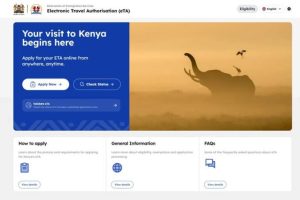
If you need an eTA, follow the steps presented during the application and check the insurance requirement displayed by the system. Use accurate passport details and travel information throughout the process.
Purchase the insurance through the official process
The insurance is purchased through the eTA process and paid for through the eCitizen platform. Travellers who already hold a valid eTA should check the Inbound Travel Health Insurance service on eCitizen for the appropriate process.
During the purchase, you may be asked to provide your personal and passport details, intended period of stay and other travel information. The system presents the approved insurance options available to you.
Check all the details carefully before making payment. Incorrect passport information can prevent the purchase from being completed successfully.
Download your policy confirmation
Once payment has been confirmed and the policy issued, download and save your electronic insurance confirmation.
Keep it accessible alongside your passport and travel authorization. The FAQ states that the policy confirmation can be verified by relevant authorities, the claims administrator and participating healthcare providers.
The published guidance also says that if a visitor arrives without the insurance, it may be possible to purchase it through the official eTA process using the QR code available at ports of entry. However, it is better to arrange the required cover before departure rather than leave it until arrival.
Save the emergency contact details
The published FAQ lists the following 24-hour assistance contact for emergencies, evacuation and general support:
Phone: +254 719 044 777
Keep this number accessible during your visit. If you need medical assistance, contact the programme’s assistance team for guidance before incurring expenses whenever possible.
For treatment at an accredited medical provider, the FAQ explains that the provider verifies eligibility and bills the programme directly, subject to the policy conditions and authorization process. If an emergency requires treatment at a non-panel hospital, the policy’s notification and claims procedures should be followed.
Can You Use Travel Insurance Bought in Your Home Country?
This is one of the most common questions travellers have, particularly those who already hold comprehensive travel insurance.
Under the Kenya Tourism Board’s published FAQ, you still need the designated inbound travel health insurance even if you already have a travel insurance policy from your home country. The FAQ explains that visitors may maintain both policies, and that the Kenyan cover is a separate statutory requirement.
Your existing insurance may still be valuable because it could offer benefits beyond the designated Kenyan policy. Depending on its terms, it may cover trip cancellation, travel delays, baggage loss or additional medical expenses.
The important thing is to distinguish between satisfying Kenya’s insurance requirement and having broader protection for your holiday. Do not rely solely on your existing policy if the official process requires you to purchase the designated cover.
Do You Need Additional Travel Insurance for a Safari?
It is worth considering comprehensive travel insurance in addition to the designated Kenyan policy.
The inbound cover has defined limits and exclusions. It is designed primarily around medical treatment, emergency medical transportation and related benefits during a temporary visit to Kenya. It should not be assumed to cover every expense associated with travelling.
Depending on the plan, additional travel insurance may provide protection for cancelled trips, delayed flights, lost baggage, personal belongings or other unexpected travel costs.
If you plan to go on a safari, check whether your additional policy covers the activities on your itinerary. A standard travel policy may have restrictions relating to particular sports, pre-existing conditions or remote-area activities.
Read both policies so you know which expenses each one covers and how to seek assistance when you need it.
Why Insurance Matters When Going on a Safari in Kenya
A safari is an opportunity to experience Kenya’s wildlife, landscapes and different ecosystems. You might spend your days watching elephants in Amboseli, looking for big cats in the Maasai Mara or exploring the wilderness of Tsavo.

However, some safari destinations are far from major towns and hospitals. If a serious medical emergency occurs, reaching an appropriate facility may require additional transport or evacuation. Knowing what your insurance covers before travelling can make a difference in such circumstances.
Insurance is only one part of preparing for your trip. You should also follow your guide’s safety instructions, share your itinerary with someone you trust and inform your tour operator of any important medical or mobility requirements before departure.
At Bison Safaris, we want travellers to enjoy their time in Kenya with fewer last-minute surprises. Understanding the practical requirements before departure helps you prepare properly and focus on the experience itself.
Frequently Asked Questions About Kenya Travel Health Insurance
Is Kenya travel health insurance compulsory?
The designated cover is required for qualifying non-Kenyans entering and remaining in Kenya for less than 12 months, subject to the applicable exemptions and implementation rules. Check the official government process to confirm whether it applies to you.
How much does Kenya travel health insurance cost?
The Kenya Tourism Board FAQ summary reports a premium of US$44 per traveller. The official FAQ directs visitors to check the applicable premium on the eCitizen platform at the point of purchase. Confirm the final amount before paying.
What is the insurance coverage limit?
The published FAQ gives a maximum cumulative benefit limit of US$50,000 per insured person, with separate limits for medical expenses, emergency transportation and repatriation. Mental health treatment and prescribed medicines have sub-limits within the medical expenses benefit.
How long does the insurance remain valid?
The published Kenya Tourism Board FAQ says the insurance validity follows the validity of the eTA. Check the dates and terms on your issued policy rather than assuming a standard 90-day or one-year period.
Can I use my existing travel insurance?
The published FAQ says that visitors must obtain the designated Kenyan cover even if they already have travel insurance from their home country. You may keep your existing policy for additional protection, depending on its terms.
Are children required to have the insurance?
The published FAQ says the cover is available to people aged three and above. It is not mandatory for children younger than three, although parents may purchase it if they wish.
Where can I purchase the insurance?
Use the official Kenya eTA portal and the eCitizen Inbound Travel Health Insurance service. The published FAQ advises travellers to use official channels only.
What should I do if I need medical assistance in Kenya?
The published FAQ lists the programme’s 24-hour assistance number as +254 719 044 777. Keep the number and your electronic policy confirmation accessible during your visit.
Prepare for Your Kenya Safari With Confidence
Kenya offers unforgettable safari experiences, from seeing elephants against the backdrop of Mount Kilimanjaro to watching wildlife across the open plains of the Maasai Mara. Preparing for your trip properly helps you enjoy those experiences without avoidable last-minute problems.
Before departure, check the entry requirements that apply to you, obtain the designated insurance if required and keep your policy confirmation accessible. Make sure you understand the benefit limits, exclusions and validity period shown on your policy.
With those details taken care of, you can focus on what brought you to Kenya in the first place: the wildlife, the scenery and the memories you will take home from your safari.