A safari vehicle leaves the Maasai Mara early in the morning. Behind it are golden grasslands, acacia trees and the wildlife that brought you to Kenya in the first place. As the journey continues, however, the scenery gradually begins to change. The open wilderness gives way to farms, villages, roadside shops and busy trading centers. Children walk to school, farmers work in their fields, matatus move between towns and vendors arrange fresh produce along the road. The wildlife may be disappearing from view, but Kenya certainly is not.
For many travellers, Kenya is almost synonymous with safari. The country’s reputation has been built around its extraordinary wildlife, from the lions of the Maasai Mara to the elephants of Amboseli and the vast wilderness of Tsavo. These experiences deserve their place among Africa’s greatest travel adventures, but they represent only one part of a much larger story. Kenya beyond safari is found in the places where people live, work, eat, create, celebrate and go about their everyday lives. It is found in bustling cities, quiet rural roads, tea plantations, coastal villages, local markets and historic neighbourhoods.
Looking beyond the famous game parks does not mean leaving the real Kenya behind. In many ways, it means discovering more of it. The landscapes between destinations, the food served in local restaurants, the conversations heard in town centers and the agricultural communities spread across the highlands all reveal a country that cannot be understood through wildlife alone. For travellers willing to slow down and look beyond the usual itinerary, these experiences can add an entirely different dimension to a Kenyan holiday.
Kenya Beyond Safari Begins When You Leave the Parks
One of the most fascinating things about travelling through Kenya is how quickly the environment can change. A journey that begins on a dusty track surrounded by wildlife can eventually pass through cultivated fields, forests, villages and commercial centers. The transition is so gradual that visitors sometimes barely notice it, particularly when they are focused on reaching the next lodge or attraction. Yet these changing landscapes are an important part of the country and offer clues about how different communities live and make their livelihoods.
Outside the protected areas, Kenya becomes much more densely inhabited and intensely used. Farmers cultivate vegetables, fruits, tea, coffee and other crops; small businesses line roads; schools and churches serve local communities; and trading centers connect rural areas with larger towns. There are mechanics repairing vehicles, shops selling everyday necessities, restaurants preparing meals and people travelling to work or school. These scenes may appear ordinary, but they provide something a game drive cannot: a glimpse into the everyday life of the country that surrounds its famous wilderness areas.
This is why the journey between destinations can be just as interesting as the destination itself. Instead of seeing rural Kenya as scenery passing outside a vehicle window, travellers can begin to recognize it as a living landscape. The fields have owners and workers, the roadside shops have customers, and the towns have histories and communities of their own. Once you start looking at Kenya in this way, the country beyond the safari circuit becomes part of the travel experience rather than simply the space between attractions.
Nairobi: More Than a Gateway to Safari
For many international visitors, Nairobi is little more than an arrival and departure point. They land at the airport, spend a night in the city and leave early the next morning for the Maasai Mara, Amboseli or another safari destination. While this makes sense for travellers with limited time, it can also mean overlooking one of the most dynamic parts of Kenya. Nairobi is not simply the place where a safari begins; it is a major African city with its own history, culture, food scene, creative industries and distinctive rhythm of life.
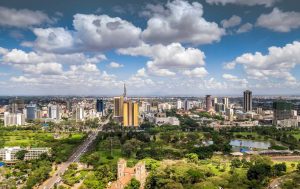
The city is full of contrasts. Modern office towers and shopping centers stand alongside older neighbourhoods, local markets and small independent businesses, while restaurants serve everything from traditional Kenyan dishes to cuisines influenced by communities from across Africa and beyond. During the morning rush, roads fill with commuters, matatus and buses, while cafés and small restaurants become busy with people starting their working day. By evening, neighbourhoods take on a different character as people leave work, meet friends, shop and head home. Simply spending time observing this movement gives visitors a much better sense of contemporary Kenyan life.
Nairobi also offers opportunities to explore Kenya’s growing creative and cultural scene. Art spaces, craft markets, restaurants, music venues and locally owned businesses provide a glimpse into the interests and ambitions of a younger, increasingly urban population. The city is constantly changing, yet it remains connected to the wider country through the people who arrive from different regions to study, work and build businesses. Experiencing Nairobi in its own right therefore gives travellers an important piece of the Kenya beyond safari story.
Discovering the Character of Small-Town Kenya
Beyond Nairobi are hundreds of towns that rarely appear in international travel brochures, yet they form the backbone of everyday life across the country. Some have grown around agriculture, others around trade, transport, industry or their proximity to important geographical features. They may not have famous landmarks or luxury hotels, but they are places where people shop, work, study, meet friends and run businesses. For a traveller, spending time in one can reveal a side of Kenya that is easy to miss when every stop is designed around a major tourist attraction.
A typical town centre can be a fascinating study in movement and interaction. Early in the morning, cafés fill with customers, traders arrange goods outside their shops and farmers or other suppliers bring products into town. Throughout the day, matatus and buses connect surrounding communities, while small restaurants, salons, hardware shops, supermarkets and workshops serve local residents. There is an ordinary rhythm to it all, but that ordinariness is precisely what makes the experience valuable. You are not watching Kenya perform for tourists; you are seeing people going about their lives.
Small towns also demonstrate how closely different parts of Kenya’s economy are connected. Agricultural communities depend on nearby trading centres to sell produce and purchase supplies, while businesses depend on the surrounding rural population. Roads and transport routes connect these towns to larger cities and tourist destinations, creating a network that keeps the country moving. For visitors who take the time to look beyond the famous attractions, these towns can turn an ordinary journey into a much richer understanding of the country.
The Markets Where Everyday Kenya Comes Together
Markets are among the best places to experience the relationship between Kenyan communities, agriculture and food. They bring together farmers, traders, restaurant owners and families, and what is available on the stalls often reflects the landscape surrounding the town. In one region, you might find piles of potatoes, vegetables and dairy products from the highlands; elsewhere, fresh fish may dominate the market; while along the coast, coconuts, spices and seafood reveal the influence of the Indian Ocean.
There is also an unmistakable energy to Kenyan markets. Conversations take place between sellers and customers, prices are negotiated, produce is sorted and transported, and people move continuously through narrow spaces filled with colour and sound. A market is not merely somewhere to buy food. It is a social and economic meeting point where information is exchanged and relationships are maintained. For travellers, observing this activity can reveal how closely daily life remains connected to farming, trade and local food systems.
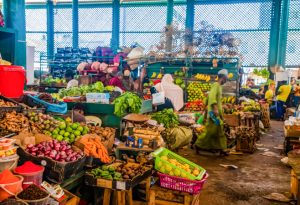
Visitors should, however, approach markets with the same respect they would show anywhere else. These are working environments, not stages arranged for photographs. Asking permission before photographing individuals, particularly children, and being mindful of people’s privacy allows travellers to experience these places without turning everyday life into a spectacle. The best memories often come from observing, tasting, listening and interacting respectfully rather than trying to photograph every moment.
Discovering Kenya Through Food
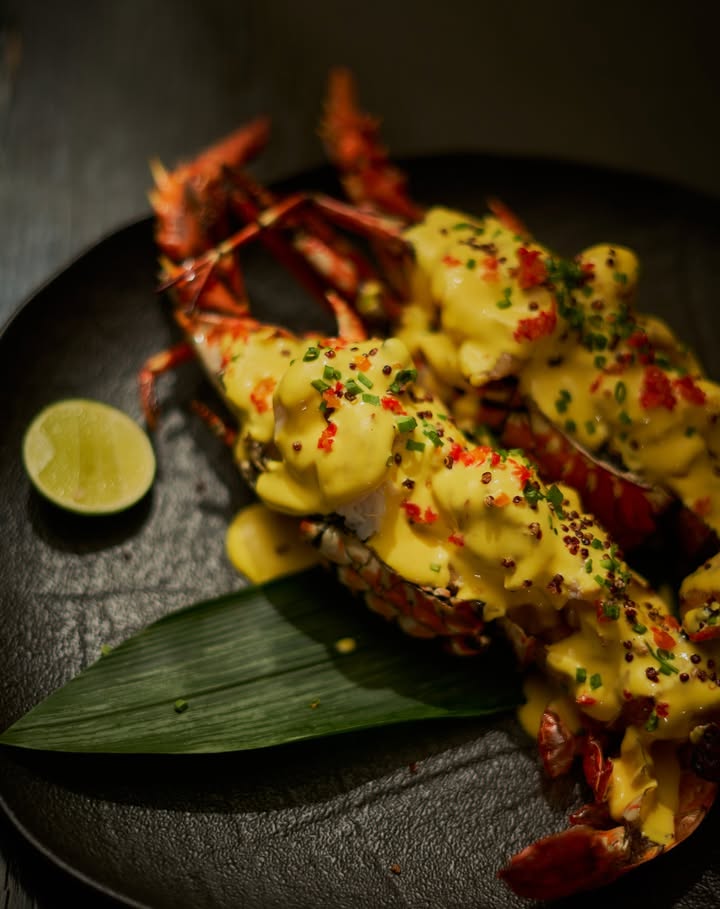
Food offers one of the most accessible ways to understand Kenya because it brings together geography, agriculture, history and culture around a shared experience. Kenyan cuisine is far more diverse than the few dishes most international visitors may already know, and travelling from one region to another reveals noticeable differences in ingredients, preparation and culinary traditions. A meal can therefore become a way of understanding the place in which it is served.
Ugali remains a staple in many Kenyan households and is commonly enjoyed with vegetables, meat, fish or stews. Chapati is equally familiar across much of the country, while nyama choma has become closely associated with social gatherings, celebrations and relaxed meals shared with friends and family. In agricultural regions, fresh vegetables, fruits, grains and dairy products feature prominently, while communities around lakes have long incorporated fish into their diets. These foods are not simply tourist experiences; they are part of everyday life for millions of Kenyans.
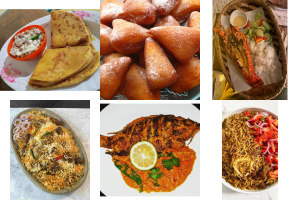
The coast introduces another culinary world altogether. Swahili cuisine reflects centuries of cultural interaction along the Indian Ocean, bringing together African traditions with influences that developed through trade and migration. Coconut, rice, seafood and spices feature heavily, while dishes such as pilau and biryani demonstrate the depth of the region’s culinary heritage. Some of the most memorable food experiences can happen in simple local restaurants, roadside cafés or small coastal eateries rather than formal establishments. Eating this way allows visitors to experience a more authentic side of Kenya and understand how food connects different communities to their environment and history.
The Green Highlands and Kenya’s Agricultural Heartland
Some of Kenya’s most beautiful landscapes have nothing to do with wildlife. They are agricultural landscapes shaped by generations of farming, and they offer a completely different visual experience from the golden savannahs associated with safari. In the central highlands, fertile soils and favourable temperatures support farms growing tea, coffee, vegetables, fruits and other crops. Around Mount Kenya, cultivated fields and small farms create a patchwork of green across the countryside, while dairy farming is also important in many communities.
Further west, the tea-growing regions offer some of the country’s most striking scenery. Around Kericho and other highland areas, neatly arranged rows of tea bushes cover rolling hills, sometimes disappearing into mist during the cooler and wetter months. The landscape can feel worlds away from the dry plains of the Maasai Mara, yet it is just as much a part of Kenya’s identity. For visitors who have only seen the country through a safari vehicle, travelling through tea country can be a genuine revelation.
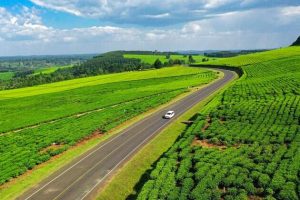
Coffee provides another opportunity to understand the agricultural side of Kenya. The country’s coffee-growing regions are concentrated mainly in highland areas where altitude, soil and climate create favourable conditions for production. Behind every cup of Kenyan coffee is a network of farmers, workers, processors, traders and exporters whose livelihoods depend on the crop. Visiting these agricultural landscapes, where appropriate and through responsible experiences, helps travellers see that Kenya’s natural beauty is not only about wilderness. Much of it is also a productive landscape supporting communities and livelihoods.
The Coast Beyond the Beach Resorts
Kenya’s coastline is often presented through photographs of white sand, turquoise water and luxury resorts, and those beaches are undoubtedly part of the attraction. But the coastal experience becomes much richer when visitors look beyond the resort environment. The region has a long history shaped by African communities and centuries of interaction across the Indian Ocean, and that history continues to influence the culture, architecture, food and language of coastal Kenya today.
Historic areas such as Mombasa’s Old Town and Lamu reveal layers of this heritage through narrow streets, traditional buildings, carved doors and distinctive architectural styles. The Swahili culture of the coast cannot be reduced to a single attraction because it is woven into everyday life, from the food prepared in local kitchens to the languages spoken and the crafts produced by artisans. Exploring these places with a knowledgeable local guide can help visitors understand the history behind what they are seeing rather than simply photographing old buildings.
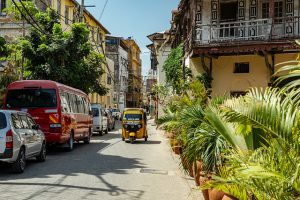
There is also a working coast beyond the tourism industry. Fishing remains important to many communities, local markets sell fresh seafood and traditional boats remain part of the shoreline landscape. Coastal villages and smaller settlements offer another perspective on the region, showing that the Indian Ocean is not only a backdrop for holidays but also a source of food, livelihoods, trade and cultural identity. This is an essential part of Kenya beyond safari for travellers who want to understand the country as a whole.
Northern Kenya: Landscapes, Communities and Traditions
Northern Kenya offers another dramatic reminder of the country’s diversity. The region is often associated with dry landscapes and remote wildlife areas, but focusing only on animals misses the human and geographical story of this vast part of the country. Communities have developed ways of living within challenging arid and semi-arid environments, with livestock playing an important role in many areas and generations of local knowledge guiding how people use scarce resources.
The landscapes themselves are extraordinary. Around Lake Turkana, the combination of desert, water and volcanic terrain creates scenery unlike the classic green savannah image of Kenya. Elsewhere, rocky hills, open plains and isolated settlements contribute to a sense of remoteness that is increasingly difficult to find in other parts of the country. Travelling through the north can therefore feel less like visiting a conventional tourist destination and more like entering a completely different geographical world.
Because distances are long and infrastructure can be limited in some areas, exploring northern Kenya requires careful planning and responsible travel. Yet that remoteness is precisely what makes it so compelling. It demonstrates that Kenya is not simply a safari destination concentrated around a handful of famous parks. It is a country stretching across dramatically different environments, each with its own communities, traditions and stories.
Matatus, Boda Bodas and the Movement of Everyday Kenya
One of the clearest differences between a safari experience and ordinary life in Kenya is the way people move. Inside a national park, travel is deliberately slow. A vehicle may stop for several minutes because elephants are crossing the track or because a guide has spotted a predator in the distance. Outside the parks, however, the country moves at a completely different pace, with buses, matatus, motorcycles, trains and private vehicles connecting communities throughout the day.
Matatus are particularly recognizable and have become an important part of Kenyan popular culture. While many are simply practical forms of public transport, others are decorated with elaborate artwork, music and distinctive designs. They reflect the creativity and personality of the communities that use them and are a familiar part of urban and rural roads alike. Boda bodas are equally important in many parts of the country, particularly where they provide convenient connections over shorter distances or on roads where larger vehicles may be less practical.

For visitors, transport can be an interesting way to observe everyday life, although independent use of unfamiliar public transport should always be approached with appropriate safety awareness and local guidance. Even without using it personally, watching the constant movement of people, goods and vehicles gives a much clearer impression of how Kenya functions beyond the quiet roads of its national parks.
Kenya’s Creative Side: Art, Crafts, Music and Design
Kenya’s creativity extends far beyond the landscapes that appear in travel brochures. Across the country, artisans continue to produce beadwork, baskets, carvings, pottery, textiles and other handmade products, with techniques and designs often connected to particular communities and cultural traditions. These crafts can provide important sources of income while also keeping knowledge and skills alive across generations.
At the same time, Kenya has a growing contemporary creative scene. Artists, photographers, musicians, designers, writers and filmmakers are finding new ways to express Kenyan identity, often combining traditional influences with modern urban experiences. Nairobi has become an important centre for this creative energy, but it is by no means limited to the capital. Cultural expressions can be found in smaller towns and communities throughout the country.
Music is particularly woven into everyday life. Different generations have developed their own tastes and styles, while traditional forms continue to influence contemporary sounds. Music can be heard in homes, businesses, public transport and social gatherings, becoming part of the atmosphere of ordinary life. For travellers, exploring Kenya’s creative side offers an opportunity to understand the country through the people who live there rather than only through the landscapes they inhabit.
Sport and the Kenyan Spirit
Sport provides another window into everyday Kenyan life, and few examples are more internationally recognized than the country’s success in distance running. Kenya has produced generations of world-class athletes, particularly from highland areas around places such as Iten and Eldoret. Running has become an important part of the identity of some communities in these regions, where aspiring athletes can often be seen training on roads and tracks.
Yet athletics is only one part of the sporting culture. Football has a huge following across the country, from professional competitions to informal games played on school grounds, open fields and neighbourhood spaces. A football match can bring together children, friends and spectators, creating a lively social experience that has little connection to tourism but says a great deal about Kenyan society.
Sport also reflects the ambitions and aspirations of young people. For some, athletics offers a pathway to international competition and economic opportunity; for others, football is simply a source of enjoyment and community. Seeing this side of Kenya helps visitors appreciate that the country is not defined only by its natural attractions. It is also shaped by the interests, dreams and everyday activities of its people.
Language Is Part of the Kenyan Experience
Kenya’s cultural diversity can be heard as much as it can be seen. English and Kiswahili are widely used across the country, but Kenya is home to numerous communities with their own languages, histories and cultural traditions. As travellers move between regions, they may notice changes in the languages and accents around them, reflecting the country’s remarkable diversity.
Kiswahili is particularly useful for visitors because it provides a common means of communication across many parts of the country. Learning a few simple expressions such as “Asante” and “Karibu” can make everyday interactions warmer and demonstrate an interest in local culture. More importantly, listening to the way people communicate offers a reminder that Kenya is not culturally uniform. Different communities have their own identities, traditions and ways of expressing themselves.
Language can therefore become part of the journey itself. Rather than simply memorizing phrases for convenience, visitors can take an interest in the stories behind the words and recognize that communication is one of the ways people carry culture from one generation to the next. It is another small but meaningful way of experiencing Kenya beyond safari.
Rural Kenya: The Landscapes Between the Attractions
Perhaps the most overlooked part of Kenya beyond safari is the countryside that travellers see while moving between major destinations. From inside a vehicle, farms, homes, livestock and roadside businesses can easily become little more than scenery passing outside the window. But when travellers slow down and pay attention, these landscapes begin to reveal the structure of everyday life.
A farm may support an entire household. A small shop may serve a cluster of homes. A school may be the centre of movement in a rural community, while a local market connects farmers with customers from surrounding areas. Roads that appear quiet from a tourist’s perspective can be essential routes for transporting crops, livestock and people. What looks like empty space is therefore often full of activity and meaning.
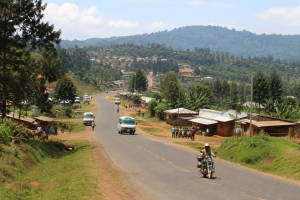
This is where travelling beyond the standard safari route can become particularly rewarding. Visitors begin to understand that Kenya’s rural landscapes are not simply beautiful scenery placed between attractions. They are working environments and homes. They support families, businesses and communities, and they form an essential part of the country’s economy and identity.
Kenyan Hospitality Goes Beyond the Safari Lodge
Kenya’s reputation for hospitality is often associated with the service travellers receive in hotels, lodges and camps, but the country’s welcoming spirit extends beyond the formal tourism industry. Everyday encounters can sometimes become some of the most memorable moments of a journey: a restaurant owner explaining a local dish, a shopkeeper helping a visitor find their way, a farmer discussing crops or a local guide sharing the history of a place.
At the same time, meaningful cultural interaction requires respect. Communities are not attractions, and visitors should never assume that people are available to be photographed, questioned or observed simply because they are travelling through a particular area. The most rewarding encounters tend to happen naturally, when both the visitor and the person they meet are comfortable with the interaction.
Travellers who approach Kenya with curiosity rather than assumptions are often rewarded with a more genuine experience. Instead of trying to collect photographs of people or manufacture cultural encounters, they can allow conversations, meals, markets and local experiences to unfold naturally. In doing so, they discover that Kenyan hospitality is not simply a service provided to tourists; it is also part of the country’s wider social culture.
How to Experience Kenya Beyond Safari Responsibly
Experiencing everyday Kenya comes with a responsibility to respect the people and places that make these experiences possible. Photography is one of the simplest examples. Visitors should ask permission before photographing individuals, particularly children, rather than assuming that being in a public place gives them an automatic right to take someone’s picture. This is especially important when visiting markets, villages and cultural spaces where people are going about their ordinary lives.
Supporting locally owned businesses can also make a meaningful difference. Travellers can choose reputable local restaurants, purchase crafts directly from genuine artisans where possible and use responsible community-based experiences that provide clear benefits to local residents. When visiting rural areas, it is equally important to remember that farms, homes and community spaces are not tourist attractions simply because travellers pass them along the road.
Responsible travel does not mean avoiding interaction with local communities. Instead, it means approaching those interactions with respect and recognizing that travellers are guests. When visitors take the time to listen, ask appropriate questions and follow local guidance, cultural experiences become more meaningful for everyone involved. This approach allows Kenya beyond safari to be experienced without turning everyday life into a performance for tourists.
Why Kenya Beyond Safari Deserves a Place on Your Journey
A safari can provide some of the most unforgettable travel memories in the world. Watching a herd of elephants move across the Amboseli plains, following predators across the Maasai Mara or witnessing the extraordinary spectacle of the Great Migration can leave an impression that lasts for years. Kenya’s wildlife deserves its global reputation, and the country’s national parks and conservancies remain an essential part of its tourism story.
But the wildlife is only one chapter.
Kenya is also the green highlands around Mount Kenya, the tea plantations of the west, the farms that feed its cities and the busy streets of Nairobi. It is the aroma of spices drifting through a coastal market, the sound of a matatu moving through traffic, the taste of food prepared in a small local restaurant and the sight of farmers working their fields. It is the Indian Ocean, the dry landscapes of the north, the football games on neighbourhood fields and the runners training before sunrise. It is the artisans, traders, farmers, cooks, drivers, musicians and countless other people whose everyday lives give the country its character.
This is what makes Kenya beyond safari worth discovering. It adds context to the wildlife, depth to the landscapes and a human dimension to the journey. Instead of seeing Kenya only as a destination where extraordinary animals live, travellers begin to see it as a diverse country with its own rhythms, traditions, challenges and everyday joys.
Discover Kenya Beyond Safari with Bison Safaris
Kenya’s wildlife may be what first inspires you to visit, but there is so much more waiting beyond the game drive. Combining a safari with cultural experiences, scenic journeys, local food, agricultural landscapes, historic towns or time along the coast can transform a traditional wildlife holiday into a much richer exploration of the country. The best itinerary does not necessarily mean visiting the greatest number of attractions; sometimes it means leaving enough time to slow down and experience the places between them.
At Bison Safaris, we believe that discovering Kenya should be about more than ticking famous national parks off a list. Whether you want to experience the Maasai Mara and Amboseli, explore the Kenyan coast, discover the country’s highland landscapes, meet local communities through responsible experiences or create a journey that combines wildlife with Kenya’s wider cultural and natural heritage, our team can help you plan an itinerary around the kind of experience you want. Contact us today and let us help you create a journey that takes you beyond the game drive and into the landscapes, cultures, flavours and everyday experiences that make Kenya truly unforgettable.