Vultures are the most misunderstood birds in the world commonly associated with death and myths because of their scavenging life. There are so many interesting facts about vultures that many people don`t know. These remarkable birds are nature custodians as they clean dead animals preventing spread of disease, recycle nutrients back into the ecosystem, and help maintain a healthy balance in the wild.
Africa is home to some of the world’s most spectacular vulture species, including the White-backed Vulture, Lappet-faced Vulture, Hooded Vulture, White-headed Vulture, Cape Vulture, and the record-breaking Rüppell’s Vulture. Their ability to soar effortlessly across vast landscapes, locate food from incredible distances, and survive on carcasses that would kill most other animals makes them one of the most fascinating groups of birds on the planet.
Fun Facts About Vultures
Rüppell’s Vulture Is the Highest-Flying Bird in the World
The Rüppell’s Vulture (Gyps rueppelli) holds an astonishing world record. It has been recorded flying at an altitude of approximately 11,300 meters (37,100 feet) higher than Mount Everest and nearly the same altitude at which commercial airplanes cruise.

This incredible ability is made possible by specialized hemoglobin in the bird’s blood, allowing it to absorb oxygen efficiently even where the air is extremely thin. Flying at such heights also provides a significant advantage when searching for food, as vultures can scan enormous areas of land without expending much energy.
Their Stomach Acid Can Destroy Deadly Diseases
One of the most remarkable fun facts about vultures is their extraordinary digestive system. Most animals would quickly become sick after eating a carcass infected with diseases such as anthrax, botulism, rabies, or cholera.
Vultures, however, possess one of the strongest digestive systems in the animal kingdom. Their stomach acid has an extremely low pH, capable of destroying dangerous bacteria and viruses before they can infect the bird.
This remarkable adaptation makes vultures one of nature’s most effective sanitation workers. By safely disposing of infected carcasses, they prevent diseases from spreading to predators, livestock, wildlife, and nearby human communities.
Vultures Cool Themselves by Urinating on Their Legs
Another fun facts about vultures that sounds unusual, vultures have developed one of the animal kingdom’s most effective cooling systems. During extremely hot weather, vultures practice a behavior known as urohidrosis, where they deliberately urinate on their legs and feet. As the liquid evaporates, it cools their body in much the same way sweat cools humans.

Scientists also believe this behavior provides another benefit. The uric acid present in the waste helps kill bacteria that vultures may pick up while walking through carcasses, reducing the risk of infection.
Different Vulture Species Work Together at a Carcass
A feeding site may appear chaotic, but vultures actually follow an efficient natural system. Each species has evolved with a different beak shape and feeding specialty. Large birds such as the Lappet-faced Vulture use their powerful bills to tear open thick hides that smaller vultures cannot penetrate. Once the carcass is opened, medium-sized species feed on muscles and organs, while smaller vultures clean up the remaining scraps.

This natural division of labor ensures that nearly every part of the carcass is consumed quickly and efficiently, reducing waste and limiting opportunities for disease-causing bacteria to multiply. Such facts about vultures is what drives bird enthusiasts to visit Africa to witness this remarkable species in work.
Young Vultures Spend Months Learning from Their Parents
Unlike many birds that become independent soon after leaving the nest, young vultures remain with their parents for several months. During this time, they learn valuable survival skills that cannot simply be inherited. Adult birds teach them how to locate thermals for effortless soaring, identify safe feeding opportunities, recognize threats, and navigate large territories. This is a fascinating fun facts about vultures.
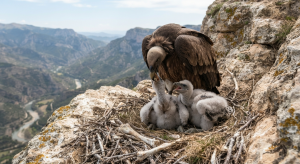
This lengthy learning period explains why vultures reproduce so slowly. Most species lay only one egg each year, and both parents invest considerable time raising their chick. Unfortunately, this also means that vulture populations recover very slowly after declines caused by poisoning or habitat loss.
Scientists Are Studying Vultures to Improve Human Medicine
One of the lesser-known fun facts about vultures is that these birds are attracting significant scientific interest. Despite constantly feeding on decaying carcasses filled with harmful microorganisms, vultures rarely suffer from infections. Researchers have discovered that their digestive systems contain unique microbes and powerful immune defenses capable of neutralizing dangerous pathogens.
Scientists are studying these adaptations in the hope of developing new antibiotics and gaining a better understanding of how to combat antibiotic-resistant bacteria in humans. This means vultures could contribute not only to healthier ecosystems but also to future advances in medical science.
Vultures Are Among Africa’s Most Endangered Birds
With all these fun facts about vultures it is also one of the most threatened birds. Over the last few decades, several African vulture species have declined by more than 90 percent. Their biggest threats include poisoning from contaminated carcasses, habitat destruction, collisions with power lines, electrocution, and illegal wildlife trade.
Because vultures reproduce slowly, population recovery can take decades. Conservation organizations across Africa are now working to establish safe feeding stations, protect nesting sites, reduce poisoning incidents, and educate communities about the importance of these birds.
Why Vultures Matter
Vultures are much more than scavengers, they are one of the most important components of healthy ecosystems. Their ability to remove carcasses rapidly prevents the spread of diseases, recycles nutrients into the environment, and supports the balance of wildlife populations.
In African national parks, vultures often work alongside predators and other scavengers, ensuring that very little goes to waste. Their presence is also an indicator of a healthy ecosystem, making them valuable to conservationists and wildlife researchers.
For birdwatchers and safari enthusiasts, spotting vultures soaring gracefully above the savannah is a reminder of the remarkable adaptations that make Africa’s wildlife so unique.
Best Places to See Vultures in Africa
If you would like to observe these incredible birds in their natural habitat, some of the best destinations include:
- Maasai Mara National Reserve, Kenya – Home to White-backed, Rüppell’s, Lappet-faced, and Hooded Vultures.
- Serengeti National Park, Tanzania – One of Africa’s best places to witness vultures feeding alongside predators.
- Kruger National Park, South Africa – Excellent for spotting Cape Vultures and White-backed Vultures.
- Etosha National Park, Namibia – Known for large scavenger populations around waterholes.
- Hwange National Park, Zimbabwe – A fantastic destination for birdwatchers and wildlife photographers.
Frequently Asked Questions
Why are vultures important?
Vultures prevent the spread of diseases by quickly removing dead animals from the environment. They are nature’s sanitation workers and play a critical role in maintaining healthy ecosystems.
Which is the highest-flying vulture?
The Rüppell’s Vulture is the world’s highest-flying bird, capable of reaching altitudes of approximately 11,300 meters (37,100 feet).
Are vultures dangerous to humans?
No. Vultures are scavengers that feed on dead animals and rarely pose any threat to healthy people or livestock.
Why are vultures endangered?
The greatest threats include poisoning, habitat loss, collisions with power infrastructure, and illegal wildlife trade.
What is the most surprising facts about vultures?
One of the most surprising fun facts about vultures is that their stomach acid is strong enough to destroy dangerous pathogens such as anthrax, botulism, and rabies, allowing them to safely consume infected carcasses without becoming sick.
These fun facts about vultures show that they are far more than scavengers, they are extraordinary birds with incredible adaptations that help keep nature healthy. From flying higher than commercial airplanes to destroying deadly pathogens with their powerful digestive systems, vultures are among the most specialized birds on Earth.
As their populations continue to decline across Africa, protecting these remarkable birds has become more important than ever. By supporting conservation efforts and learning about their ecological value, we can help ensure that future generations continue to witness vultures soaring across Africa’s skies.
If you enjoyed these fun facts about vultures don’t miss our guide to 10 Endemic Bird Species worth watching in Africa to discover more of the continents extraordinary avian wildlife.