Long before Kenya became synonymous with thrilling safaris, snow-capped mountains, and sun-drenched beaches, it was the stage for a much older and more remarkable story, one that began millions of years before the first civilizations emerged.
Across the sweeping landscapes of the Great Rift Valley, beneath ancient lakebeds and layers of volcanic ash, lie some of the world’s most extraordinary fossil discoveries. These discoveries have helped scientists answer one of humanity’s oldest and most profound questions: Where did we come from?
From the remains of early human ancestors to ancient stone tools and fossils of long-extinct animals, Kenya has transformed our understanding of human evolution. The country is home to archaeological sites that continue to attract researchers from around the globe while offering curious travelers a rare opportunity to walk through landscapes where the story of humanity was literally unearthed.
Unlike many historical destinations where the past survives in ruins and monuments, Kenya’s fossil sites preserve a history measured in millions of years. Standing on the shores of Lake Turkana or overlooking the plains of Olorgesailie, it’s humbling to realize that these landscapes have witnessed countless chapters of Earth’s history and some of the earliest moments in our own.
Whether you’re fascinated by archaeology, passionate about history, or simply looking to explore a different side of Kenya beyond its famous wildlife, these fossil sites promise an unforgettable journey into the deep past.
In this guide, we’ll explore the best fossil sites in Kenya, uncover the remarkable discoveries that made them famous, introduce the pioneering scientists behind those discoveries, and help you plan a visit to some of the country’s most fascinating heritage destinations.
Why Kenya Is Called the Cradle of Humankind
Before exploring the fossil sites themselves, it’s worth understanding why Kenya occupies such a special place in the history of human evolution.
Stretching from north to south, the Great Rift Valley has shaped Kenya’s landscape for millions of years. Powerful geological forces created valleys, lakes, volcanoes, and sedimentary basins that proved ideal for preserving ancient remains. Over time, volcanic eruptions blanketed the region with ash, rivers deposited layers of sediment, and shifting landscapes buried the bones of humans and animals alike.
Millions of years later, erosion gradually exposed these buried treasures, allowing scientists to uncover fossils that would revolutionize our understanding of the past.
Kenya’s fossil-rich regions have yielded evidence of ancient elephants, giant crocodiles, prehistoric mammals, early stone tools, and some of the earliest known human ancestors. Many discoveries from Kenya have become central to the scientific study of human evolution, making the country one of the world’s most significant destinations for paleoanthropology.
Several of these sites also lie within spectacular natural landscapes. Ancient excavation areas overlook shimmering lakes, volcanic hills, open savannahs, and dramatic escarpments, proving that Kenya’s fossil heritage is as visually captivating as it is scientifically important.
Today, visitors can experience many of these places firsthand, exploring museums, protected archaeological sites, interpretation centres, and national parks while learning how each discovery contributed to the story of humanity.
Did You Know?
One of the world’s most famous early human fossils, popularly known as Turkana Boy, was discovered in Kenya in 1984. The remarkably complete skeleton transformed scientists’ understanding of early human growth, anatomy, and movement, and remains one of the most important paleoanthropological discoveries ever made.
Koobi Fora – Where the Story of Humanity Was Rewritten
This is where I think we truly begin our journey. Few places on Earth have changed our understanding of human evolution as profoundly as Koobi Fora.
Located along the eastern shores of Lake Turkana in northern Kenya, this seemingly harsh and arid landscape has produced one of the richest collections of early human fossils ever discovered. At first glance, the terrain appears almost lifeless, a vast expanse of rocky hills, dry riverbeds, and dusty plains stretching toward the world’s largest permanent desert lake. Yet beneath these ancient sediments lies an extraordinary archive of life dating back millions of years.
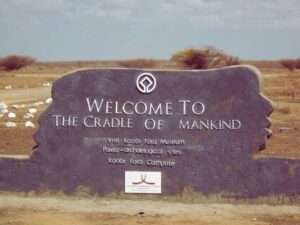
The story of Koobi Fora began to capture international attention in the late 1960s when systematic excavations led by the Leakey family uncovered fossil after fossil from different stages of human evolution. Among the discoveries were skulls, jaws, teeth, and stone tools belonging to several early human relatives, demonstrating that multiple human ancestor species once lived in East Africa at the same time. These finds challenged long-held scientific assumptions and reshaped the study of human origins.
Koobi Fora is also closely linked to one of Kenya’s greatest scientific achievements, the discovery of Turkana Boy by the renowned Kenyan fossil hunter Kamoya Kimeu in 1984. Although Turkana Boy was discovered at nearby Nariokotome rather than within the main Koobi Fora fossil beds, both sites form part of the greater Turkana Basin, one of the world’s most important paleoanthropological landscapes. Together, they tell the remarkable story of early human life around an ancient lake that existed nearly two million years ago.
Today, visitors can explore this extraordinary region as part of the Lake Turkana World Heritage Site. Guided visits offer insights into fossil discoveries, geology, and the scientific methods used to uncover evidence hidden beneath layers of ancient earth. The nearby museum provides additional context, displaying replicas and exhibits that bring millions of years of history to life.
Standing at Koobi Fora is a humbling experience. There are few places in the world where you can look across an ancient landscape and know that beneath your feet lie clues to the story of humanity itself.
Why visit Koobi Fora?
- One of the world’s most significant fossil sites.
- Home to groundbreaking discoveries in human evolution.
- Part of the UNESCO-listed Lake Turkana World Heritage Site.
- Spectacular desert landscapes unlike anywhere else in Kenya.
- A must-visit destination for archaeology and history enthusiasts.
Things to do
- Visit the Koobi Fora Museum.
- Explore fossil excavation areas with a guide.
- Learn about early human evolution.
- Visit nearby Lake Turkana.
- Photograph the dramatic volcanic landscape.
Best time to visit
The dry months from June to October and January to February generally offer the most comfortable conditions for exploring northern Kenya. Temperatures remain high throughout the year, so carrying plenty of water, sun protection, and lightweight clothing is essential.
Nearby attractions
- Sibiloi National Park
- Lake Turkana
- Central Island National Park
- The Turkana Basin Institute
Olorgesailie Prehistoric Site – Where Early Humans Learned to Adapt
If Koobi Fora tells the story of our ancient ancestors, Olorgesailie Prehistoric Site tells the story of how they survived.
Located about 90 kilometers southwest of Nairobi in Kajiado County, this remarkable archaeological site lies within the southern Great Rift Valley. At first glance, the landscape appears quiet and almost ordinary, with rolling plains framed by distant volcanic hills. Yet beneath this seemingly peaceful setting lies evidence of one of humanity’s greatest strengths, our ability to adapt.
For hundreds of thousands of years, this region experienced dramatic environmental changes. Ancient lakes expanded and disappeared, volcanic eruptions reshaped the landscape, and wildlife populations shifted with the changing climate. Early humans living here had to respond to these challenges, developing new tools and strategies that helped them survive in an ever-changing world.
Olorgesailie is internationally renowned for its extraordinary concentration of Acheulean handaxes, carefully crafted stone tools that were used by early human ancestors for hundreds of thousands of years. Thousands of these tools have been unearthed at the site, making it one of the world’s most important windows into prehistoric technology. Archaeologists have also uncovered the fossil remains of extinct animals, including giant baboons, elephants, hippos, and other species that once inhabited the ancient lake basin.
Perhaps even more fascinating is what recent research has revealed. Scientists studying Olorgesailie discovered evidence that early humans here gradually shifted from producing large hand axes to creating smaller, more sophisticated stone tools while also using pigments and transporting materials over long distances. These discoveries suggest that innovation, planning, and complex social behaviour emerged much earlier than previously believed.
Today, visitors can walk through the protected archaeological site, view the preserved excavation areas, and learn about the discoveries at the on-site museum. Standing beside fossils and ancient tools exactly where they were found creates a powerful connection to people who lived hundreds of thousands of years before us.
Why visit Olorgesailie?
- One of Africa’s most significant prehistoric archaeological sites.
- Famous for thousands of ancient Acheulean hand axes.
- Excellent museum with informative exhibits.
- Easy day trip from Nairobi.
- A fascinating introduction to early human technology and adaptation.
Things to do
- Explore the archaeological site.
- Visit the interpretation centre and museum.
- View preserved fossil excavation areas.
- Learn about prehistoric wildlife.
- Enjoy photography across the Rift Valley landscape.
Best time to visit
Olorgesailie can be visited throughout the year, although the dry seasons from June to October and January to February provide more comfortable walking conditions.
Nearby attractions
- Lake Magadi
- Mount Olorgesailie
- Shompole Conservancy
- The Great Rift Valley viewpoints
Did You Know?
Many of the hand axes discovered at Olorgesailie are estimated to be between 500,000 and 900,000 years old. Some are so well preserved that the sharp edges created by early humans are still clearly visible today.
Kariandusi Prehistoric Site – Kenya’s First Protected Archaeological Site
Long before archaeology became widely recognized in Kenya, one remarkable discovery near Lake Elementaita revealed that the country’s ancient history deserved protection.
Nestled along the floor of the Great Rift Valley in Nakuru County, Kariandusi Prehistoric Site occupies a peaceful setting overlooking the lake and surrounding escarpments. Unlike the remote fossil fields of northern Kenya, Kariandusi is easily accessible, making it one of the best places for travelers to experience Kenya’s prehistoric heritage without venturing far from major tourist routes.
The site was discovered in 1928 by the renowned archaeologist Louis Leakey, who recognized its extraordinary scientific importance. Excavations revealed thousands of stone tools crafted by early humans during the Acheulean period, offering valuable insight into how prehistoric communities hunted, processed food, and adapted to their environment.
Today, Kariandusi remains one of the finest examples of an open-air prehistoric site in East Africa. Carefully preserved excavation trenches allow visitors to see exactly where stone tools were uncovered, while the museum displays original artefacts, fossils, and detailed explanations of the site’s significance.
One of Kariandusi’s greatest strengths is its accessibility. Families, school groups, and international visitors can easily combine a visit with nearby attractions such as Lake Nakuru National Park or Lake Elementaita, making it an excellent stop on a Rift Valley road trip.
Walking through Kariandusi is a reminder that remarkable discoveries don’t always happen in remote wilderness. Sometimes, they lie quietly beneath landscapes that travellers pass every day without realising the extraordinary stories hidden beneath their feet.
Why visit Kariandusi?
- Kenya’s first protected prehistoric site.
- Discover thousands of ancient stone tools.
- Excellent museum suitable for all ages.
- Easy access from Nairobi and Nakuru.
- Beautiful views overlooking Lake Elementaita.
Things to do
- Tour the archaeological site.
- Visit the on-site museum.
- Learn about Acheulean technology.
- Photograph the Rift Valley scenery.
- Combine your visit with nearby lakes and national parks.
Best time to visit
Kariandusi is accessible throughout the year. Dry weather offers the most comfortable conditions for exploring the outdoor exhibits.
Nearby attractions
- Lake Elementaita
- Lake Nakuru National Park
- Hyrax Hill Prehistoric Site
- Menengai Crater
Sibiloi National Park – Where Wildlife Meets the Origins of Humanity
Most visitors come to Kenya hoping to see lions, elephants, or the Great Migration.
Few realize that one of the country’s most remarkable national parks protects something even older, the story of humanity itself.
Stretching along the northeastern shores of Lake Turkana, Sibiloi National Park is unlike any other protected area in Kenya. The landscape is dramatic and almost otherworldly, with volcanic rock formations, fossil-rich badlands, open plains, and the shimmering waters of Africa’s largest desert lake. While wildlife still roams these remote landscapes, it is the park’s archaeological significance that has earned it worldwide recognition.
Established in 1973, Sibiloi National Park protects part of the Lake Turkana National Parks UNESCO World Heritage Site, an area internationally celebrated for its exceptional fossil discoveries. Within its boundaries lie several important excavation sites, including Koobi Fora, where researchers have uncovered fossils that transformed our understanding of early human evolution.
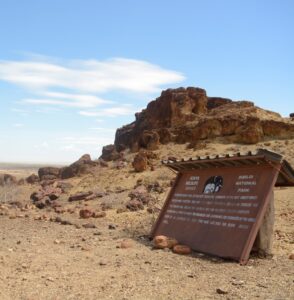
The park also preserves countless fossils of prehistoric animals, ancient lake ecosystems, and stone tools that provide valuable insight into how humans and wildlife adapted to changing environments over millions of years.
Yet Sibiloi is far from an open-air museum. Visitors may encounter zebras, giraffes, oryx, crocodiles, hippos, and numerous bird species while exploring the same landscapes where scientists continue to make groundbreaking discoveries. Few places in the world offer such a remarkable combination of natural beauty and scientific importance.
Because of its remote location, reaching Sibiloi requires careful planning, but those who make the journey are rewarded with one of Kenya’s most unforgettable and least-visited destinations.
Explore more about Sibiloi in our guide on The Cradle of Mankind: Sibiloi National Park
Why visit Sibiloi National Park?
- Part of the UNESCO-listed Lake Turkana National Parks.
- Home to some of the world’s most important fossil discoveries.
- Spectacular volcanic landscapes.
- Excellent birdwatching opportunities.
- A unique blend of archaeology, geology, and wildlife.
Things to do
- Visit fossil excavation areas.
- Explore the Koobi Fora Museum.
- Enjoy game drives.
- Birdwatch along Lake Turkana.
- Photograph the dramatic desert scenery.
Best time to visit
The dry seasons provide the most reliable road conditions, although temperatures remain high throughout the year. Travellers should carry plenty of water and prepare for remote conditions.
Nearby attractions
- Lake Turkana
- Central Island National Park
- South Island National Park
- Koobi Fora
Did You Know?
The Lake Turkana National Parks were designated a UNESCO World Heritage Site not only because of their outstanding natural beauty but also because they contain some of the world’s most significant evidence of human evolution.
Hyrax Hill Prehistoric Site – Discovering Kenya’s Ancient Communities
Not every important archaeological site tells the story of humanity’s earliest ancestors.
Some reveal how later communities lived, farmed, traded, and built settlements thousands of years after the first stone tools were made.
Located just outside Nakuru City, Hyrax Hill Prehistoric Site offers visitors a fascinating glimpse into Kenya’s later prehistoric cultures. Perched on a rocky hill overlooking the Rift Valley, the site combines beautiful scenery with decades of archaeological research that continues to deepen our understanding of East Africa’s ancient communities.
The site takes its name from the small hyraxes that once lived among the rocky outcrops, but its true significance lies beneath the surface. Excavations have uncovered evidence of several periods of human occupation, including Iron Age settlements and earlier pastoral communities. Archaeologists discovered stone bowls, pottery, burial sites, livestock enclosures, and household remains that paint a vivid picture of everyday life thousands of years ago.
Unlike sites focused solely on fossils, Hyrax Hill allows visitors to explore how people gradually transitioned from hunting and gathering to herding livestock and establishing more permanent settlements. It reminds us that human history did not end with the discovery of fossils, it continued through innovation, community, and cultural development.
The site’s museum displays many of the artefacts recovered during excavations, while guided tours help visitors understand how archaeologists interpret ancient settlements and reconstruct the lives of people who lived there centuries ago.
Its location near Nakuru also makes Hyrax Hill one of Kenya’s easiest archaeological attractions to include in a road trip through the Rift Valley.
Why visit Hyrax Hill?
- One of Kenya’s best-preserved prehistoric settlement sites.
- Excellent museum with archaeological artefacts.
- Learn about Iron Age communities and early pastoralists.
- Beautiful views across the Rift Valley.
- Easy access from Nakuru.
Things to do
- Tour the archaeological site.
- Visit the museum.
- Learn about Kenya’s prehistoric cultures.
- Photograph the surrounding landscapes.
- Combine your visit with nearby attractions.
Best time to visit
Hyrax Hill is accessible throughout the year, although mornings and late afternoons offer cooler temperatures for walking around the site.
Nearby attractions
- Lake Nakuru National Park
- Menengai Crater
- Kariandusi Prehistoric Site
- Lake Elementaita
Rusinga Island – Fossils on the Shores of Lake Victoria
When people think about fossil discoveries in Kenya, their minds usually turn to the Great Rift Valley and Lake Turkana.
Yet one of the country’s most important paleontological landscapes lies hundreds of kilometrers away on the tranquil waters of Lake Victoria.
Rusinga Island, located in Homa Bay County, has long attracted scientists searching for clues about Africa’s ancient environments. The island’s volcanic rocks and sedimentary deposits have preserved fossils dating back more than 18 million years, offering rare insights into life during the Miocene Epoch.
Among the most celebrated discoveries is Proconsul, an extinct primate regarded as one of the earliest known apes. Fossils found on Rusinga Island have helped researchers understand how primates evolved long before the appearance of early humans, making the island internationally significant in the study of evolutionary history.
Beyond its scientific importance, Rusinga is also a beautiful travel destination. Gentle hills, fishing villages, and panoramic views across Lake Victoria create a peaceful atmosphere that contrasts sharply with the arid landscapes of northern Kenya’s fossil sites.
For travellers interested in combining archaeology with cultural experiences and lakeside scenery, Rusinga Island offers a refreshing and often overlooked perspective on Kenya’s prehistoric heritage.
Why visit Rusinga Island?
- Internationally significant primate fossil discoveries.
- Beautiful Lake Victoria scenery.
- Rich Luo cultural heritage.
- Excellent birdwatching opportunities.
- A unique blend of history, science, and local culture.
Things to do
- Explore fossil heritage sites.
- Learn about the discovery of Proconsul.
- Enjoy boat rides on Lake Victoria.
- Visit local fishing communities.
- Birdwatch and photograph the lakeside landscapes.
Best time to visit
The island can be visited year-round, although the drier months generally offer more comfortable conditions for exploring.
Nearby attractions
- Mbita
- Tom Mboya Mausoleum
- Mfangano Island
- Lake Victoria beaches
Kanapoi – Home to One of Humanity’s Earliest Ancestors
Long before modern humans walked the Earth, the landscapes west of Lake Turkana were home to some of our earliest known ancestors. Today, that ancient story is preserved at Kanapoi, a remote fossil site in West Turkana that has become one of the most significant locations in the study of human evolution.
Unlike more developed visitor attractions, Kanapoi remains primarily a scientific research site. Its importance lies not in museums or visitor facilities but in the remarkable fossils that have been uncovered beneath its ancient sediments.
In the 1990s, researchers working at Kanapoi discovered fossils belonging to Australopithecus anamensis, one of the earliest known members of the human evolutionary family. Dating back more than 4 million years, these discoveries helped fill an important gap between even older ape-like ancestors and later species that eventually gave rise to the genus Homo.
The fossils found here revealed that some of our earliest ancestors were already walking upright while still retaining physical characteristics suited to climbing trees. These discoveries reshaped scientific understanding of how human evolution unfolded, demonstrating that walking on two legs developed earlier than many researchers had previously believed.
Although Kanapoi is not a conventional tourist destination, its scientific importance makes it an essential chapter in Kenya’s remarkable fossil heritage. For anyone interested in the origins of humanity, it represents one of the earliest pages in our evolutionary story.
Why Kanapoi matters
- One of Africa’s oldest human ancestor fossil sites.
- Discovery of Australopithecus anamensis.
- Critical evidence in understanding early bipedalism.
- Important research location within the Turkana Basin.
Visitor information
Kanapoi has limited tourism infrastructure and is generally visited as part of scientific research or specialized educational expeditions. Travellers interested in the region often experience its story through museums and guided interpretation at nearby attractions such as Koobi Fora and Sibiloi National Park.
Nearby attractions
- Koobi Fora
- Sibiloi National Park
- Lake Turkana
- Turkana Basin Institute
Did You Know?
The species Australopithecus anamensis, first identified from fossils discovered in Kenya, lived approximately 4.2 to 3.9 million years ago, making it one of the earliest known members of the human family tree.
Lomekwi – Where the World’s Oldest Stone Tools Were Found
Some discoveries don’t just answer scientific questions. They completely rewrite history.
That is exactly what happened at Lomekwi, a rugged archaeological site on the western side of Lake Turkana.
For decades, scientists believed that the earliest stone tools were around 2.6 million years old. Then, in 2015, researchers announced a discovery that stunned the scientific community, stone tools dating to approximately 3.3 million years ago, making them the oldest known stone tools ever discovered.
The significance of Lomekwi extends far beyond Kenya. These simple yet deliberately crafted tools pushed back the known origins of technology by hundreds of thousands of years and raised new questions about which early human ancestors possessed the intelligence and dexterity to make them.
Standing in this remote landscape today, it’s remarkable to imagine that this is where some of the first known technological innovations in human history took place. Long before cities, agriculture, or written language existed, our distant ancestors were already shaping stones into tools that helped them interact with the world around them.
Because Lomekwi remains an active archaeological research area, access for general tourism is limited. Nevertheless, its discoveries are celebrated in museums and scientific exhibitions around the world, firmly placing Kenya at the center of one of humanity’s greatest technological milestones.
Why Lomekwi matters
- Home to the oldest known stone tools in the world.
- Revolutionized understanding of early technology.
- One of the most important archaeological discoveries of the 21st century.
- Part of the internationally significant Turkana Basin.
Visitor information
Direct public access is limited, but travelers visiting the Lake Turkana region can learn about the discoveries through nearby museums, interpretation centers, and guided tours that explain the importance of the site.
Nearby attractions
- Lake Turkana
- Koobi Fora
- Sibiloi National Park
- Central Island National Park
Why Lomekwi Changed Science
Before the discovery at Lomekwi, many scientists believed that sophisticated tool-making began with members of the genus Homo.
The Lomekwi tools suggested something even more fascinating. They indicated that earlier human ancestors, or perhaps another closely related species, were capable of deliberately shaping stones long before previously believed.
In other words, Kenya didn’t just preserve evidence of early human life. It preserved evidence of the beginnings of technology itself.
Chemeron Formation – Fossils from an Ancient Rift Valley World
Travel through Baringo County, and you’ll find landscapes filled with rugged hills, dry valleys, and dramatic escarpments. Hidden within these ancient rock layers is the Chemeron Formation, another site that has contributed significantly to our understanding of East Africa’s prehistoric environments.
Unlike some fossil sites that focus mainly on human evolution, Chemeron has yielded a rich variety of fossil animals alongside evidence that helps scientists reconstruct the ecosystems early humans once inhabited.
Ancient elephants, antelopes, hippos, crocodiles, and numerous other species have been identified from these deposits, providing a vivid picture of landscapes that looked very different from those seen today.
These discoveries remind us that understanding human evolution isn’t only about studying human fossils. It’s also about understanding the environments in which our ancestors lived, the animals they encountered, and the climate changes they experienced.
For travelers exploring Lake Baringo, the surrounding geology offers an added layer of appreciation. Beneath the beautiful scenery lies a landscape that has quietly recorded millions of years of Earth’s history.
Why Chemeron matters
- Rich fossil record of prehistoric wildlife.
- Important evidence for reconstructing ancient ecosystems.
- Helps scientists understand environmental change in the Rift Valley.
- Complements nearby archaeological and geological attractions.
Visitor information
Chemeron is primarily a geological and scientific locality rather than a developed tourist attraction. Visitors interested in the area’s prehistoric history often combine their trip with Lake Baringo, museums, and guided geological tours.
Nearby attractions
- Lake Baringo
- Lake Bogoria
- Tugen Hills
- Baringo cultural experiences
Fort Ternan – A Discovery That Changed the Story of Ape Evolution
Nestled among the rolling highlands of Kericho County, Fort Ternan may appear quiet compared to Kenya’s famous national parks and archaeological landscapes. Yet this unassuming location occupies an important place in the history of paleontology.
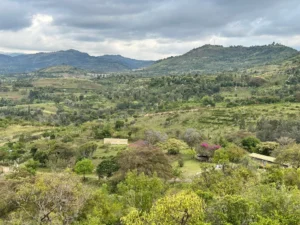
In 1962, excavations at Fort Ternan led by the renowned paleontologist Louis Leakey uncovered the fossil remains of Kenyapithecus wickeri, an extinct ape that lived around 14 million years ago during the Middle Miocene. At the time, the discovery attracted worldwide attention because it offered valuable clues about the evolution of apes and the distant ancestors from which modern great apes and humans eventually evolved.
Although scientists have refined their understanding of Kenyapithecus over the decades, the discovery remains one of Kenya’s landmark contributions to evolutionary science. It demonstrated that East Africa held a much richer fossil record than previously imagined and encouraged further exploration across the Rift Valley and beyond.
Unlike Koobi Fora or Olorgesailie, Fort Ternan is not a heavily developed tourist destination. However, its scientific legacy continues to influence research into primate evolution, making it an important stop in the story of Kenya’s fossil heritage.
Visitors exploring the lush tea-growing landscapes of Kericho can appreciate that beneath these green hills lies evidence of a world that existed millions of years before humans appeared.
Why Fort Ternan matters
- Site of the discovery of Kenyapithecus wickeri.
- Important contribution to the study of ape evolution.
- Demonstrates Kenya’s rich Miocene fossil record.
- Located within the scenic highlands of Kericho County.
Visitor information
Fort Ternan is best appreciated as part of a broader exploration of western Kenya’s geological and historical heritage. Local guidance is recommended, as visitor facilities are limited.
Nearby attractions
- Kericho tea plantations
- Mau Forest
- Londiani Forest
- Kisumu (within driving distance)
Meet the Discoverers
The fossils found across Kenya did not simply emerge from the ground on their own. Behind every discovery were dedicated researchers, fossil hunters, and scientists whose work transformed our understanding of human evolution.
Louis Leakey – The Visionary
Few names are as closely associated with Kenya’s prehistoric heritage as Louis Leakey. Through decades of research, he championed the idea that East Africa was central to understanding human origins. His work inspired generations of archaeologists and helped place Kenya at the forefront of paleoanthropological research.
Mary Leakey – The Meticulous Researcher
An exceptional archaeologist in her own right, Mary Leakey was renowned for her careful excavation techniques and detailed scientific observations. Her contributions greatly advanced the study of prehistoric life and archaeology in East Africa.
Richard Leakey – Continuing the Legacy
Building on the work of his parents, Richard Leakey led groundbreaking expeditions around Lake Turkana that resulted in numerous important fossil discoveries. He also became an internationally respected conservationist, helping protect Kenya’s natural heritage for future generations.
Kamoya Kimeu – Kenya’s Legendary Fossil Hunter
Perhaps no individual better represents Kenya’s contribution to paleoanthropology than Kamoya Kimeu.
Beginning as a field assistant, Kimeu developed an extraordinary ability to identify fossils in some of the harshest landscapes on Earth. His greatest achievement came in 1984, when he discovered the remarkably complete skeleton known as Turkana Boy, one of the most significant human fossil discoveries ever made.
His work demonstrated that some of the world’s greatest scientific discoveries are made not only through technology but also through patience, skill, and an exceptional understanding of the land.
Travel Tips for Visiting Kenya’s Fossil Sites
Exploring Kenya’s fossil sites is unlike a typical safari. Many are located in remote regions where careful planning will make your journey safer and more rewarding.
Plan for long distances
Several important fossil sites, particularly those around Lake Turkana, are located far from Kenya’s major cities. Allow enough travel time and consider combining multiple nearby attractions into one itinerary.
Visit museums and interpretation centers
Even if access to active excavation sites is limited, museums provide valuable context that helps bring fossil discoveries to life.
Travel with experienced guides
Knowledgeable local guides can explain the scientific importance of each site and enrich your visit with historical and cultural insights.
Respect protected heritage sites
Many fossil localities remain active research areas. Follow all regulations, stay on designated paths, and never remove rocks, fossils, or artefacts.
Prepare for remote conditions
Northern Kenya can be extremely hot and isolated. Carry sufficient drinking water, sun protection, sturdy footwear, and emergency supplies when travelling to remote regions.
Frequently Asked Questions
Which is the most famous fossil site in Kenya?
Koobi Fora, near Lake Turkana, is widely regarded as Kenya’s most famous fossil site because of its extraordinary discoveries relating to human evolution.
Why is Kenya called the Cradle of Humankind?
Kenya has yielded some of the world’s most significant fossil discoveries, helping scientists understand the evolution of early humans over millions of years. Together with neighboring countries in East Africa, it forms one of the most important regions for studying human origins.
Can tourists visit fossil sites in Kenya?
Yes, several fossil and prehistoric sites, including Olorgesailie, Kariandusi, Hyrax Hill, and Sibiloi National Park, welcome visitors. Others, such as Lomekwi and Kanapoi, are primarily research sites with limited public access.
Where was Turkana Boy discovered?
Turkana Boy was discovered in 1984 by Kamoya Kimeu at Nariokotome, near the western shores of Lake Turkana. While Nariokotome itself is separate from Koobi Fora, both belong to the greater Turkana Basin, one of the world’s richest fossil regions.
What is the oldest archaeological discovery in Kenya?
Among Kenya’s oldest archaeological discoveries are the 3.3-million-year-old stone tools from Lomekwi, currently recognized as the oldest known stone tools ever found.
Kenya’s fossil sites invite travelers to experience a side of the country that often receives far less attention than its celebrated wildlife and beaches. Yet beneath the Rift Valley, around Lake Turkana, and across ancient landscapes from Kericho to Lake Victoria lies a heritage that has reshaped our understanding of life on Earth.
These remarkable places remind us that Kenya is not only a destination for adventure but also one of the world’s greatest classrooms for exploring the origins of humanity. Every fossil, stone tool, and archaeological discovery adds another chapter to a story that continues to unfold through ongoing scientific research.
Whether you choose to visit the dramatic landscapes of Koobi Fora, explore the prehistoric settlements at Hyrax Hill, or stand beside the ancient lakebeds of Olorgesailie, you’ll be walking through places that have influenced science on a global scale.
Explore other Kenya’s historical sites in our guide on Kenya’s Historical Treasures, that tells about stories of the past.
At Bison Safaris, we believe that travel is about more than visiting destinations, it’s about understanding the stories that make those places meaningful. Fossil sites in Kenya offer a rare opportunity to connect with a history measured not in centuries, but in millions of years, leaving visitors with a deeper appreciation of the country’s remarkable contribution to the story of humanity.