Kenya is a country of remarkable contrasts. In one trip, you can watch elephants beneath Mount Kilimanjaro, follow wildlife across the Maasai Mara, explore the rugged landscapes of northern Kenya and finish your holiday beside the Indian Ocean. The only challenge is that these experiences are spread across a large country, and travelling between them by road can take considerably more time than many visitors expect.
This is where flights in Kenya can transform the way you travel.
Whether you are travelling between Nairobi and the coast, heading into the Maasai Mara for a safari or connecting remote destinations such as Samburu and Laikipia, Kenya has an extensive domestic aviation network designed to make long distances easier to cover. Some airlines operate conventional commercial flights between major cities, while specialist safari airlines use smaller aircraft to reach remote airstrips close to camps and conservancies.
Understanding the different flights in Kenya is therefore important when planning an itinerary. The best airline depends not only on the destination, but also on your departure airport, baggage requirements, budget and whether you are travelling to a major town or directly into the bush.
Why Choose Flights in Kenya?
There is something special about travelling through Kenya by road. The landscape constantly changes, from the traffic and skyscrapers of Nairobi to the escarpments of the Great Rift Valley, open savannah and eventually the palm fringed coast. For travellers with plenty of time, the journey itself can be part of the adventure.
But not every journey needs to be made on the road.
For visitors with only a few days in Kenya, spending six or seven hours travelling between destinations can take away valuable time from the holiday. Flights in Kenya can turn a long road journey into a much shorter trip, giving you more time to enjoy your destination.
This is particularly valuable on safari. Instead of spending most of a day driving from Nairobi to the Maasai Mara, travellers can take a flight from Wilson Airport and land at an airstrip within the Mara ecosystem. A safari vehicle can then collect them and take them to their camp or lodge.
The same advantage applies in northern Kenya. Destinations such as Samburu, Lewa, Loisaba and Laikipia are geographically remote, but safari aviation makes them much more accessible. Flights can also make it easier to combine a safari with a beach holiday without repeatedly returning to Nairobi.
That does not mean flights in Kenya are always better than driving. A road journey gives you the chance to see more of the country, stop at viewpoints and experience the changing landscape at ground level.
For many travellers, the best approach is to combine both. Drive where the journey is part of the experience and fly when saving time makes more sense.
JKIA or Wilson Airport: Where Do Your Flights in Kenya Depart?
One of the most important things to understand before booking flights in Kenya is that Nairobi has two airports commonly used by travellers.
Jomo Kenyatta International Airport, JKIA, is Kenya’s principal international gateway. It also handles conventional domestic services, including flights operated by airlines such as Kenya Airways and Jambojet.

Wilson Airport serves a different but equally important role. It is a major hub for safari and regional aviation, with many flights operated by Safarilink, AirKenya and other smaller operators departing from here.
For a first time visitor, this distinction can be easy to overlook.
Imagine arriving in Nairobi on an international flight at JKIA and continuing to the Maasai Mara the following morning. Your safari flight may depart from Wilson rather than JKIA. The two airports are separate, so you need to allow enough time to travel between them.
This is especially important if your international and domestic tickets are booked separately. Immigration, baggage collection and Nairobi traffic can all affect how quickly you can get from one airport to the other.
Never assume that a flight advertised as departing from Nairobi leaves from JKIA. Check the airport name and code on your booking before travelling.
The Main Airlines Operating Flights in Kenya
The airlines operating flights in Kenya cater to different types of travellers. Some focus on major airports and city-to-city connections, while others specialise in reaching safari destinations and remote airstrips.
Safarilink Aviation
Safarilink is one of the most important airlines for travellers taking flights in Kenya to safari destinations. Operating from Wilson Airport, the airline’s network includes destinations such as Amboseli, Maasai Mara, Samburu, Nanyuki, Lewa Downs, Loisaba, Naivasha, Tsavo West, Diani, Lamu, Malindi, Mombasa and Kisumu. Its network also extends to destinations in Tanzania and Uganda.
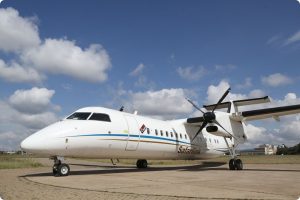
Its biggest advantage is access to smaller airstrips. Rather than flying only between major airports, Safarilink can take passengers much closer to the safari camp or conservancy where they are staying.
The baggage rules reflect the smaller aircraft used on many routes. Safarilink generally allows 15 kg per passenger on most safari routes, including hand baggage and cameras, while selected destinations have a 20 kg allowance.
Travellers using Safarilink should therefore pack carefully and choose soft-sided luggage rather than assuming the baggage allowance will be the same as on an international flight.
AirKenya Express
AirKenya Express is another established safari airline based at Wilson Airport. Its network provides access to destinations including the Maasai Mara, Amboseli, Samburu, Ol Pejeta, Lewa and Tsavo, with regional connections extending beyond Kenya.
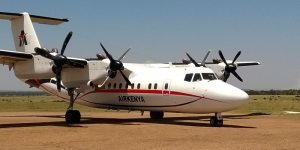
For travellers whose itinerary focuses heavily on safari, AirKenya can be particularly convenient because its aircraft are suited to remote airstrips that are not served by larger commercial planes.
The airline also has specific check-in requirements. At Wilson Airport, passengers are generally required to check in 60 minutes before departure, while check-in at bush airstrips is generally 30 minutes before departure. Flight times can also change because of operational, weather or safety considerations.
This is an important difference between conventional flights in Kenya and safari aviation. A bush flight is part of an operating environment where weather, airstrip conditions and aircraft payload can influence the schedule.
Kenya Airways
Kenya Airways is Kenya’s national carrier and is more suited to conventional flights in Kenya between major airports.
Its current domestic network includes Nairobi to Mombasa, Nairobi to Kisumu and Kisumu to Mombasa. The airline currently advertises 60 weekly flights to Mombasa and 17 weekly flights to Kisumu.
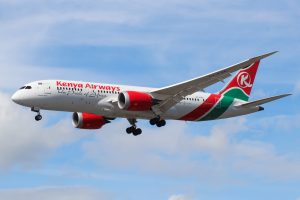
For travellers moving between Nairobi, the coast and western Kenya, Kenya Airways provides a conventional commercial flight experience.
Its baggage allowance also differs from that of safari airlines. Kenya Airways currently lists one checked bag of up to 23 kg in Economy and up to 32 kg in Business on applicable routes.
Jambojet
Jambojet is Kenya’s low cost carrier and is another major option for flights in Kenya.
Its network focuses on major airports and regional destinations rather than small safari airstrips. Depending on the current schedule, its domestic network includes destinations such as Mombasa, Kisumu, Eldoret, Malindi, Lamu and Ukunda.
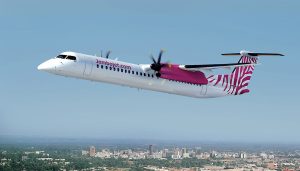
The low cost model means travellers should pay attention to the fare conditions and additional services when booking. A low advertised fare does not necessarily include everything you may need, particularly checked baggage.
When comparing flights in Kenya, look at the final price rather than only the headline fare. Adding baggage or other services can change the total cost considerably.
Skyward Airlines
Skyward Airlines has developed a broad network connecting Nairobi with destinations across different parts of Kenya. Its services include destinations such as Mombasa, Malindi, Lamu, Ukunda, Eldoret, Kitale, Lodwar, Migori and Garissa, alongside other destinations depending on the current schedule.
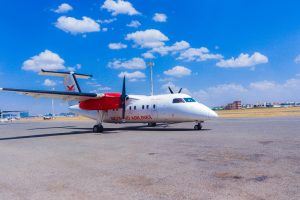
This makes Skyward useful for travellers who need to reach regional centers that may not be served by the largest airlines.
As with all flights in Kenya, baggage allowances and schedules vary by airline and route, so check the conditions attached to your specific booking before departure.
Mombasa Air Safari
Mombasa Air Safari is particularly useful for travellers combining Kenya’s coast with a safari.
The airline operates services involving destinations such as the Maasai Mara, Amboseli, Tsavo West, Diani and Malindi, making it possible to connect parts of the coast with safari destinations without necessarily returning to Nairobi between every stage of a trip.
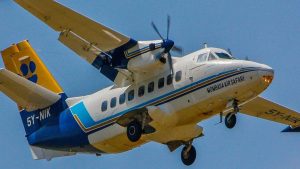
Its scheduled flights generally have a 15 kg total baggage allowance, including hand luggage and cameras. Soft-sided bags are required because smaller aircraft have limited and irregular luggage space.
The airline also provides luggage storage at selected locations, which can be useful if you are travelling with belongings that you do not need to take into the bush.
Governors’ Aviation
Governors’ Aviation is a specialist safari operator rather than a conventional city to city airline. It is particularly relevant to travellers staying in the Maasai Mara, Naivasha and selected destinations in Laikipia.
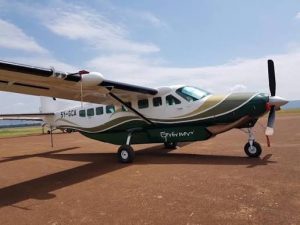
Its 2026 schedule includes daily services between Wilson Airport and numerous Maasai Mara airstrips, including Cottars, Ol Seki, Olare, Keekorok, Serena, Ol Kiombo, Kichwa Tembo, Musiara, Mara North and Ngerende. It also operates services towards Naivasha and Laikipia.
The extensive list of airstrips demonstrates just how specialized safari flights in Kenya can be. Your destination is not simply “the Maasai Mara”; the most convenient flight depends on where your camp or lodge is located.
Where Can You Take Flights in Kenya?
The easiest way to understand the country’s aviation network is to look at the major travel regions.
Nairobi is the starting point for many flights in Kenya. From the capital, travellers can fly towards the coast, western Kenya, northern Kenya and major safari destinations.
The Maasai Mara is one of the most popular destinations for safari flights. Several airlines serve different airstrips within the Mara ecosystem. Because there are numerous airstrips, travellers should always check which one is closest to their accommodation.
This can make a significant difference. Landing at an airstrip close to your camp may mean that your safari vehicle is waiting nearby, while choosing a different airstrip could result in a much longer transfer.
Amboseli is another popular destination from Nairobi. For travellers on a short safari, flights can save valuable hours that would otherwise be spent travelling by road.
Northern Kenya is another region where flying makes a great deal of sense. Samburu, Lewa, Loisaba and Laikipia are far from Nairobi, but specialist safari airlines make these destinations much easier to reach.
The coast is equally important. Mombasa, Diani through Ukunda, Malindi and Lamu are connected to Nairobi by several domestic operators. These routes are especially useful for travellers combining a safari with a beach holiday.
The network extends beyond tourism hotspots too. Depending on the airline and current schedule, flights in Kenya can connect travellers with regional destinations such as Eldoret, Kisumu, Kitale, Lodwar, Migori and Garissa.
Domestic aviation therefore serves more than tourism. It also connects Kenya’s regions for business, family travel and other purposes.
Airports and Safari Airstrips Are Not the Same Thing
For many international visitors, one of the most surprising things about flights in Kenya is how different a safari flight can feel from a normal commercial flight.
At a major airport such as JKIA, passengers pass through terminals, security checkpoints, departure lounges and boarding gates. A bush flight can be a much simpler experience.
You may arrive at a small airstrip surrounded by open grassland, wait briefly for the aircraft and then board a small plane. After landing, there may be little more than a simple shelter or waiting area. A safari vehicle from your camp may already be waiting to collect you.
The lack of large infrastructure is intentional. These airstrips exist because they are close to wildlife areas and safari camps.
The Maasai Mara demonstrates this particularly well. There are numerous airstrips serving different sections of the ecosystem and surrounding conservancies. The variety of scheduled Mara destinations operated by specialist airlines shows why travellers need to identify the correct airstrip before booking.
For many travellers, arriving by airstrip is one of the most memorable parts of taking flights in Kenya. One moment you are above the savannah; minutes later, you are stepping onto the ground with a safari vehicle waiting nearby.
Baggage Allowance for Flights in Kenya
Baggage is one area where travellers should never make assumptions.
There is no single baggage allowance that applies to every airline offering flights in Kenya.
Conventional airlines can offer considerably more luggage capacity. Kenya Airways, for example, lists up to 23 kg of checked baggage in Economy and 32 kg in Business on applicable domestic routes.
Safari flights are different because smaller aircraft have limited payload and luggage space.
Safarilink generally allows 15 kg total on most safari routes, including hand baggage and cameras. AirKenya also uses a 15 kg allowance for its safari operations, while Mombasa Air Safari similarly limits scheduled-flight baggage to 15 kg total.
This means a suitcase that is perfectly acceptable on an international flight may be unsuitable for the safari portion of your journey.
Soft-sided luggage is therefore the safest choice when your itinerary includes safari flights in Kenya. Mombasa Air Safari specifically explains its restrictions around hard-shell luggage because of the limited space available on its aircraft.
If your itinerary combines conventional and safari flights, consider leaving larger luggage in secure storage and carrying only what you need into the bush. Some operators provide luggage storage at their departure points.
Always check the airline’s current baggage rules before travelling, particularly if you are carrying camera equipment, sports equipment, baby equipment or other bulky items.
Tips for Booking Flights in Kenya
Booking flights in Kenya is straightforward, but a few details can make the difference between a smooth journey and an unnecessary travel headache.
- Check the departure airport first. If your flight leaves Nairobi, determine whether it departs from JKIA or Wilson. This is particularly important when connecting from an international arrival.
- Look at the exact destination. If you are travelling to the Maasai Mara, do not stop at the words “Maasai Mara” on the booking page. Find out which airstrip your flight uses and whether it is convenient for your accommodation.
- Check baggage before you pack. This becomes especially important when your itinerary combines a large commercial aircraft with a smaller safari aircraft.
- Leave enough time between separate flights. International arrivals involve immigration and baggage collection, while traffic between JKIA and Wilson can be unpredictable. If possible, avoid creating a tight connection between two separately booked tickets.
- Check the schedule close to departure. Safari aviation can be affected by weather and operating conditions. AirKenya, for example, notes that flight times can change because of operational, weather or safety considerations.
- Compare the total cost. The cheapest advertised flight is not necessarily the cheapest journey once baggage, transfers and other extras are considered.
Most importantly, choose the flight that works best for your itinerary rather than automatically choosing the lowest fare.
Flights in Kenya vs Driving: Which Is Better?
There is no universal answer.
Flights in Kenya are particularly useful when time is limited, distances are long or the destination is remote. They are an excellent option for safari travellers who would rather spend their holiday watching wildlife than sitting in a vehicle for several hours between destinations.
Driving is better when the journey itself matters. Kenya has landscapes that deserve to be seen from the ground, and a road trip allows you to stop at viewpoints, towns and attractions along the way.

The most rewarding itinerary may combine both.
You could drive from Nairobi to Amboseli to experience the changing scenery, fly from Amboseli to the Maasai Mara to save time and then take another flight from the Mara towards the coast.
Alternatively, you could make a longer road journey through the Great Rift Valley and then use flights in Kenya to connect the final stages of your trip.
Domestic aviation does not have to replace road travel. It can simply give you more flexibility in deciding where your time is best spent.
Frequently Asked Questions About Flights in Kenya
Can international tourists take flights in Kenya?
Yes. International visitors can use Kenya’s domestic and safari airlines. Carry your passport and make sure the name on your booking matches your travel document.
Which Nairobi airport is used for safari flights?
Many safari flights depart from Wilson Airport, although the airport depends on the airline and route. Conventional domestic services may operate from JKIA, so always check your booking carefully.
Can you take flights from Nairobi to the Maasai Mara?
Yes. Several safari airlines operate flights from Nairobi to different airstrips within the Maasai Mara ecosystem. The best airstrip depends on the location of your camp or lodge.
What is the baggage allowance for flights in Kenya?
It varies by airline. Conventional carriers can offer allowances of around 23 kg or more, while safari airlines commonly impose lower limits because they operate smaller aircraft. Several safari operators use a 15 kg total allowance on many services.
Can I take a hard-shell suitcase on safari flights?
You should not assume that you can. Many safari airlines require or strongly recommend soft-sided luggage because of limited luggage space on small aircraft.
Are flights in Kenya safe?
Kenya’s aviation industry operates under the country’s civil aviation regulatory framework. Travellers should use established operators, follow airline instructions and understand that weather and operational conditions can occasionally affect safari flight schedules.
Are flights in Kenya expensive?
Prices vary according to the route, airline, season, availability and how early you book. Safari flights can cost more than some conventional domestic routes because they serve smaller destinations and remote airstrips.
Should I take flights in Kenya or drive on safari?
If you have limited time, flying can be an excellent way to maximize your time at the destination. If you have more time and want to experience Kenya’s scenery, driving can be equally rewarding. For many itineraries, combining the two offers the best balance.
Make More of Your Time in Kenya
The growing network of flights in Kenya makes it possible to experience several very different sides of the country without spending most of your holiday travelling between them. A journey can begin among Nairobi’s urban attractions, continue into the Maasai Mara by small aircraft and end on the beaches of the Indian Ocean.
The experience is not limited to major airports. Some of Kenya’s most memorable journeys end on simple bush airstrips surrounded by wilderness, where a safari vehicle is waiting to take you into the heart of a reserve or conservancy.
The secret to making flights in Kenya work well is preparation. Know whether you are leaving from JKIA or Wilson, check the exact airstrip serving your accommodation, understand your airline’s baggage allowance and leave enough time for connections.
Most importantly, choose flights that complement your itinerary rather than simply choosing the cheapest available ticket.
If you are planning a multi-destination Kenya safari, Bison Safaris can help you combine flights, road transfers and carefully selected safari experiences into one seamless itinerary. With the right balance of flying and driving, you can spend less time getting between destinations and more time experiencing the wildlife, landscapes and coastal beauty that make Kenya unforgettable.