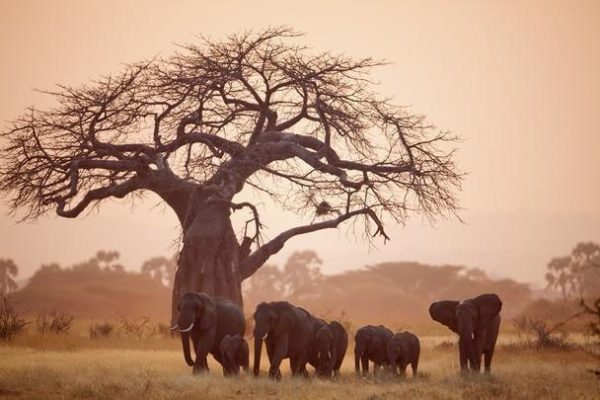
A safari does not always announce itself with a lion’s roar. Sometimes it begins with a call from somewhere high in the trees. You stop the vehicle, everyone looks up, and after a few seconds your guide points towards a tiny shape moving between the branches. Other times, the scene is much bigger: hundreds of birds lifting from a wetland at once, flamingos gathering along a lake shore, or an eagle gliding silently above the savannah.
That is the magic of birdwatching safaris in East Africa. The region’s wildlife is not limited to the animals most visitors come hoping to see. Look a little closer and the landscapes are alive with colour, movement and sound.
Kenya, Uganda, Tanzania and Rwanda contain an extraordinary mixture of lakes, wetlands, forests, mountains, grasslands and savannahs. Each habitat attracts a different community of birds, which means that moving from one destination to another can completely change what you encounter.
You do not have to be a serious birder to enjoy it. A pair of binoculars, a knowledgeable guide and a little patience can turn an ordinary game drive into a fascinating search for species you might otherwise drive straight past.
If you are planning birdwatching safaris in East Africa, these seven destinations offer very different ways to experience the region’s remarkable birdlife.
Why East Africa Is So Good for Birdwatching
One of the best things about birdwatching in East Africa is the sheer variety of habitats.
A morning around a Rift Valley lake can involve watching waterbirds, while an afternoon in woodland may mean searching the branches for rollers, turacos or sunbirds. In a rainforest, the experience changes again: birds may be hidden in the canopy, and sometimes hearing the call is easier than finding the bird itself.
The region also receives migratory birds at different times of the year, adding seasonal visitors to the species that live here throughout the year. In Kenya, for example, November to April is particularly interesting for birdwatchers because Palearctic migrants are present alongside resident species. Our guide to an unforgettable Kenya birding safari also covers the country’s major birding regions, equipment and the role of specialist guides.
This combination of resident birds, migrants and varied habitats is what makes birdwatching safaris in East Africa so rewarding. You are not simply visiting a place to find one particular bird. You are entering an ecosystem and discovering what happens to be moving, calling, feeding or flying through it that day.
Lake Nakuru, Kenya
Lake Nakuru is one of the most recognizable birdwatching destinations in Kenya, and for good reason. The lake lies in the Great Rift Valley, surrounded by woodland, grassland and rocky escarpments. Kenya Wildlife Service describes the park as an ornithological paradise with approximately 450 bird species recorded.
Flamingos are naturally part of the attraction, but they should not be the only reason to bring binoculars.
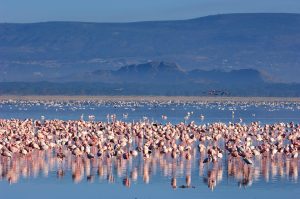
Pelicans, fish eating birds, terrestrial species and migratory birds can all add to the experience. Around the lake, the scenery constantly changes as birds move between the water, shoreline and surrounding vegetation.
There is also an important lesson here for anyone planning birdwatching safaris in East Africa: wildlife does not always appear exactly as it does in photographs.
Lake Nakuru’s flamingo population has changed considerably as water levels and lake conditions have changed. A recent Kenya Wildlife Service census found that Lesser Flamingos have shifted between Rift Valley lakes as environmental conditions change, with Lake Nakuru recording far fewer flamingos than during its historic peak.
That does not make the lake less interesting. If anything, it is a reminder that birdwatching is about observing nature as it is, rather than expecting a particular photograph to come to life in front of you.
And if you become fascinated by the behaviour of the birds you encounter, our article on Kenyan birds with the most bizarre mating dances is a natural next read. It explores everything from the spectacular displays of grey crowned cranes to the unusual courtship behaviour of widowbirds and other Kenyan species.
Lake Naivasha, Kenya
There is something wonderfully peaceful about birdwatching around Lake Naivasha.
The freshwater lake sits on the floor of the Great Rift Valley, surrounded by acacia woodland, papyrus and agricultural landscapes. Its calm waters provide habitat for a wide variety of waterbirds, while the vegetation around the shoreline creates opportunities to look for species away from the open water.
The lake is internationally recognized as an important wetland. Its Ramsar information identifies it as a stopover and wintering area for Palearctic migrant birds and records a high diversity of avifauna, including species such as the African fish eagle, great crested grebe, saddle-billed stork and giant kingfisher.
The African fish eagle is one of those birds that can make you stop whatever you are doing.
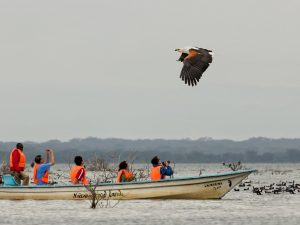
You may hear its distinctive call before noticing the bird itself, often perched somewhere above the water. Pelicans, herons, egrets, cormorants and kingfishers bring their own movement to the shoreline, while hippos can occasionally remind you that you are never watching birds in isolation from the rest of the ecosystem.
Naivasha is also a good place to experience the quieter side of birdwatching safaris in East Africa. You are not necessarily racing from one sighting to another. Sometimes you are simply sitting near the water, watching birds feed, fly and interact.
And if you happen to see an African jacana stepping almost effortlessly across floating vegetation, remember that some of Kenya’s most unusual bird behaviour happens in wetlands.
Bwindi Impenetrable Forest, Uganda
Birdwatching in Bwindi feels completely different from birdwatching beside a lake. Here, the landscape closes around you.
The ancient looking forest is dense, green and often misty, with birds moving through layers of vegetation and canopy. Instead of scanning a wide horizon, you may find yourself standing quietly on a forest trail, listening for a call and trying to work out where it came from.
Uganda Wildlife Authority lists more than 350 bird species in Bwindi, including 23 Albertine Rift endemics.
The Albertine Rift is particularly important because several of its bird species have very restricted ranges. For a birdwatcher, that makes the experience more than simply adding another colourful bird to a checklist. You are looking for species associated with a very specific part of Africa.
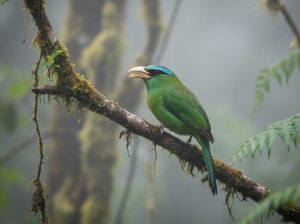
Bwindi is also a good example of why birdwatching safaris in East Africa can appeal even to travellers who are not expert birders. You may not know the name of every bird you hear, but the experience of walking through a forest alive with calls and movement is rewarding in itself.
Patience matters here. A bird can call repeatedly without showing itself, and then suddenly appear for only a few seconds before disappearing into the foliage. That fleeting moment is often what makes forest birding so addictive.
Queen Elizabeth National Park, Uganda
If you want your birdwatching safari to combine birds with a classic African wildlife experience, Queen Elizabeth National Park offers a particularly interesting mix.
The park contains savannah, woodland, wetlands, lakes and the Kazinga Channel. Uganda Wildlife Authority records more than 600 bird species in the park, creating opportunities for both dedicated birders and travellers who simply want to notice more of the wildlife around them.
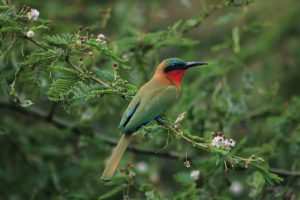
The Kazinga Channel is especially rewarding because the water concentrates wildlife in one area.
A boat trip can put you close to the shoreline while hippos rest in the water and crocodiles lie along the banks. Above them, birds perch, feed and move between the water and vegetation.
African fish eagles are among the species to look for, while wetland habitats provide opportunities for storks, herons and other water associated birds.
The beauty of birdwatching here is that you do not have to choose between the two types of safari. One moment you might be watching a bird perched above the channel, the next, the guide may point out an elephant or buffalo nearby.
That constant possibility of something unexpected happening is what keeps a game drive interesting even when the famous predators are nowhere in sight.
Lake Manyara, Tanzania
Lake Manyara is compact, but its mixture of habitats makes it an excellent stop for birdwatchers.
Tanzania National Parks describes the park as supporting more than 400 recorded bird species, with the alkaline lake attracting flamingos, pelicans and other waterbirds while forests and woodland support turacos, hornbills and other species.
The contrast is part of the attraction.
Near the lake, you can watch large groups of birds feeding or moving across the water. Further inland, the scenery becomes greener and more enclosed, and your attention shifts to the trees.
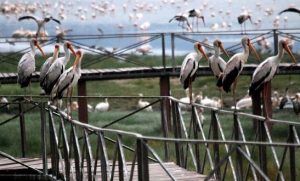
It is the sort of place where a birding morning can unfold in layers. You begin with obvious waterbirds and gradually start noticing smaller species in the surrounding vegetation.
Lake Manyara is also a reminder that birdwatching does not have to mean travelling to an isolated wilderness. The park’s different habitats are packed into a relatively compact landscape, allowing visitors to experience several types of birding during the same safari.
For anyone planning birdwatching safaris in East Africa as part of a wider northern Tanzania trip, that variety makes Lake Manyara a particularly interesting addition.
Arusha National Park, Tanzania
Arusha National Park is easy to underestimate. It sits close to Arusha, the gateway to many northern Tanzania safaris, yet its landscapes stretch from lakes and open plains to forested slopes around Mount Meru.
Tanzania National Parks records more than 450 bird species in the park. The Momella Lakes are particularly useful for spotting lesser and greater flamingos, while the surrounding forests provide a completely different birding environment.
This is where the pace can slow down.
Instead of simply watching the lake, you begin listening for movement in the forest. Turacos, hornbills and other woodland birds can reward careful observation, while the open areas around the lakes offer a chance to look for waterbirds.
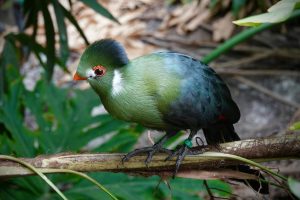
Arusha also works well for travellers who are combining birdwatching with other interests. You can experience forest, mountain scenery, wildlife and lakes without needing to dedicate the entire trip to birds.
And that is one of the strengths of birdwatching safaris in East Africa: you do not necessarily have to build an itinerary around one activity. Birding can become another way of experiencing a destination that already has plenty to offer.
Akagera National Park, Rwanda
Akagera brings us to the eastern side of Rwanda, where lakes, wetlands, savannah and woodland create a very different birding landscape.
Visit Rwanda lists more than 520 bird species in Akagera, including African fish eagles, shoebill storks, grey crowned cranes, lilac breasted rollers, saddle billed storks and papyrus gonoleks. The park supports both resident and migratory birds.
For many birdwatchers, the shoebill is the species that immediately catches the imagination.
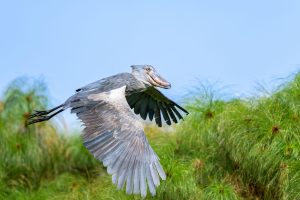
It is an unusual looking bird with an enormous bill and an almost prehistoric appearance. But even if you do not encounter one, Akagera has enough variety to keep a birding excursion interesting.
The wetlands are particularly important. They bring together birds that depend on shallow water and marshy habitats, while the surrounding savannah adds species associated with drier landscapes.
Akagera is also a good example of why birdwatching safaris in East Africa can feel so different from one destination to another. You can travel a relatively short distance within the region and suddenly find yourself looking at a completely different collection of birds.
When Is the Best Time for Birdwatching Safaris in East Africa?
There is no single month that guarantees the best birdwatching everywhere in East Africa.
Resident species can be seen throughout the year, while migratory birds add another layer of diversity during their seasonal movements. In Kenya, November to April is particularly attractive for birdwatchers interested in migrants, while Uganda also offers year-round birdwatching with seasonal differences in conditions and species activity.
For a traveller, the best time therefore depends partly on what you want to see.
If migratory birds are high on your list, researching their seasonal movements before booking is worthwhile. If your main interest is resident species, you may have considerably more flexibility.
Weather also matters. Wet conditions can make some roads and walking trails more difficult, but the greener landscape can bring its own rewards. Drier months may make travel easier in some destinations, while certain birds may be more conspicuous around remaining water sources.
The important thing is to think of birdwatching as a natural experience rather than a guaranteed checklist. Even two visits to the same park can produce completely different sightings.
What to Pack for a Birdwatching Safari
You do not need an enormous amount of equipment to start enjoying birdwatching.
A good pair of binoculars should be at the top of the list. Birds can be surprisingly difficult to identify with the naked eye, especially when they are perched high in a tree or sitting on the opposite side of a lake.
A camera with a zoom lens is useful if photography matters to you, but remember that getting the photograph should never become more important than giving the bird space.
Comfortable walking shoes are useful for forest trails and nature walks, while lightweight clothing, a hat, sunscreen and insect repellent can make long hours outdoors more comfortable.
A notebook or birding app is also worth carrying. Recording your sightings gives you something to look back on after the safari and gradually helps you recognize species more easily.
For a more detailed look at preparation, Bison’s Kenya birding safari guide covers binoculars, spotting scopes, cameras, clothing, guides and practical preparation.
What Makes a Good Birdwatching Safari?
The best birdwatching safaris are not necessarily the ones where you see the greatest number of species.
Sometimes the most memorable sighting is one bird.
It might be an owl sitting silently in a tree, a fish eagle calling over a lake or a colourful roller appearing beside the safari vehicle for just long enough to take a photograph.
A good guide can make a huge difference because experienced birding guides know that finding a bird is often about more than simply looking. They recognize calls, understand habitats and know where particular species are likely to feed or rest.
Kenya’s birdlife is particularly rewarding in this respect. Our guide to Kenya’s colourful lilac-breasted roller is a good example of how a familiar safari bird can become much more interesting once you understand its appearance, behaviour and place in the landscape.
And if owls are what catch your attention, Kenya has some fascinating species beyond the birds you are most likely to see during a daytime game drive. Our guide to the Sokoke Scops Owl explores one of Kenya’s distinctive forest owls and offers another glimpse into the country’s less obvious birdlife.
That is really the secret of birdwatching. The more you learn, the more you notice.
Responsible Birdwatching in East Africa
Birdwatching should never come at the expense of the birds themselves.
Avoid approaching nests or breeding sites too closely, and never disturb a bird simply to get a better photograph. Loud playback of bird calls can interfere with normal behaviour, while leaving established trails can damage fragile habitats.
Wetlands deserve particular care because they support large numbers of birds but can also be sensitive to disturbance and environmental change. Lake Naivasha, for example, is an internationally important wetland that supports both resident and migratory birds.
A responsible birdwatcher observes without trying to control the encounter.
Let the bird decide how close it wants to be. Listen to your guide. Keep noise low. Stay on appropriate paths and respect the rules of protected areas.
The goal is to leave the habitat looking exactly as you found it.
Experience East Africa Beyond the Big Five
There is a certain freedom that comes with discovering birdwatching safaris in East Africa.
You stop measuring a safari only by whether you saw a lion or leopard. You begin paying attention to the smaller details: the flash of a roller’s wings, the call of a fish eagle across the water, a crane dancing in the grass or an owl appearing unexpectedly in the trees.
The region’s lakes, forests, wetlands and savannahs make that possible in countless different ways.
From Lake Nakuru and Lake Naivasha in Kenya to Bwindi and Queen Elizabeth in Uganda, Lake Manyara and Arusha in Tanzania, and Akagera in Rwanda, each destination offers its own collection of habitats and birdlife. You may arrive looking for one particular species and leave talking about something you never expected to see.
That is what makes birdwatching safaris in East Africa so rewarding. They encourage you to slow down, look closer and experience the landscape rather than simply passing through it.
For travellers who want to discover this side of East Africa, Bison Safaris can help build a safari around birdwatching interests while still leaving room for the landscapes, cultures and wildlife that make the region special.