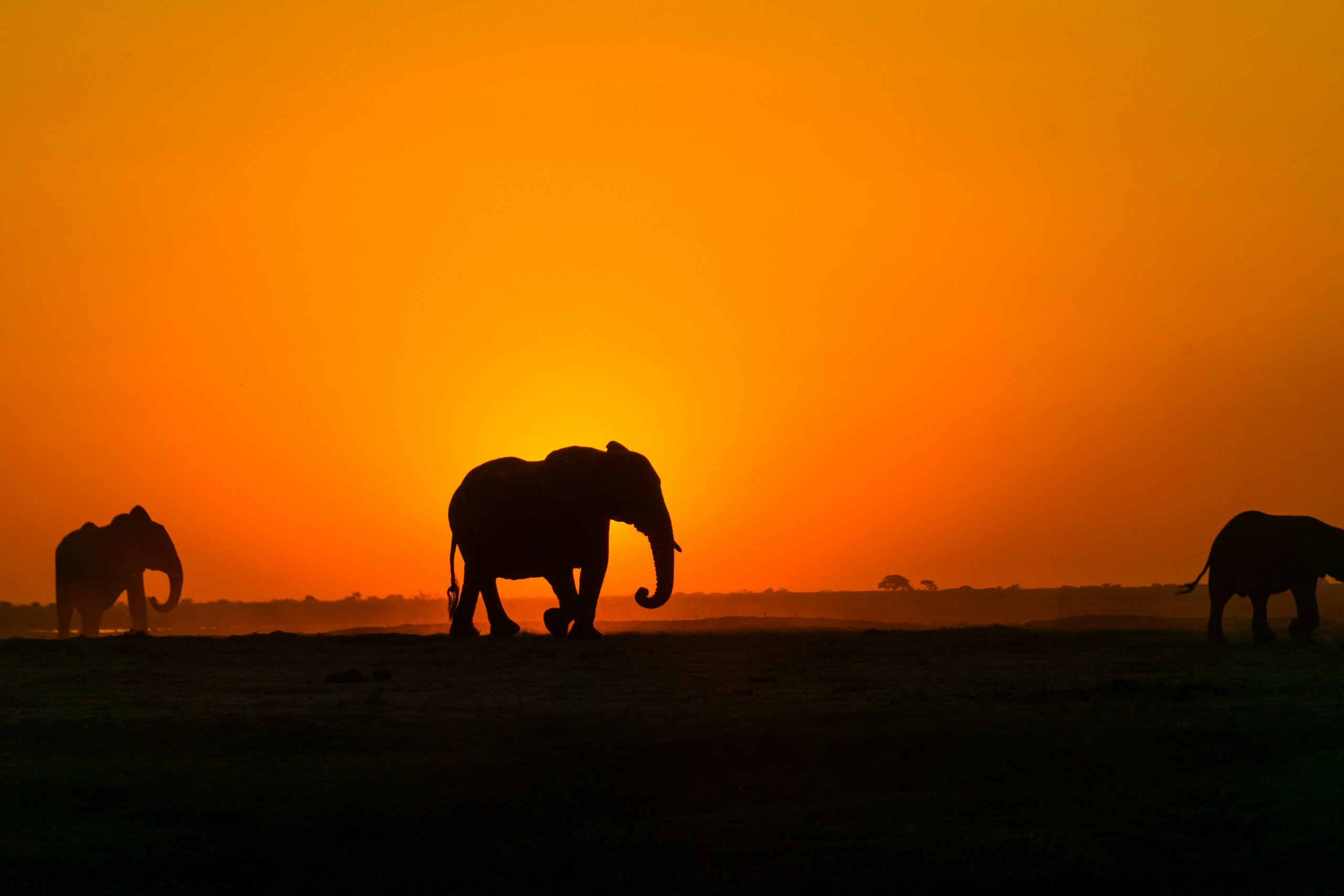
When most people imagine a Kenyan safari, they picture lions stalking the savannah, elephants crossing dusty plains, or giraffes gracefully browsing beneath the African sky. Yet, there’s another part of the landscape that quietly makes these unforgettable wildlife encounters possible, the remarkable trees in Kenya.
From the iconic umbrella-shaped acacias that define the Maasai Mara to the ancient baobabs standing like giants in Tsavo, Kenya’s trees are far more than scenic backdrops. They provide food, shelter, nesting sites, shade, and even natural landmarks for countless species. Some have evolved extraordinary relationships with insects and animals, while others have supported local communities for generations through medicine, food, and cultural traditions.
Learning to recognize these trees transforms a safari into a richer experience. Suddenly, every game drive becomes an opportunity to appreciate not only the wildlife but also the ecosystems that sustain it.
In this guide, we’ll introduce you to 11 incredible trees in Kenya, where to find them, and why they deserve just as much attention as the country’s famous wildlife.
Why Trees Are Essential to Kenya’s Wildlife
Every ecosystem depends on plants, and Kenya’s diverse landscapes are no exception. Whether you’re exploring the open grasslands of the Maasai Mara, the volcanic plains of Amboseli, or the forests of Mount Kenya, trees play a vital role in supporting life.
Many herbivores, including giraffes, elephants, and antelopes, rely on leaves, bark, flowers, and seed pods as food throughout the year. Birds build nests high among branches, while monkeys and countless insects spend much of their lives in the forest canopy. Even predators benefit indirectly, as healthy vegetation supports the herbivores they hunt.
Trees also help stabilize soil, reduce erosion during heavy rains, regulate temperatures by providing shade, and improve water retention across landscapes. In many areas, they create microhabitats that allow smaller plants and animals to thrive despite harsh climates.
For safari travelers, understanding these trees offers a deeper appreciation of Kenya’s extraordinary natural heritage and reveals the hidden connections that keep its ecosystems thriving.
The Baobab Tree (Adansonia digitata)
Few trees are as instantly recognizable as the majestic baobab. Often called the “Tree of Life”, this massive species appears almost upside down, with thick trunks that look as though roots are reaching into the sky.
Some baobabs are believed to be over 1,000 years old, making them silent witnesses to centuries of wildlife migrations and changing landscapes. Their enormous trunks store thousands of liters of water, allowing them to survive prolonged droughts in Kenya’s arid regions.
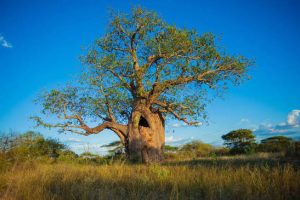
Baobabs are ecological powerhouses. Elephants sometimes strip their bark during dry seasons to access moisture, while bats pollinate the large white flowers that bloom at night. Birds, reptiles, insects, and small mammals all depend on the tree for shelter or food.
The best places to see baobabs include Tsavo East National Park, Tsavo West National Park, and parts of Kenya’s coastal region, where these ancient giants dominate the landscape.
Their striking silhouette against a fiery African sunset makes them one of the most photographed trees on any Kenyan safari.
Umbrella Thorn Acacia (Vachellia tortilis)
If you’ve ever admired a classic African safari photograph, chances are you’ve already seen the umbrella thorn acacia. Its broad, flat-topped canopy has become one of the defining symbols of East Africa.
Perfectly adapted to hot, dry environments, this tree provides valuable shade for wildlife and serves as a major food source for giraffes, elephants, gazelles, and many browsing antelope species. During the dry season, its nutritious seed pods become especially important.
The umbrella thorn’s extensive root system allows it to survive in areas where rainfall is scarce, making it common across Kenya’s savannahs.
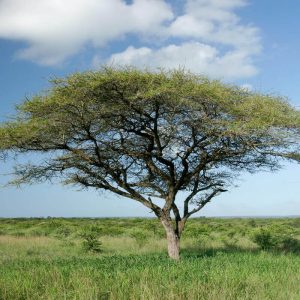
Visitors can easily spot these iconic trees in the Maasai Mara National Reserve, Amboseli National Park, Samburu National Reserve, and throughout Tsavo.
Besides supporting wildlife, these acacias create some of Kenya’s most breathtaking landscapes, especially during sunrise and sunset when their distinctive shapes stand dramatically against the horizon.
Yellow Fever Tree (Vachellia xanthophloea)
Despite its alarming name, the yellow fever tree does not cause yellow fever. Early settlers mistakenly associated these striking trees with mosquito-filled swamps where people contracted the disease, giving rise to the misleading name.
Recognizable by its smooth, yellow-green bark, this tree flourishes in wetlands, riverbanks, and floodplains. Its bright trunks often glow beautifully in early morning or late afternoon light, making it a favorite subject for photographers.
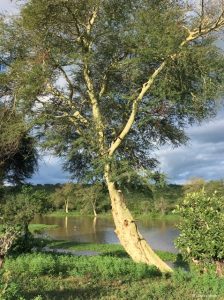
The yellow fever tree provides nesting sites for birds, shade for mammals, and nectar for insects. Wetland ecosystems surrounding these trees also attract elephants, buffaloes, hippos, and a rich variety of birdlife.
Excellent places to find yellow fever trees include Amboseli National Park, Lake Nakuru National Park, and sections of the Great Rift Valley.
Whistling Thorn (Vachellia drepanolobium)
One of the most fascinating trees in Kenya is the whistling thorn, famous for its remarkable partnership with ants. At first glance, it looks like an ordinary acacia, but a closer look reveals swollen thorns that serve as tiny homes for aggressive ant colonies.
The ants defend the tree against browsing animals by swarming and biting anything that disturbs it. In return, the tree provides nectar and shelter for its tiny protectors. This mutual relationship is one of nature’s best examples of cooperation.
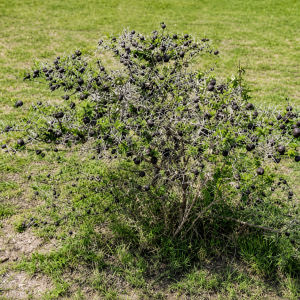
When strong winds blow across the savannah, air passing through holes in the swollen thorns produces a soft whistling sound, giving the tree its memorable name.
The whistling thorn is common in Laikipia, Nairobi National Park, Ol Pejeta Conservancy, and parts of the Maasai Mara. If your guide points out ants marching across an acacia trunk, you’re likely looking at one of these extraordinary trees.
Sausage Tree (Kigelia africana)
The sausage tree is impossible to miss once you know what to look for. Its enormous sausage-shaped fruits hang from long rope-like stalks, sometimes reaching lengths of more than half a metre.
Although the fruits are poisonous when raw to humans, they are enjoyed by several wildlife species, including baboons, elephants, giraffes, and hippos. The tree’s large maroon flowers bloom at night and are pollinated mainly by fruit bats, adding another fascinating chapter to its ecological story.
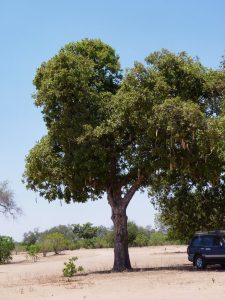
Traditional communities have also valued the sausage tree for generations, using different parts of it in herbal medicine and crafting.
You’ll often see sausage trees growing along rivers and seasonal watercourses in parks such as Tsavo, Amboseli, Meru National Park, and Samburu National Reserve.
Doum Palm (Hyphaene compressa)
Unlike most palm trees, the doum palm has branching trunks, making it one of the easiest palms to recognize in East Africa.
It thrives in the dry northern regions of Kenya, particularly near rivers where its roots can access groundwater. Its fruits provide food for elephants, baboons, and birds, while local communities use the leaves for weaving baskets, mats, ropes, and roofing materials.
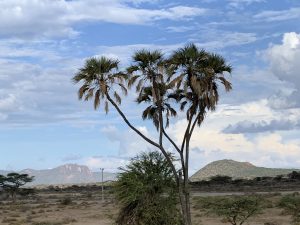
The doum palm gives many northern landscapes their distinctive appearance and is especially common in Samburu National Reserve, Buffalo Springs National Reserve, Shaba National Reserve, and parts of Turkana.
For many visitors, seeing these elegant palms against Kenya’s rugged northern scenery is a refreshing contrast to the acacia-dominated southern savannahs.
African Olive (Olea europaea subsp. cuspidata)
The African olive is a hardy evergreen tree that grows naturally in Kenya’s highlands and montane forests. Closely related to the cultivated olive, it produces small fruits that are eaten by birds and other wildlife.
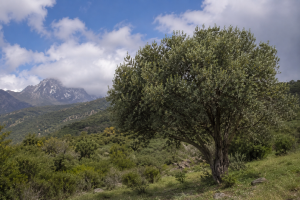
Its dense canopy provides shelter for numerous forest species, while its strong wood has historically been prized for carving and construction. Today, conservation efforts help protect mature African olive trees from overexploitation.
Safari travelers exploring Mount Kenya National Park, the Aberdare Range, and sections of the Mau Forest Complex are likely to encounter these impressive trees.
East African Sandalwood (Osyris lanceolata)
The East African sandalwood is one of Kenya’s most threatened native trees. Known for its fragrant wood and aromatic oils, it has been heavily harvested over the years for perfumes, cosmetics, and traditional medicine.
Unlike many trees, sandalwood is partially parasitic, drawing some nutrients from the roots of nearby plants while still producing its own food through photosynthesis.
Because of overharvesting, the species is now protected in Kenya, highlighting the importance of responsible conservation and sustainable resource management.
Although not as visually dramatic as a baobab or acacia, the East African sandalwood tells an important story about balancing human needs with biodiversity conservation.
Sycamore Fig (Ficus sycomorus)
The sycamore fig has been a symbol of life and abundance across Africa for centuries. Its broad canopy offers welcome shade, while its abundant figs feed monkeys, baboons, birds, bats, and countless other animals.
One of the most fascinating features of this tree is its partnership with tiny fig wasps. These insects pollinate the figs, allowing the tree to reproduce, while the wasps complete their life cycle inside the fruit. Neither species could survive without the other.
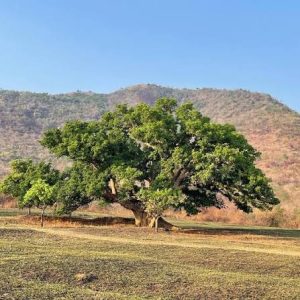
Sycamore figs often grow along rivers and seasonal streams, making them excellent places to watch wildlife gathering throughout the day.
Fever Berry Tree (Croton megalocarpus)
The fever berry tree is admired for its attractive foliage and clusters of berries that attract birds and small mammals. It grows in forests, woodland edges, and riverine habitats across much of Kenya.
Its seeds are rich in oils, and researchers have explored their potential for biofuel production. The tree also contributes to healthy ecosystems by providing food and shelter for numerous insects and birds.
Visitors exploring Kenya’s central highlands, forest reserves, and protected areas may come across this lesser-known but ecologically valuable species.
East African Cedar (Juniperus procera)
Towering above many of Kenya’s montane forests, the East African cedar is one of the country’s most iconic indigenous conifers.
It can reach heights of more than 40 metres and forms an important part of high-altitude ecosystems. Its dense forests help regulate water catchments, prevent soil erosion, and provide habitat for birds, monkeys, and other forest wildlife.
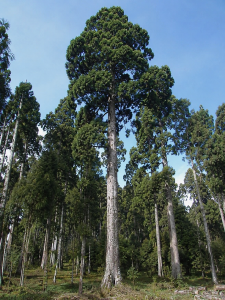
Historically, cedar timber was highly valued because of its strength and resistance to insects. Today, many remaining forests are carefully protected to ensure future generations can continue to enjoy these magnificent trees.
The best places to see East African cedar include Mount Kenya National Park, the Aberdare National Park, and sections of the Mau Forest Complex.
Where Can You See These Trees in Kenya?
| Destination | Trees to Look For |
|---|---|
| Tsavo East & Tsavo West | Baobab, Sausage Tree, Umbrella Thorn Acacia |
| Maasai Mara National Reserve | Umbrella Thorn Acacia, Whistling Thorn |
| Amboseli National Park | Yellow Fever Tree, Sausage Tree, Umbrella Thorn |
| Samburu National Reserve | Doum Palm, Umbrella Thorn, Sausage Tree |
| Mount Kenya National Park | East African Cedar, African Olive |
| Lake Nakuru National Park | Yellow Fever Tree |
| Aberdare National Park | East African Cedar, African Olive |
Tips for Identifying Trees on Safari
Learning to recognize Kenya’s trees doesn’t require a botany degree. A few simple observations can help you identify many species during your safari.
- Pay attention to the shape of the tree’s canopy, as each species has a distinctive silhouette.
- Look closely at the bark, which may be smooth, rough, brightly coloured, or deeply textured.
- Notice which animals are feeding, resting, or nesting in the tree, as many species have favourite food sources.
- Ask your safari guide to point out interesting trees during game drives, many guides have extensive knowledge of local plants.
- Carry a wildlife field guide or plant identification app if you’re especially interested in Kenya’s flora.
- Visit the same destination during different seasons to see flowering, fruiting, and changing foliage.
While Kenya’s wildlife often steals the spotlight, the country’s remarkable trees are the quiet architects of its ecosystems. They nourish herbivores, shelter birds, stabilize landscapes, and create the iconic scenery that has inspired generations of travelers.
The next time you’re on safari, don’t focus only on the animals crossing the plains. Look up at the towering baobabs, admire the graceful acacias, or pause beneath the cool shade of a sycamore fig. Each tree has its own story to tell and plays an essential role in preserving Kenya’s extraordinary natural heritage.
Understanding the trees in Kenya adds a richer perspective to every safari, turning a simple wildlife drive into a deeper appreciation of one of Africa’s most diverse and interconnected ecosystems.