There are places whose beauty is easy to explain. A mountain rises above the clouds, a waterfall crashes through a gorge, or a herd of elephants crosses an open plain, and the landscape speaks for itself.
Uganda is different. Its appeal comes from the remarkable way its landscapes, wildlife, water, forests, mountains and fertile countryside come together in one relatively compact country. Within a journey across Uganda, a traveler can move from tropical rainforest to open savannah, from crater lakes to the banks of the Nile, and from lowland plains to the snow-capped peaks of the Rwenzori Mountains.
It is this extraordinary combination that lies behind one of Africa’s most enduring travel nicknames: the Pearl of Africa.
But where did the name come from? Why did it become associated so strongly with Uganda? And does the phrase still describe the country today?
The story goes back more than a century, to a period when European explorers and colonial officials were traveling through East Africa. It involves one of the most famous names in British history, but the origins of the phrase are more complicated than the popular version suggests.
Where Did the Name “Pearl of Africa” Come From?
The name is most commonly associated with Winston Churchill, who visited Uganda in 1907 during a long journey through Africa.
At the time, Churchill was a rising British politician rather than the wartime prime minister most people know today. His journey through Africa took him through several territories, including Uganda, and he later described his experiences in his 1908 travel book, My African Journey.
Uganda clearly made a strong impression on him. Churchill wrote enthusiastically about the country’s scenery, vegetation, wildlife and agricultural richness. In one of the passages most frequently associated with the nickname, he described Uganda in terms of its magnificence, variety of colour and abundance of plant and animal life before referring to it as the “Pearl of Africa.”
His description was not based on a single attraction. It was the sheer variety of Uganda that fascinated him.
The country appeared remarkably green and fertile, its lakes and rivers added another dimension to the landscape, and its forests and wildlife contrasted with the drier environments encountered elsewhere during his African journey.
Churchill was so impressed that, toward the end of his book, he urged readers to “concentrate upon Uganda,” describing the country as a beautiful garden and comparing it to paradise. That helped turn a description into a lasting national identity.
But Did Churchill Actually Invent the Name?
This is where the story becomes more interesting.
Although Churchill is widely credited with giving Uganda the name Pearl of Africa, historical accounts suggest that the expression may have been used earlier.
Some Ugandan historical accounts attribute an earlier use of the phrase to Henry Morton Stanley, the explorer who traveled through the region in the nineteenth century. One account points to Stanley’s writings in connection with the expression “Pearl of Africa” before Churchill’s famous visit.
That means it is safer to say that Churchill popularized the name rather than definitively invented it. And perhaps that is the more important part of the story.
Churchill’s 1907 journey and his subsequent book gave the phrase an international audience. His descriptions helped establish an image of Uganda as an exceptionally beautiful and richly endowed part of Africa, and the name continued to be associated with the country long after he had left.
Over time, Pearl of Africa became much more than a phrase in a travel book. It became a way of presenting Uganda to the world.
Uganda’s Natural Beauty Explains the Name
To understand why the description endured, it helps to look beyond the words themselves.
Uganda sits in a remarkably diverse part of East Africa. Its landscapes are influenced by the Great Rift Valley, the equatorial climate, extensive lakes and river systems, tropical forests, mountains and broad savannahs. The result is a country where the scenery can change dramatically within a relatively short distance.
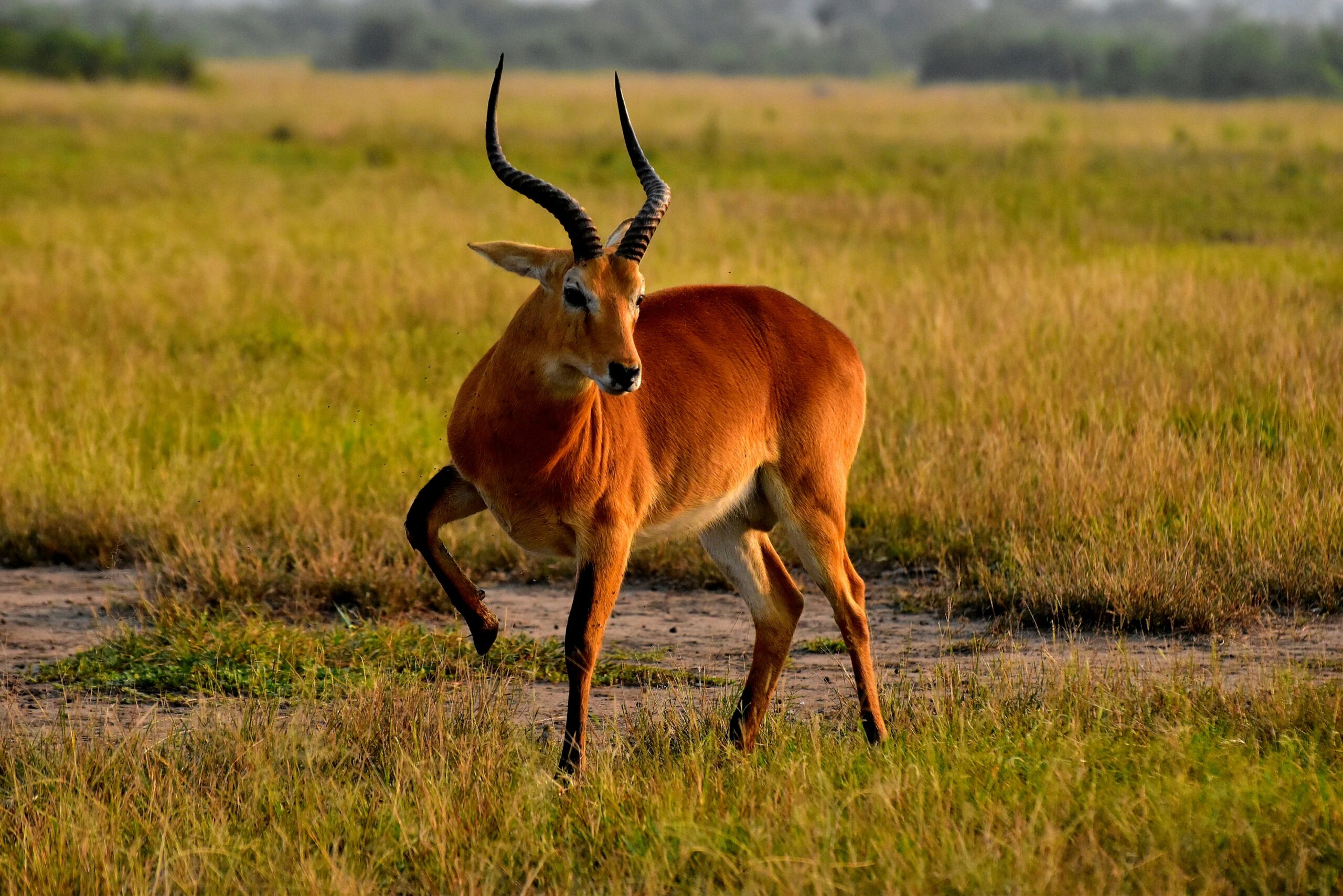
One moment, a traveler may be driving through open grassland dotted with Uganda kob and other wildlife. Later, the road may wind through thick green vegetation, climb into the highlands or reach the shores of a vast lake. This diversity is one of Uganda’s greatest strengths.
The Uganda Wildlife Authority describes the country’s protected areas as containing everything from the forests of Bwindi and Kibale to the savannahs of Kidepo and the dramatic landscapes around the Rwenzori Mountains. Uganda’s protected-area network currently includes 10 national parks, alongside wildlife reserves, sanctuaries and community wildlife management areas.
The Pearl of Africa, in other words, is not defined by one landscape. It is defined by the combination.
The Nile Adds Another Layer to Uganda’s Story
Water is another important part of Uganda’s identity.
The country is closely associated with the Nile, one of Africa’s great rivers. The Victoria Nile flows northward from Lake Victoria, passing through some of Uganda’s most spectacular landscapes before continuing toward the Albert Nile and beyond the country’s borders.
Few places illustrate this relationship between water and landscape better than Murchison Falls.
Here, the Nile is forced through a remarkably narrow gorge before exploding out into a powerful cascade. The falls became one of Uganda’s defining natural attractions and helped establish the country’s reputation as a destination for adventurous travelers and safari enthusiasts.
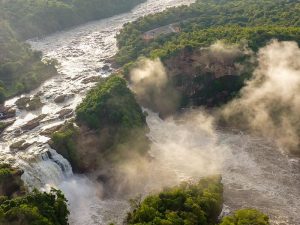
The Nile is also part of Uganda’s tourism history. Early European travelers were fascinated by the search for the source of the Nile, and the river became an important part of the country’s image long before modern safari tourism developed.
Today, visitors can experience the Nile in very different ways, from boat trips through wildlife-rich areas to viewing dramatic waterfalls and exploring its surrounding landscapes.
The river is not simply a geographic feature. It is part of the story that made Uganda captivating to outsiders more than a century ago.
A Pearl Rich in Wildlife
If Uganda’s landscapes provide the setting, its wildlife gives the country another reason to deserve its famous nickname.
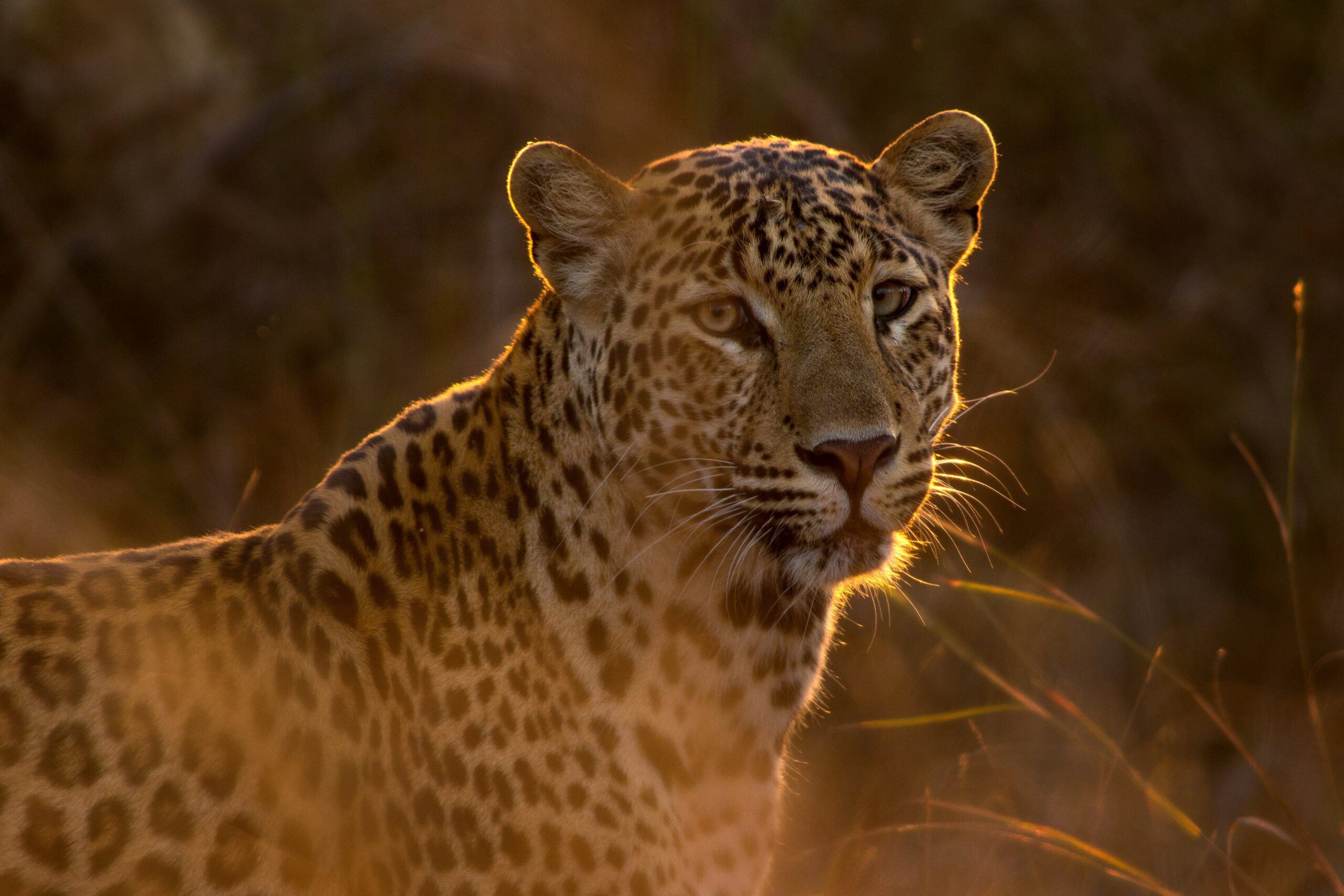
Uganda is home to an extraordinary range of animals, including elephants, lions, leopards, buffaloes, hippos, giraffes, chimpanzees and mountain gorillas. Its birdlife is equally impressive, with more than 1,000 recorded bird species according to the Uganda Wildlife Authority.
But Uganda’s wildlife experience differs from the classic image many travelers have of an East African safari.
There are open savannahs, certainly. Queen Elizabeth National Park, Murchison Falls National Park, Kidepo Valley National Park and Lake Mburo National Park all offer opportunities to explore Uganda’s wildlife-rich grasslands.
Yet Uganda also takes travelers into forests. In Bwindi Impenetrable National Park, ancient rainforest provides habitat for mountain gorillas. In Kibale National Park, the forest is particularly famous for chimpanzee tracking and its remarkable primate diversity.
This mixture of savannah and rainforest is one of the reasons Uganda stands apart from many other safari destinations.
A traveler can spend one part of a trip watching elephants and lions in open country and another walking beneath a dense forest canopy in search of great apes.
That variety is very much in keeping with the idea behind the Pearl of Africa.
The Mountains Make Uganda Even More Remarkable
Uganda’s mountains add another unexpected dimension.
The Rwenzori Mountains, often called the Mountains of the Moon, rise dramatically along the country’s western border. Their higher peaks can be covered in snow and glaciers, despite Uganda’s location close to the Equator.
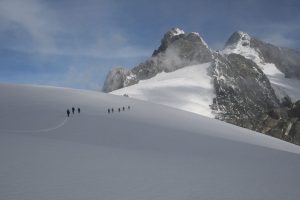
That contrast is extraordinary. At lower elevations, Uganda can feel unmistakably tropical. Higher up, the vegetation changes dramatically as travelers move through different ecological zones toward the mountains’ high peaks.
Mount Elgon, on Uganda’s eastern side, offers another completely different highland environment.
These mountains demonstrate why describing Uganda simply as a “green country” does not really do it justice. Its landscapes are layered, varied and often surprising.
The Lakes and Green Countryside Behind the Nickname
Uganda’s abundance of water also helps explain the imagery of a pearl.
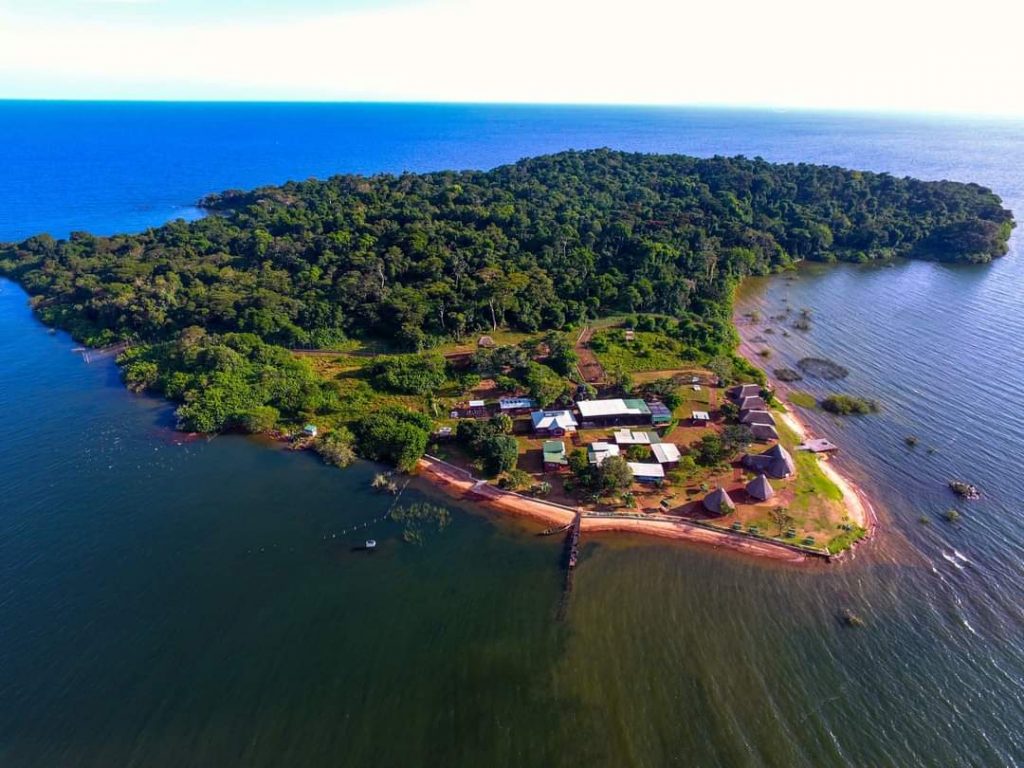
The country contains numerous lakes, from the enormous Lake Victoria to smaller crater and highland lakes scattered across its landscapes.
Lake Bunyonyi, surrounded by steep green hills in southwestern Uganda, is one of the country’s most visually striking examples. Its many small islands and surrounding terraced hills create a landscape that looks almost painted.
Elsewhere, lakes such as Lake Albert, Lake Edward and Lake George form important parts of Uganda’s ecosystems and scenery. Then there is the countryside itself.
Uganda’s fertile landscapes have long been central to its identity. Churchill was particularly struck by the country’s agricultural richness, describing Uganda as a “beautiful garden” where staple foods grew with remarkable ease.
Even today, traveling through rural Uganda can reveal a landscape of farms, banana plantations, tea-growing areas, hills and small communities surrounded by dense greenery.
The country does not simply contain pockets of beautiful scenery. In many places, the countryside itself becomes part of the experience.
The People and Cultures Behind the Landscape
The phrase Pearl of Africa can sometimes make Uganda sound as though its value lies entirely in nature. It does not.
Uganda is home to a remarkable diversity of peoples, languages, traditions and historical kingdoms. The country’s cultural heritage adds another layer to the story.
The Kingdom of Buganda, for example, has played a major role in Uganda’s history. Its cultural heritage remains visible today in places such as the Kasubi Royal Tombs in Kampala, where the tombs of former Kabakas are preserved.
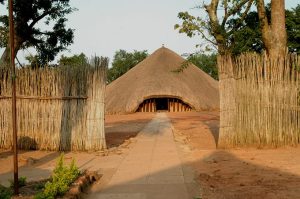
Uganda’s traditional kingdoms and communities have their own histories, customs, crafts, music and ceremonies.
For travelers, this means Uganda cannot really be understood simply by ticking national parks off a list.
The landscapes make an impression, but encounters with communities, food, traditions and historical sites give the journey a deeper sense of place.
That is another reason the Pearl of Africa is a more fitting description when understood broadly. A pearl is valuable not only because of its appearance but because of what lies behind its surface.
The Pearl Had a Difficult Chapter
There is another part of Uganda’s story that is important to understand.
The country was once one of East Africa’s leading wildlife tourism destinations. During the 1960s, Uganda’s national parks attracted large numbers of visitors, and Murchison Falls became particularly popular. According to Uganda Wildlife Authority’s historical account, the country had by then developed into a major wildlife tourism destination and had, for a period, surpassed Kenya and Tanzania in wildlife-based tourism.
Then the country’s political turmoil changed everything.
The years of instability beginning in the 1970s had devastating consequences for Uganda’s wildlife and tourism industry. Poaching increased dramatically, protected areas suffered, and wildlife populations declined severely.
Uganda’s elephant populations, for example, fell sharply during this period. The country’s rhino populations also disappeared from the wild, with the last confirmed black rhino sighting in Kidepo Valley recorded in 1983.
The nickname remained, but the reality behind it had been badly damaged.
That part of the story matters because it shows that the Pearl of Africa was never simply a romantic description of an untouched paradise. Uganda’s natural heritage has faced serious threats, and protecting it has required decades of work.
A Pearl Rebuilding Its Shine
Uganda’s recovery is one of the most compelling parts of its modern tourism story.
As political stability improved from the mid-1980s onward, efforts to rebuild the country’s protected areas and tourism infrastructure gained momentum. Wildlife conservation gradually became a national priority again, and Uganda’s forests and savannahs began to recover.
Today, Uganda Wildlife Authority manages a network of national parks, wildlife reserves and other protected areas. These include famous destinations such as Bwindi, Kibale, Queen Elizabeth, Murchison Falls, Kidepo Valley and the Rwenzori Mountains.
The recovery is particularly meaningful because Uganda’s tourism identity is now increasingly connected with conservation.
Mountain gorilla tourism, chimpanzee tracking, savannah safaris, birdwatching and mountain trekking all depend on healthy ecosystems. You can read more on gorilla trekking in our guide on Gorilla Trekking in Uganda.
The modern Pearl of Africa therefore isn’t simply a country being admired for its scenery. It is a country whose natural heritage is being actively protected and, in some cases, restored.
Why Uganda Is Still the Pearl of Africa Today
More than a century after Churchill’s visit, the name continues to make sense, although perhaps for more reasons than he originally described.
Uganda has the Nile. It has vast lakes. It has tropical forests filled with primates. It has savannahs where elephants, lions and buffalo roam. It has mountain gorillas in mist-covered forests. It has chimpanzees swinging through the canopy. It has the snow-capped Rwenzori Mountains near the Equator. It has waterfalls, crater lakes, fertile hills and enormous stretches of countryside where green seems to be the dominant colour. And beyond the scenery, it has cultures and histories that cannot be separated from the landscapes in which they developed.
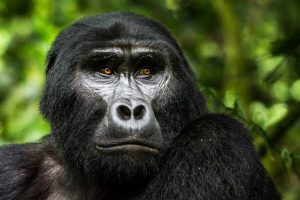
Uganda Wildlife Authority currently highlights the country’s gorillas, chimpanzees, tree-climbing lions, Murchison Falls and snow-capped Rwenzori Mountains among its most distinctive natural attractions. That combination is what makes the nickname work.
Uganda does not need to compete with Kenya’s Maasai Mara or Tanzania’s Serengeti by trying to offer exactly the same experience. Its strength lies in its variety.
A safari in Uganda can be about big game, but it can also be about primates, forests, mountains, rivers, birds and cultural encounters.
It can be adventurous without being defined by one iconic attraction. And that may be the best way to understand the phrase Pearl of Africa.
More Than a Nickname
More than a century after the phrase Pearl of Africa became associated with Uganda, it still captures something distinctive about the country. Not because Uganda has one extraordinary attraction that defines it, but because so many different experiences come together within its borders.
A journey through Uganda can move from the misty forests of Bwindi to the open savannahs of Queen Elizabeth National Park, from the powerful waters of the Nile to the quiet shores of Lake Bunyonyi, and from tropical lowlands to the snow-capped peaks of the Rwenzori Mountains. Along the way, wildlife, history and living cultures become part of the journey.
The country’s story also makes the nickname more meaningful. Uganda’s natural heritage has endured periods of immense difficulty, yet its wildlife and protected areas have gradually recovered, giving travelers the opportunity to experience landscapes and species that once faced serious threats.
Perhaps that is why the Pearl of Africa remains such an enduring name. Uganda’s beauty is not found in one place. It is scattered across forests, lakes, mountains, rivers, savannahs and communities, each revealing a different side of the country.
For travelers looking to experience this diversity for themselves, Bison Safaris can help turn the idea of discovering Uganda into a carefully planned East African adventure. Whether the journey is centered on wildlife, gorilla trekking, dramatic landscapes, cultural experiences, or a combination of destinations across the region, the right itinerary can reveal why Uganda earned a name that has lasted for generations.
The Pearl of Africa is waiting to be explored.