Kenya is usually imagined through a very different picture: a lion disappearing into the tall grass, elephants crossing an open plain, a hot air balloon floating above the Maasai Mara, or a dhow sailing slowly along the Indian Ocean. But beyond the famous safari scenes and white sand beaches, another side of the country has been quietly drawing travellers who would rather spend their holiday waiting for a line to tighten.
Fishing in Kenya takes you into some of the country’s most contrasting landscapes. One day, you can be far out in the warm waters of the Indian Ocean, watching a sailfish break the surface. On another trip, you can be standing beside a cold mountain stream in the highlands, casting for trout beneath a forested slope. Further west, Lake Victoria offers an entirely different experience, with broad open water, fishing communities and the chance to pursue the powerful Nile perch.
That variety is what makes fishing in Kenya so interesting. You do not have to be an experienced angler to appreciate it, either. For some travellers, the attraction is the challenge of landing a large game fish. For others, it is simply the opportunity to spend a quiet morning on the water, away from the crowds and the usual sightseeing schedule.
Whether you are interested in deep sea sport fishing, freshwater angling or trout fishing in the mountains, Kenya offers several ways to make fishing part of a memorable trip.
Why Go Fishing in Kenya?
Kenya’s appeal as a fishing destination comes largely from its geography. The country has a long Indian Ocean coastline, enormous inland lakes, mountain rivers and a network of other freshwater bodies. The Kenya Fisheries Service notes that the country has about 650 kilometers of coastline and a large marine area extending into its Exclusive Economic Zone, while inland waters provide additional fishing opportunities.
For a traveller, this means that fishing does not have to look the same from one part of Kenya to another.
Along the coast, fishing is about warm tropical water, offshore reefs and powerful pelagic fish. The Malindi and Watamu area is particularly well known for billfish, while the waters around Shimoni provide access to the deeper Pemba Channel. Current fishing reports from Watamu continue to record catches of sailfish, yellowfin tuna and encounters with marlin, showing that this remains an active sport fishing destination rather than simply a historical reputation.
In the highlands, everything changes. The heat gives way to cool air and rushing streams, with trout fishing becoming as much about the landscape as the fish itself. KWS describes the Aberdare region as having trout fishing in rivers including the Amboni, Chania and Gura, while its current visitor information lists trout fishing among the activities available in Aberdare National Park.
Then there is Lake Victoria, where the scale of the landscape makes the experience feel completely different again. Kenya’s tourism board describes the lake as rich in fish life and notes that visitors have traditionally travelled there specifically in pursuit of Nile perch.
In other words, fishing in Kenya is not one experience. It is several very different experiences connected by one country.
Deep Sea Fishing Along the Kenyan Coast
If you picture fishing in Kenya and imagine an angler standing on the back of a boat while a marlin launches itself out of the water, you are probably thinking about the country’s deep sea fishing.
The Indian Ocean coastline is where Kenya’s most dramatic sport fishing experiences take place. The waters off Malindi, Watamu and Shimoni are especially important, with recreational fishing also taking place around Diani, Mombasa and Lamu. Kenya’s national report to the Indian Ocean Tuna Commission identifies these areas as the country’s main recreational sport and big-game fishing locations.
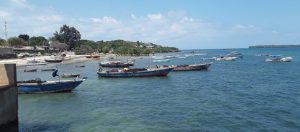
Watamu and Malindi are particularly famous for billfish. Sailfish, black marlin, blue marlin and striped marlin are among the species anglers may encounter, alongside yellowfin tuna, wahoo, dorado and giant trevally.
What makes this stretch of coast special is how quickly the underwater landscape changes once a boat leaves shore. Deep water and productive fishing grounds are relatively accessible, allowing anglers to spend more of their day actually fishing rather than travelling endlessly offshore. The geography around Watamu and Malindi also creates conditions that bring a variety of pelagic species into the area.
For an experienced angler, that can make a day on the Indian Ocean feel like a genuine expedition. For someone trying deep-sea fishing for the first time, it is simply an opportunity to experience a side of Kenya that has very little to do with the traditional safari circuit.
Malindi and Watamu
Malindi and Watamu form one of the country’s best-known sport-fishing areas.
The two coastal towns are close enough to combine with a beach holiday, which makes them particularly convenient for travellers who do not want fishing to take over their entire trip. You can spend one day relaxing beside the ocean, another exploring the coast and another heading offshore before returning to your accommodation in the evening.
The fishing itself changes with the season. Kenya’s main billfish period generally runs from around October into March, with January to March particularly associated with marlin. Sailfish can be encountered during other periods as well, while tuna and other species provide additional opportunities. The Kenya Association of Sea Anglers information reported through the Indian Ocean Tuna Commission identifies August to October as the main yellowfin tuna season and November to the end of March as the main marlin period.
That seasonal rhythm is worth considering when planning a fishing holiday. You should not simply choose a month because it is convenient and assume that every species will be equally available.
Shimoni and the Pemba Channel
Further south, Shimoni offers access to the Pemba Channel, one of the most celebrated deep-water fishing areas on the Kenyan coast.
The channel is particularly associated with big-game fishing, including marlin and other offshore species. Kenya’s tourism information highlights the Pemba Channel as one of the country’s major fishing areas and notes its reputation for striped marlin.
Shimoni can also fit naturally into a wider coastal itinerary. Travellers staying around Diani or exploring the southern coast can make fishing part of their experience without having to choose between the ocean and everything else Kenya has to offer.
Fishing in Kenya’s Mountain Highlands
It is difficult to imagine a greater contrast with deep-sea fishing than trout fishing in the Kenyan highlands.
Here, there are no tropical beaches or offshore boats. Instead, the setting is cooler and quieter, with streams winding through high altitude landscapes and forested valleys. The slopes around Mount Kenya and the Aberdare region are particularly associated with trout fishing.
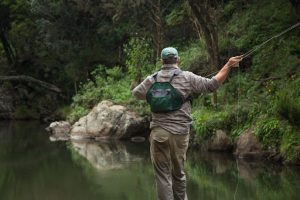
The Mount Kenya area has long been known for streams stocked with trout, and Kenya’s tourism information notes that many hotels and lodges around the mountain can arrange trout-fishing trips, guides and equipment.
Aberdare National Park offers another opportunity. KWS currently lists trout fishing among the activities available to visitors, and its information identifies the Amboni, Chania and Gura rivers as trout-fishing waters.
This is perhaps one of the most appealing forms of fishing in Kenya for travellers who enjoy being outdoors but are not necessarily chasing enormous fish.
There is something wonderfully slow about it. You follow the river, find a suitable stretch of water, make your cast and wait. Around you, there may be nothing but forest, mountains and the sound of moving water.
That makes trout fishing particularly easy to combine with a highland getaway.
Lake Victoria and the Search for Nile Perch
At the opposite end of the country, Lake Victoria offers an entirely different fishing experience.
Kenya’s portion of the lake stretches across the western part of the country, with Kisumu providing one of the main gateways for travellers. The lake is enormous, and its shores and islands have long been closely connected with fishing communities. Kenya’s official tourism material describes Nile perch as one of the major attractions for visiting anglers.
Nile perch are powerful freshwater predators, and their size is part of what has made them famous among sport fishermen. The lake therefore offers a very different proposition from the billfish grounds of the Indian Ocean: instead of battling a sailfish or marlin in open saltwater, an angler can spend the day pursuing a large freshwater fish surrounded by the distinctive scenery and culture of western Kenya.
But Lake Victoria is about more than the fish.
The lake itself is part of the experience. Fishing trips can bring travellers closer to lakeside communities, islands and landscapes that are rarely included in the standard Kenya itinerary. Magical Kenya currently promotes experiences around Homa Bay that combine traditional fishing on Lake Victoria with lakeside meals and exploration of islands such as Takawiri and Mfangano.
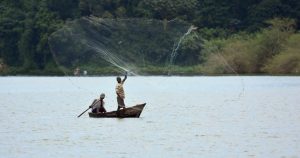
For travellers who want to see a different side of the country, that combination can be particularly rewarding.
What Fish Can You Catch in Kenya?
The answer depends heavily on where you go.
On the Indian Ocean, the species list becomes especially exciting for big-game anglers. Depending on the location and season, you may encounter sailfish, black, blue and striped marlin, yellowfin tuna, wahoo, dorado, giant trevally and other marine game fish.
In Lake Victoria, Nile perch is one of the major attractions, alongside other freshwater species.
In the highlands, the focus is mainly trout, particularly rainbow and brown trout. KWS information on the Mount Kenya ecosystem notes that both types have been stocked in selected rivers and lakes for recreational fishing.
This variety is one reason it is difficult to describe a single “best” fishing experience in Kenya. Someone dreaming of a marlin fight and someone hoping to spend a peaceful morning fly fishing in the mountains are looking for completely different things.
When Is the Best Time for Fishing in Kenya?
There is no single best month for all types of fishing in Kenya.
Instead, your ideal travel period depends on the species and experience you want.
For offshore fishing, the seasons are strongly influenced by the Indian Ocean’s monsoon patterns. The main billfish season generally falls between October and March, while January through March is particularly important for marlin. Yellowfin tuna fishing is especially associated with August through October.
This does not mean that fishing stops outside those periods. Different species remain available, and the exact conditions vary from one location to another. The Kenya Fisheries Service and local fishing operators should therefore be consulted when planning a specific trip.
For trout fishing, conditions are different again because you are dealing with freshwater and high-altitude environments rather than tropical offshore waters. The availability of particular waters can also be affected by local regulations and closed seasons.
The safest approach is to choose your target species first and then build the trip around its season.
Do You Need a Fishing License in Kenya?
This is one part of a fishing holiday that travellers should not leave until the last minute.
Kenya regulates recreational fishing, and the Kenya Fisheries Service identifies trout, inland, coastal and deep sea sport fishing within its licensing framework. Its published service charter lists a fishing license for these recreational categories and gives application requirements including an application form and identification or passport.
Trout fishing has additional rules. Kenya’s fisheries regulations provide for specific waters to be declared open for trout fishing, as well as controls relating to seasons, catch limits, minimum sizes and fishing methods. A valid trout-fishing license is required.
For this reason, travellers should not assume that a license bought or arranged for one type of fishing automatically covers every location or method.
If you are booking through a fishing charter, lodge or safari company, ask specifically what is included in the package and whether the necessary fishing permissions have been arranged. If you are organizing the experience independently, check the current requirements with the Kenya Fisheries Service before travelling.
Regulations can change, so relying on an old blog post or forum comment is not a good idea.
Catch and Release and Responsible Fishing
The most memorable fishing trip is not necessarily the one that ends with the most fish being taken home.
Sport fishing in Kenya increasingly places emphasis on conservation, particularly for large billfish and sharks. Kenya’s national report to the Indian Ocean Tuna Commission notes that deep water sport fishing operates under a tag and release policy for billfish and sharks, with tagging providing information useful for conservation and research.
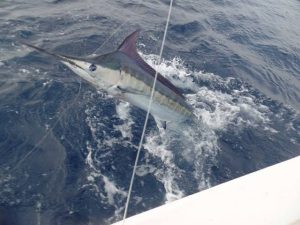
That approach matters because large predatory fish are part of functioning marine ecosystems, and the appeal of catching them should not come at the expense of their future survival.
Travellers can also make a difference through smaller choices. Use reputable operators, follow local catch rules, avoid keeping fish unnecessarily and listen to your guide when they recommend releasing a particular catch. On freshwater trips, respect closed seasons and local regulations rather than treating every river or lake as open-access fishing water.
Fishing is most rewarding when the place you came to enjoy remains healthy enough for another traveller to experience it years later.
What Should You Bring for a Fishing Trip in Kenya?
What you need depends on the type of fishing.
For a deep sea charter, much of the heavier equipment is normally supplied by the operator, but you should confirm this before booking. You will still want comfortable clothing, sun protection, sunglasses, a hat, water and any personal medication you may need.
The Indian Ocean can be bright and hot, and spending several hours on a boat is very different from sitting beneath a beach umbrella. A long sleeved lightweight shirt can be far more useful than simply relying on sunscreen.
For trout fishing in the highlands, warm and waterproof clothing becomes much more important. The weather around Mount Kenya and the Aberdares can feel dramatically cooler than the Kenyan coast, particularly at altitude.
If you are travelling specifically for fishing, ask your operator about rods, reels, tackle, bait, flies, waders and other equipment before you pack. There is little point carrying bulky equipment halfway around the world if your guide already provides everything you need.
How to Combine Fishing With a Kenya Holiday
One of the easiest ways to enjoy fishing in Kenya is not to make the entire trip about fishing.
A traveller arriving in Nairobi could begin with a safari, continue towards the coast and finish with a few days around Watamu or Malindi, including a day offshore. Another itinerary could combine a Mount Kenya or Aberdare stay with trout fishing before continuing to the Maasai Mara or another wildlife destination.
Western Kenya offers another possibility. A trip around Kisumu and Lake Victoria can combine fishing with island visits, cultural experiences, wildlife and lakeside relaxation. Magical Kenya’s current Homa Bay experiences, for example, combine traditional fishing with lakeside dining and island exploration.
This flexibility is one of the biggest advantages of choosing fishing as part of a Kenya holiday. You do not have to choose between a fishing trip and a safari, beach holiday or cultural journey. With the right itinerary, fishing can become one memorable chapter of a much larger Kenyan adventure.
Is Fishing in Kenya Suitable for Beginners?
Absolutely, although the experience you choose matters.
You do not need to arrive in Kenya as an expert angler. A guided trip can be a much easier way to start because the crew knows the local waters, equipment and techniques. This is particularly useful for deep-sea fishing, where boat handling, tackle and offshore conditions are very different from ordinary recreational fishing.
Beginners may also find trout fishing appealing because it is a slower, more intimate experience. Instead of spending the day fighting a huge ocean fish, you can learn the basics while moving along a mountain stream and enjoying the surrounding landscape.
The important thing is to tell the operator your experience level before booking. Someone who has never held a fishing rod should not necessarily be placed on the same trip as an angler travelling specifically to pursue marlin.
The right guide can make the difference between spending a frustrating day wondering what to do and spending the afternoon completely absorbed in the experience.
The Best Fishing Experience in Kenya May Not Be the Biggest One
There is a temptation to judge fishing trips by photographs of enormous fish. A marlin beside a boat makes an impressive picture, and there is nothing wrong with travelling to Kenya specifically for that challenge.
But fishing in Kenya has another appeal that is easier to miss.
It can take you into places where the pace of a holiday changes completely. You are no longer rushing between attractions or checking how many animals you have seen. You are watching the water. You notice the wind. You begin paying attention to the movement of birds and baitfish. On a mountain stream, you hear the river before you see the next pool. On Lake Victoria, the horizon can seem to stretch forever.
And then there is that moment when something finally takes the line.
Whether it is a powerful sailfish off Watamu, a Nile perch in Lake Victoria or a trout in a cold highland stream, the excitement comes partly from everything that happened before the fish appeared.
That is what makes fishing such an interesting way to experience Kenya. It takes you beyond the country’s familiar safari image without asking you to leave the country’s wild character behind.
A fishing holiday can be planned as a standalone adventure or woven into a wider Kenya itinerary that includes wildlife, mountains, the coast or cultural experiences.
At Bison Safaris, we can help you build a trip around the kind of fishing experience you want, whether that means heading to the Indian Ocean for deep sea fishing, exploring the highlands for trout or discovering the quieter waters of western Kenya.
The most important thing is to start with the experience you want to have. Kenya gives you plenty of water to choose from; the right itinerary simply brings the right one within reach.