Most Famous Lions In Africa: Stories of the Wild’s Greatest Legends
Across Africa’s endless savannahs, lions have long represented strength, courage, and the untamed beauty of the wilderness. Their roars echo through some of the continent’s most iconic landscapes, from the golden plains of the Maasai Mara to the vast grasslands of the Serengeti. Yet among the thousands of lions that roam these wild places, only a few have become famous lions in Africa, with stories that have travelled far beyond the landscapes they once called home.
These legendary lions are remembered for more than their power. Some became icons because of the coalitions they formed with their brothers, standing together against rivals and shaping the fortunes of entire prides. Others became symbols of resilience after surviving incredible challenges, while some captured the world’s imagination through remarkable relationships with humans and groundbreaking conservation stories.
The names of lions such as Scarface, Notch, Elsa, and Kamunyak have become woven into safari history. Their lives have been followed by researchers, photographers, filmmakers, and travellers who journey across Africa hoping to witness the same wild landscapes that shaped their stories.
But the greatest lion legends are not only about individual animals. They are stories of family, survival, cooperation, and the delicate balance of life on the African plains. The mighty coalitions that ruled territories, the lionesses that protected future generations, and the prides that endured through changing seasons all reveal a deeper truth: every lion carries a story.
From the legendary Four Musketeers of the Maasai Mara to the unforgettable lionesses that changed how the world sees these magnificent cats, this is the story of most famous lions in Africa and the legacies they left behind.
What Makes a Lion Become a Legend?
Africa is home to tens of thousands of lions, yet only a handful become internationally recognized. What separates these individuals from the thousands of other lions living unseen across the continent?
Often, it is not simply strength.
A lion becomes legendary because its story connects with people.
Some lions are remembered because of their appearance. A distinctive scar, an enormous mane, or a unique marking can make a particular animal recognizable to generations of safari visitors. Others become famous because of the challenges they overcome, the battles they survive, the territories they defend, or the rivals they defeat.
However, many of Africa’s greatest lion stories are not about individual animals at all. They are about relationships.
Male lions rarely succeed alone. In the harsh competition for territory and prides, coalitions provide a powerful advantage. Brothers born in the same litter often remain together after leaving their pride, forming alliances that allow them to challenge older males and claim territories of their own.
Some coalitions become so successful that their names become part of safari history.
The Four Musketeers of the Maasai Mara, the Four Kilometre Boys, and the Black Rock Boys are remembered not because one lion was stronger than the others, but because they achieved something remarkable together.
Lionesses, too, have created some of the most unforgettable stories in wildlife history. While males often attract attention because of their size and battles for dominance, lionesses are the heart of every pride. They raise cubs, cooperate during hunts, defend their young, and ensure the survival of future generations.
The stories of Elsa, the lioness who changed conservation forever, and Kamunyak, the lioness whose unusual behavior fascinated the world, show that fame in the wild is not always earned through dominance. Sometimes it comes through something much rarer, an extraordinary connection that changes how humans understand animals.
Behind every famous lion lies a story of survival, family, and the constantly changing drama of life on the African plains.
The Four Musketeers – The Legendary Coalition Led by Scarface
Few lion coalitions in modern safari history have captured the imagination of the world like the Four Musketeers.
Their story unfolded in Kenya’s Maasai Mara, one of Africa’s most celebrated wildlife landscapes. Here, among rolling grasslands, seasonal rivers, and endless herds of prey, four brothers grew from young dispersing males into one of the most famous lion coalitions ever documented.
The coalition consisted of:
- Scarface
- Morani
- Sikio
- Hunter
Together, they became a symbol of the power of cooperation in the lion world.
Their success was built on a simple but powerful truth: a group of united lions can achieve what a single male often cannot. By working together, the four brothers were able to challenge rivals, defend territory, and establish themselves among the dominant lions of the Maasai Mara.
Their reign became closely associated with the famous Marsh Pride, a pride that gained worldwide attention through wildlife documentaries and long-term observations. For years, visitors travelled to the Mara hoping for a glimpse of these remarkable lions, particularly the male whose name would become known around the globe.
Scarface: The Lion Whose Scar Became a Symbol of Survival
Among the Four Musketeers, one lion became the face of the coalition.
His name was Scarface.
The injury that gave him his famous name became both his defining feature and a symbol of resilience. The distinctive scar across his face made him instantly recognizable, but it was his personality and remarkable survival that truly captured people’s attention.
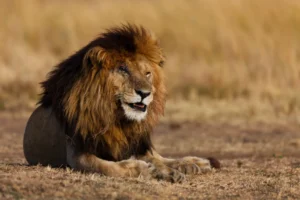
Many lions experience injuries during territorial conflicts, but few survive long enough to become global icons. Scarface did exactly that. Despite the challenges that came with age, battles, and the constant struggle to maintain dominance, he continued to hold his place as one of the Masai Mara’s most admired lions.
Photographers and safari guides often described him as a calm and confident presence. Rather than simply being remembered as a powerful male, Scarface became a symbol of endurance, a reminder that survival in the wild is not only about strength but also resilience.
His story reached audiences worldwide, turning him into one of Africa’s most recognizable lions. Even years after his passing, Scarface remains deeply connected to the identity of the Maasai Mara and continues to inspire travelers who dream of experiencing the landscapes where he once roamed.
Morani – The Strength Behind the Coalition
Among the four brothers, Morani became one of the most recognizable member.
His name became associated with strength, confidence, and the commanding presence expected of a dominant male lion. With his powerful presence and striking appearance, Morani represented the strength that helped define the coalition establish itself within the Masai Mara.
While Scarface attracted global attention because of his recognizable scar, Morani was admired for his imposing appearance and his role within the brotherhood. He was not simply a companion to a famous lion, he was one of the reasons the coalition was able to succeed.
Life as a dominant male lion is demanding. Territory must be constantly defended, rival males must be challenged, and threats can appear at any time. A coalition’s survival depends on every member contributing, and Morani’s strength helped the Four Musketeers maintain their position during their reign.
For safari guides and photographers who followed the coalition, Morani represented the raw power and resilience that make lions such fascinating animals to observe.
Sikio – The Lion Recognized by His Scarred Ear
Every famous lion has a feature that helps people identify them, and for Sikio, it was his distinctive ear.
The name Sikio, meaning “ear” in Swahili, reflected the physical characteristic that made him recognizable among the coalition. Like many wild lions, his body carried evidence of the challenges he had faced throughout his life.
In the African wilderness, scars are often reminders of survival. Every injury tells a story of territorial battles, competition, or the constant struggle to maintain a place within a demanding ecosystem.
Although Sikio was not as internationally famous as Scarface, his contribution to the coalition was equally important. The success of the Four Musketeers depended on all four brothers moving together, defending one another, and presenting a united challenge to rivals.
His story highlights an important lesson about famous lions in Africa: legends are rarely created by one individual alone. Behind many iconic lions are the family members and companions who helped them survive.
Hunter – The Quiet Member of a Legendary Brotherhood
Hunter completed the Four Musketeers coalition, and although he received less attention than Scarface and Morani, his role was just as significant.
The public often remembers the most recognizable members of a group, but wildlife stories are rarely complete without acknowledging every individual involved. Hunter shared the same challenges, battles, and victories as his brothers.
Together, the four males transformed from young dispersing lions into one of the most celebrated coalitions in the Masai Mara. Their success was not built on one exceptional lion, it was built on trust, cooperation, and a shared ability to face the dangers of the wild together.
Hunter’s story also reflects the reality of documenting wildlife. Some animals become famous because of a distinctive feature or a dramatic moment captured on camera, while others remain less known despite playing an equally important role.
The Four Musketeers were successful because each lion brought something different to the coalition.
The Legacy of the Four Musketeers
The story of Scarface, Morani, Sikio, and Hunter remains one of the most memorable chapters in Masai Mara history.
Their reign demonstrated the importance of coalitions in lion society and gave millions of people around the world a closer look at the complex lives of Africa’s predators. Through photographs, documentaries, and stories shared by safari guides, the four brothers became ambassadors for the landscapes they inhabited.
Although their time on the savannah eventually came to an end, their legacy continues. They remain a reminder that the most powerful stories in nature are not always about individual strength, they are about relationships, survival, and the remarkable connections that exist between animals.
Today, visitors exploring the Masai Mara may not encounter Scarface or his brothers, but the same wilderness that shaped their lives continues to support generations of lions. Every sunrise over the Mara plains carries the possibility of discovering the next great lion story.
Notch and His Dynasty – The Patriarch Who Built a Lion Empire
Long before social media transformed the way people followed wildlife stories, one lion was already becoming a legend across the endless plains of the Serengeti.
His name was Notch.
Recognizable by the distinctive notch on his nose and his commanding presence, Notch became one of the most famous lions in Africa because his story was not only about dominance, it was about legacy. While many male lions are remembered for the territories they conquered or the battles they won, Notch became extraordinary because of the family line he established.
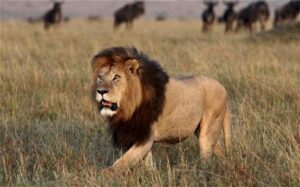
His story unfolded in one of the world’s greatest wildlife landscapes, the Serengeti ecosystem of Tanzania, where millions of animals follow ancient rhythms of migration, survival, and renewal. Here, lions have always played a central role in the natural drama of the plains, but few individuals have left a mark as significant as Notch.
The Rise of a Lion King
Notch became known among researchers and wildlife observers in the Serengeti during the late 1990s and early 2000s. Like every young male lion, his journey began with uncertainty. Male lions must eventually leave their birth prides and enter a dangerous period of independence, where survival depends on forming alliances, finding territory, and competing against established males.
Many young males never make it through this stage.
Notch, however, survived.
Over time, he developed into a powerful male and became one of the dominant lions in his region. His success was not only a result of physical strength but also his ability to adapt to the constantly changing challenges of life in the wild.
The Serengeti is a landscape where dominance is temporary. A lion king may rule for years, but eventually, younger rivals arrive, testing the limits of his power. What made Notch different was that he did not simply survive his reign, he built something that would continue after him.
The Dynasty of Notch
The most remarkable chapter of Notch’s story began when his sons grew into powerful males and formed a coalition connected to his legacy.
In the lion world, male coalitions are often formed between brothers that leave their birth pride together. However, Notch’s story was unusual because his descendants later formed one of the most closely followed lion lineages in the Serengeti. His sons grew into powerful males, and several of them became part of a remarkable lineage that continued his influence across the Serengeti. This family coalition demonstrated one of the most fascinating aspects of lion society: the importance of bloodlines and cooperation.
The young males inherited more than their father’s genes. They inherited his legacy.
They learned the challenges of defending territory, competing with rival coalitions, and maintaining access to prides. Together, they became one of the most remarkable examples of a lion lineage ever observed.
Among his well-known descendants were lions such as Notch II, Grimace, Ron, Caesar, and others who helped carry his bloodline forward. Their presence helped ensure that Notch’s influence extended long after he was gone.
More Than a Dominant Male
What makes Notch’s story so fascinating is that he represents something deeper than power.
In popular imagination, lions are often portrayed as solitary kings ruling through strength alone. But the reality is far more complex. A successful male lion’s legacy is measured not only by the territory he controls but also by the influence he leaves on future generations.
Notch demonstrated that survival in the wild is built through relationships.
His sons relied on one another. They defended each other during conflicts, moved together through the landscape, and benefited from the protection that a strong coalition provides. Their success showed how cooperation can shape the future of an entire lion population.
This is why Notch remains one of the most famous lions in Africa. His story is not simply about a powerful male, it is about family, inheritance, and the continuation of a legacy.
The Enduring Legacy of Notch
Although Notch eventually disappeared from the Serengeti, his influence continued through his descendants.
Today, his name remains connected to one of the most remarkable lion lineages ever documented. Wildlife enthusiasts and researchers continue to follow the story of his descendants, making him one of the rare lions whose story extends beyond his own lifetime.
Notch’s legacy also reminds us of the importance of protecting ecosystems where these stories can unfold. Without vast landscapes like the Serengeti, where lions can roam, compete, raise cubs, and establish territories, future generations of legendary lions may never have the opportunity to emerge.
The story of Notch is ultimately a story of continuity, the idea that while individual lions may disappear into history, their influence can remain written across the landscape for generations.
The Four Kilometer Boys – The Brotherhood of Lipstick and Blackie
Not every famous lion earns recognition through a distinctive scar or an extraordinary lifespan. Some become legends because of the relentless battles they fight and the determination they show in one of Africa’s most competitive landscapes.
That was the story of Lipstick and Blackie.
Among the best-known members of the Four Kilometer Boys were the brothers Lipstick and Blackie, whose partnership became one of the defining stories of the coalition.
Their lives reflected the reality faced by every male lion. Success was never permanent. Every territory defended attracted challengers, every victory came at a cost, and every day demanded strength, patience, and cooperation.
Although Lipstick became the best-known member of the coalition, neither brother could have achieved lasting success alone. Their partnership demonstrated why cooperation remains one of the greatest strengths in lion society.
Lipstick – The Battle-Scarred King of the Mara
Among the Four Kilometer Boys, Lipstick became one of the most recognizable lions ever photographed in the Maasai Mara.
His unusual name came from the distinctive dark pigmentation around his lips, a feature that made him instantly recognizable to guides, photographers, and returning safari visitors. Combined with his impressive mane and confident presence, Lipstick quickly became one of the Mara’s most celebrated male lions.
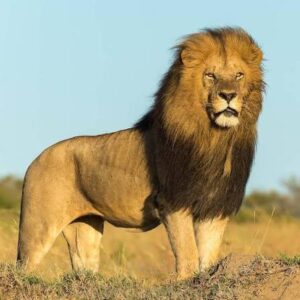
But his reputation was earned through far more than appearance.
Lipstick spent years defending territory against rival coalitions, navigating the constant struggle for dominance that defines the lives of male lions. His reign was marked by repeated challenges from younger competitors, making his ability to hold territory for an extended period all the more remarkable.
To many visitors, Lipstick represented the very image of a wild African lion, powerful, experienced, and carrying the visible marks of a life shaped by survival.
Blackie – The Other Half of the Brotherhood
If Lipstick became the public face of the coalition, Blackie was its steadfast foundation.
The two brothers spent years side by side, defending territory and confronting rival coalitions in the Masai Mara. Their partnership reflected one of the defining characteristics of lion society: male lions are often at their strongest when they stand together.
While visitors frequently remembered Lipstick’s distinctive appearance, experienced guides knew that Blackie’s contribution was just as important. A coalition succeeds because every member shares the burden of territorial patrols, confrontations, and defending prides.
Together, Lipstick and Blackie demonstrated why brotherhood lies at the heart of many of Africa’s greatest lion stories.
The Four Kilometer Boys and the Changing Face of the Mara
The story of the Four Kilometer Boys reflects the constantly changing nature of the Masai Mara.
Unlike human kingdoms, where rulers may leave behind monuments and written histories, a lion’s reign exists only for a brief moment in time. A dominant coalition may appear unstoppable one year and face powerful challengers the next.
The Four Kilometer Boys experienced this reality.
Their battles for territory and dominance formed part of the larger natural cycle that defines lion populations. Every coalition that rises eventually faces the arrival of younger males seeking their own opportunity.
Yet their importance remains.
The Four Kilometer Boys became part of the rich history of the Mara because they represented something fundamental about lions: strength is often found in unity. Their story is not only about territorial control, it is about brotherhood, endurance, and the determination required to survive in the African wilderness.
The Black Rock Boys – Five Brothers Who Carried the Mara’s Legacy Forward
Every generation of the Masai Mara produces lions that capture the imagination of safari guides, photographers, researchers, and visitors. After the era of Scarface and the Four Musketeers, and following the dominance of coalitions such as the Four Kilometer Boys, a new group of brothers began attracting attention across the Mara.
They became known as the Black Rock Boys.
Born into the Black Rock Pride, the five brothers: Olobor, Oloshipa, Oloimina, Oloisiado, and Lorkulup, grew up together before eventually dispersing as young males. Like countless lions before them, they faced one of the greatest challenges in a lion’s life: leaving the safety of their birth pride to find a territory of their own.
Unlike many dispersing males that separate or disappear, the Black Rock brothers stayed together. Their unity became their greatest strength, allowing them to challenge established coalitions and gradually establish themselves among the Masai Mara’s most closely watched lions.
The Five Brothers
One of the things that made the Black Rock Boys remarkable was their size as a coalition.
While many lion coalitions consist of two or three males, these five brothers remained together during the early years of their dispersal. Their numbers gave them a significant advantage when confronting rival males and defending territory.
Each brother contributed to the coalition’s success:
- Olobor, one of the most recognizable members, became well known among guides and photographers following the coalition.
- Oloshipa played an important role during the brothers’ rise through the Mara.
- Oloimina remained an important member of the coalition as it expanded its influence.
- Oloisiado shared the same difficult journey from dispersing cub to dominant male.
- Lorkulup, admired for his impressive appearance, became one of the coalition’s most photographed lions.
Although individual lions naturally received different levels of public attention, the Black Rock Boys were always strongest when they operated as a united coalition.
The Legacy of the Black Rock Boys
The story of the Black Rock Boys is still being written.
Like every great lion coalition before them, their dominance was never guaranteed. The same forces that shaped the lives of the Four Musketeers and the Four Kilometer Boys would eventually test them as well.
But their importance goes beyond territory and dominance.
The five brothers became ambassadors for the modern Masai Mara, inspiring visitors and reminding the world why protecting wild spaces matters. Through their story, people gained a deeper appreciation for lion behavior, family bonds, and the fragile balance that allows these ecosystems to survive.
Their legacy is not only measured by the land they controlled, but by the connection they created between people and the natural world.
The Lionesses Who Became Legends
The stories of famous lions in Africa are often dominated by powerful males, but no lion population can survive without its lionesses.
They are the foundation of every pride.
Lionesses raise cubs, cooperate during hunts, defend their young, and pass knowledge from one generation to the next. While males often become symbols of strength and dominance, lionesses represent the heart, resilience, and continuity of lion society.
Some lionesses became famous not because they conquered territories, but because their stories changed the way the world understood lions.
Among them, two names stand above many others:
Elsa and Kamunyak.
Elsa – The Lioness Who Inspired a Conservation Movement
Long before television crews followed lions across the African savannah and wildlife documentaries became household favourites, one lioness was already changing the way people thought about Africa’s wildlife.
Her name was Elsa.
Unlike the famous lions in Africa that earned their place in history through fierce territorial battles or powerful coalitions, Elsa’s legacy was built on trust, compassion, and one of the most remarkable conservation stories ever told.
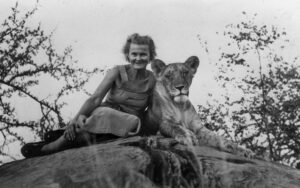
Her journey showed the world that protecting wildlife was about more than saving a species. It was about understanding the lives of individual animals and preserving the wild places they call home.
The Beginning of an Extraordinary Story
Elsa’s story began in northern Kenya in 1956, when she and her two sisters were orphaned after their mother was shot following an encounter with a game warden.
George and Joy Adamson took the cubs into their care. While her sisters were later relocated to zoos, Elsa remained with the Adamsons, beginning a journey that would forever change wildlife conservation.
A lion is born with instincts that cannot be removed. Even a cub raised by humans remains a wild animal that must eventually learn how to survive independently. The goal was never to make Elsa a domestic animal, but rather to give her the opportunity to return to the environment where she belonged.
Over time, Elsa developed from a playful cub into a powerful lioness. The Adamsons worked to prepare her for life beyond human care, teaching her the skills she would need to hunt, survive, and eventually live as a wild lion.
Her journey became a groundbreaking example of wildlife rehabilitation.
Elsa and the Birth of a Conservation Movement
When Joy Adamson published Born Free in 1960, readers around the world were introduced to a lioness unlike any they had encountered before.
The book became an international bestseller and was later adapted into the Academy Award-winning film of the same name. Together, they transformed Elsa into a global symbol of Africa’s wildlife and inspired countless people to see lions not as fearsome predators alone, but as intelligent, social animals worthy of protection.
For many future conservationists, photographers, safari guides, and travellers, Elsa became the beginning of a lifelong fascination with Africa’s wilderness.
Elsa’s Life in the Wild
After being prepared for independence, Elsa successfully adapted to life outside human care.
She learned to hunt, establish herself in the wild, and raise cubs of her own. Her ability to survive demonstrated that lions raised through careful rehabilitation could potentially return to their natural environment.
However, life in the wild remained unpredictable.
Elsa eventually died in 1961, but her short life had already left an extraordinary mark. Few lions have had such a profound influence on human understanding of wildlife.
Her descendants continued her story, and the work of the Adamsons inspired further conservation initiatives focused on protecting predators and their habitats.
Why Elsa Remains One of Africa’s Greatest Lion Legends
What makes Elsa unique among famous lions in Africa is that her legacy was not built on dominance.
She did not become famous because she was the strongest lioness or because she controlled a large territory. She became famous because her life changed a relationship, the relationship between people and the wild.
Her story showed the world that conservation is not only about protecting species numbers. It is also about building understanding, empathy, and respect for the individual animals that make those species remarkable.
Decades after her passing, Elsa remains a symbol of hope and one of the most influential lionesses in wildlife history.
Her story also connects deeply with Kenya’s conservation heritage, reminding travelers that the country’s wilderness is not only home to spectacular wildlife encounters but also to stories that have shaped global conservation.
Kamunyak – The Lioness That Adopted Her Prey
Few wildlife stories are as unusual, surprising, and thought-provoking as that of Kamunyak.
In Kenya’s Samburu ecosystem, a lioness did something that challenged everything scientists and wildlife observers believed they understood about predator behavior.
Instead of hunting newborn oryx calves, Kamunyak repeatedly protected them.
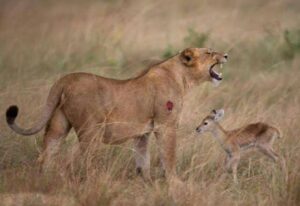
Her story became one of the most remarkable examples of unusual predator behavior ever documented and earned her a place among the most famous lions in Africa.
The Lioness Who Broke the Rules of the Wild
The relationship between predators and prey is one of the defining forces of nature.
Lions survive by hunting. Oryx survive by avoiding predators. This ancient relationship has shaped ecosystems for thousands of years.
But Kamunyak appeared to challenge that natural order.
The name Kamunyak means “the blessed one” in the Samburu language, a fitting name for a lioness whose behavior left many observers searching for explanations.
Instead of killing young oryx calves, she was observed caring for them, staying close to them, and protecting them from potential threats.
Her behavior was extraordinary because it went against the typical instincts of a predator.
A Mystery That Captivated the World
Kamunyak’s story attracted international attention because no simple explanation could fully explain her actions.
Scientists and wildlife observers proposed several possibilities. Some suggested that her behavior may have been linked to maternal instincts after losing her own cubs. Others believed it could have been an unusual expression of the nurturing behavior that normally drives lionesses to protect their offspring.
Whatever the reason, Kamunyak created moments that fascinated the world.
Her story showed that animal behavior is often more complex than humans expect. Even creatures we understand well can surprise us, revealing new layers of intelligence, instinct, and individuality.
Kamunyak’s Legacy
Although Kamunyak’s life eventually faded from public attention, her story remains one of the most memorable in wildlife history.
She became a symbol of curiosity and a reminder that nature does not always follow predictable patterns. Her life encouraged researchers and conservationists to look more closely at animal behavior and appreciate the individuality of wild creatures.
Among the many famous lions in Africa, Kamunyak stands apart because her legend was not built through power or dominance.
Her legacy came from compassion, an unexpected behavior from one of the world’s most powerful predators.
Why These Famous Lions in Africa Matter
The stories of Africa’s most famous lions are about far more than individual animals. They are stories of resilience, family, survival, and the enduring importance of protecting the continent’s wild places.
Each lion featured in this article left a unique legacy. Scarface became a symbol of resilience, the Four Musketeers demonstrated the power of brotherhood, Notch built one of the Serengeti’s most celebrated lion lineages, the Four Kilometer Boys and the Black Rock Boys showed how cooperation shapes the lives of male lions, Elsa inspired a global conservation movement, and Kamunyak challenged everything we thought we knew about predator behaviour.
Together, these legendary lions have inspired researchers, photographers, conservationists, and safari travellers from around the world. Their stories remind us that every protected ecosystem holds the possibility of another extraordinary chapter in the history of Africa’s wildlife.
Protecting these landscapes means ensuring that future generations of lions can continue to roam free, raise families, defend territories, and create stories that inspire people for years to come.
Where to Experience Africa’s Legendary Lions
The lions featured in this article became legends because they lived in some of Africa’s most spectacular wilderness areas. Today, these destinations continue to offer unforgettable safari experiences where visitors can witness lions thriving in their natural habitat.
Masai Mara National Reserve, Kenya
The Masai Mara has produced some of Africa’s most celebrated lion stories, including Scarface, the Four Musketeers, the Four Kilometer Boys, and the Black Rock Boys. With its vast open plains, healthy lion population, and exceptional year-round wildlife viewing, it remains one of the finest places in Africa to experience the thrill of seeing lions in the wild.
Serengeti National Park, Tanzania
The endless plains of the Serengeti formed the backdrop to Notch’s remarkable legacy. Home to one of the largest lion populations on the continent, the park offers visitors the opportunity to witness prides and coalitions living alongside the spectacular Great Migration.
Samburu National Reserve, Kenya
Samburu National Reserve became internationally recognised through the extraordinary story of Kamunyak, the lioness whose remarkable behaviour fascinated wildlife experts around the world. Beyond its famous lioness, Samburu offers a unique safari experience with dramatic landscapes, fewer crowds, and several rare northern wildlife species.
Meru National Park, Kenya
Meru National Park is forever connected to Elsa, the lioness whose inspiring journey was immortalized in Born Free. This beautiful and less-visited wilderness offers travellers the chance to explore one of Kenya’s most unspoiled safari destinations while following in the footsteps of one of Africa’s most famous lionesses.
Walk in the Footsteps of Africa’s Greatest Lions
The stories of these famous lions in Africa were not created in captivity or behind fences. They unfolded across sweeping savannahs, ancient migration routes, and untamed wilderness that can still be explored today.
Although Scarface, Notch, Elsa, Kamunyak, and many of the other lions featured here have become part of Africa’s wildlife history, the landscapes they once roamed remain wonderfully alive. Every sunrise over the Masai Mara, every roar echoing across the Serengeti, every quiet moment in Samburu, and every adventure through Meru offers a reminder that the story of Africa’s lions is still being written.
More about lions can be found in our guide on Fascinating facts about Lions.
A safari is more than a chance to see wildlife, it is an opportunity to witness one of nature’s greatest spectacles and create memories that last a lifetime.
At Bison Safaris, we design authentic safari experiences that bring you closer to Africa’s extraordinary wildlife and the remarkable places these legendary lions once called home. Whether you’re dreaming of the Masai Mara, the Serengeti, Samburu, or Meru, our tailor-made journeys help you experience the magic of Africa’s wilderness with knowledgeable guides and unforgettable encounters.
The next legendary lion may already be roaming the African savannah.
Will you be there to witness its story?