

There is a particular kind of silence that comes with standing at the foot of a rock face. You look up, trace the cracks with your eyes, check your harness one more time, and wonder whether your arms are really ready for what comes next. Then you make the first move.
That is the appeal of rock climbing. It is not simply about getting to the top. It is the concentration, the small decisions, the feeling of your hands finding a hold and your feet settling onto the rock, and the sudden realization that the landscape looks completely different when you are several meters above the ground.
For travellers who want something more active than a conventional sightseeing trip, rock climbing in Kenya offers a surprisingly varied adventure. The country has everything from relatively accessible crags near Nairobi to dramatic volcanic cliffs in the Great Rift Valley and serious high altitude climbing on Mount Kenya.
Kenya’s climbing history is also much older than many visitors realize. The Mountain Club of Kenya traces more than a century of climbing in the country, beginning with Halford Mackinder’s first ascent of Batian on Mount Kenya. Today, the country’s climbing scene includes established routes as well as remote areas where there is still plenty of rock waiting to be explored.
Whether you are completely new to outdoor climbing or an experienced climber looking for a different landscape, Kenya has plenty to offer.
What Makes Rock Climbing in Kenya Special?
Kenya is usually introduced to international travellers through its wildlife. The image is familiar: lions on the savannah, elephants beneath acacia trees, wildebeest crossing the Mara and flamingos around Rift Valley lakes.
Climbing reveals another Kenya.
Instead of watching the landscape from a safari vehicle, you become part of it. A cliff overlooking the Rift Valley becomes your route. A volcanic tower becomes something you have to climb rather than simply photograph. On Mount Kenya, enormous granite walls rise above an extraordinary high altitude landscape where glaciers, rock, scree and alpine vegetation meet.
There is also a pleasing variety in the country’s climbing environments. Around Nairobi, climbers can reach crags such as Lukenya without travelling deep into the country. Further west, Hell’s Gate combines climbing with the spectacular scenery of the Great Rift Valley. At the other end of the scale, the technical peaks of Mount Kenya demand considerably more experience, preparation and equipment.
That range is what makes Kenya interesting for climbing. You do not have to be preparing for a major alpine expedition to enjoy the sport here.
Lukenya: One of Kenya’s Most Accessible Climbing Areas
If you are looking for rock climbing in Kenya and staying in Nairobi, Lukenya is one of the most obvious places to begin.
Located south of Nairobi along the Mombasa Road, Lukenya is a collection of cliffs owned by the Mountain Club of Kenya. The club describes the area as suitable for both beginners and experienced climbers, and it is close enough to Nairobi to make a day outdoors possible without turning the trip into a major expedition.
What makes Lukenya particularly interesting is the variety of climbing available. The area has numerous traditional routes, while some sections also offer opportunities for other forms of climbing. There are shaded and exposed areas, and the surrounding landscape gives the experience a distinctly Kenyan feel rather than the atmosphere of an indoor climbing gym.
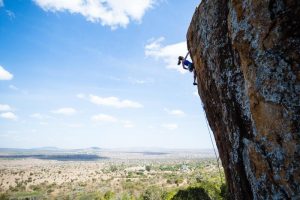
It is worth remembering that Lukenya is not a developed tourist attraction with restaurants, shops and facilities waiting at the crag. The Mountain Club of Kenya specifically advises visitors to be self-sufficient, including carrying their own food and water and taking their rubbish away. Non-members also need to follow the current access arrangements for the area.
For someone coming from Nairobi, however, that simplicity is part of the appeal. You leave the city behind, walk towards the cliffs and spend the day climbing beneath the open Kenyan sky.
Hell’s Gate: Climbing Among the Rift Valley Cliffs
Few climbing environments in Kenya are as visually dramatic as Hell’s Gate National Park.
The park sits on the floor of the Great Rift Valley near Naivasha, surrounded by towering cliffs, volcanic formations, gorges and open grassland. Kenya Wildlife Service lists rock climbing among the park’s adventure activities and specifically identifies Fischer’s Tower as a popular climbing site.
Fischer’s Tower is probably the formation most likely to catch a first time visitor’s eye. Rising dramatically from the surrounding landscape, the volcanic pillar looks almost as though it has been deliberately placed there for photographers and climbers.
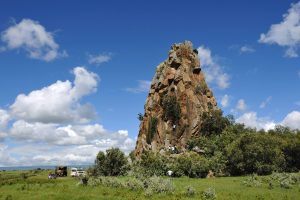
But there is more to Hell’s Gate than one famous tower. The park has a broader collection of cliffs and climbing areas, including the Main Wall. The American Alpine Club describes Hell’s Gate as one of Kenya’s major climbing areas, with routes following the distinctive cracks and columns of its volcanic rock.
The surroundings make the experience particularly memorable. You are not climbing in isolation from the landscape. Below and around you is the Rift Valley, with open plains, cliffs and wildlife forming part of the scenery.
That combination is difficult to reproduce anywhere else.
A day at Hell’s Gate can also become part of a wider Naivasha experience. You might spend the morning around the park, climb during the day and later head towards Lake Naivasha for a quieter evening. Bison Safaris already includes Hell’s Gate and Naivasha among its travel experiences, making the area easy to incorporate into a wider Kenyan itinerary.
Mount Kenya: Where Rock Climbing Becomes a Serious Mountain Adventure
Mount Kenya takes rock climbing in Kenya to an entirely different level.
The mountain’s two highest summits, Batian at 5,199 meters and Nelion at 5,188 meters, are technical climbing peaks. The Mountain Club of Kenya describes the summit area as offering high standard rock and ice climbing, while Point Lenana, at 4,985 meters, is accessible to fit trekkers without the same technical climbing requirements.
This distinction is important.
Someone searching for a Mount Kenya adventure may hear the word “climb” and imagine the same kind of experience as scrambling up a relatively low rock face. Batian and Nelion are something very different. They involve technical climbing at high altitude and should not be treated as ordinary hiking routes.
For experienced mountaineers, however, the combination is extraordinary. The technical rock routes rise above an alpine landscape of cliffs, valleys, glaciers and volcanic formations. The altitude adds another layer of difficulty because the body is working in an environment where oxygen is considerably lower than at sea level.
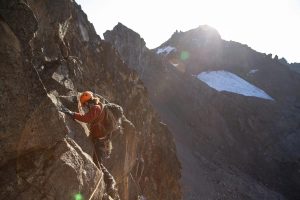
Mount Kenya therefore belongs in a different category from a casual day of climbing at Lukenya or Hell’s Gate.
Bison Safaris’ Mount Kenya trekking programme also distinguishes between trekking to Point Lenana and technical climbing on Batian and Nelion, reflecting the very different experiences available on the mountain.
You Do Not Have to Be an Expert to Start
The word “rock climbing” can sound intimidating if your only mental picture is someone hanging from a huge cliff hundreds of meters above the ground. That is not where everyone begins.
The Mountain Club of Kenya has specifically produced guidance for people starting outdoor climbing and recommends that beginners learn from experienced climbers. The club also emphasizes that outdoor climbing is different from climbing indoors and that safety procedures need to be taken seriously.
A beginner’s first experience may involve easier routes and a top-rope setup, where the rope is already anchored above the climber. This allows a new climber to concentrate on movement and technique without immediately having to manage the complexities of leading a route.
The important thing is not to confuse beginner friendly with risk free.
Climbing is an activity where proper equipment, sound anchors, competent belaying and appropriate supervision matter. If you have never climbed outdoors, going with someone experienced is far better than arriving at a cliff with borrowed equipment and trying to figure everything out yourself. The Mountain Club of Kenya makes the same point in its beginner guidance.
What Equipment Do You Need?
The exact equipment depends on the type of climbing and the route, but a basic climbing setup can include a climbing harness, climbing shoes, helmet, rope, carabiners and protection equipment.
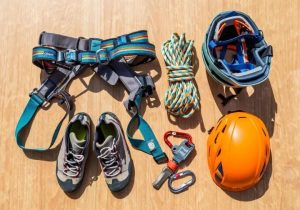
Traditional climbing introduces additional equipment for placing protection in cracks, while sport climbing generally relies on fixed protection. Some Kenyan climbing areas have both types of routes, which is another reason to understand the route and climbing style before setting out.
You should not assume that every climbing location has equipment available for hire. Lukenya, for example, has no facilities at the crag, and visitors are expected to be self sufficient.
For beginners, the easiest approach is to climb through a reputable instructor, experienced climbing group or established operator that can provide appropriate equipment and supervision.
And don’t forget the less glamorous essentials. Water, food, sun protection, suitable clothing and a way to carry your rubbish can make the difference between a comfortable day outside and a miserable one.
When Is the Best Time for Rock Climbing in Kenya?
There is no single perfect month for every climbing area because Kenya’s climbing environments are so different.
Weather is particularly important for outdoor climbing. Rain can make rock slippery, while strong sun can make exposed cliffs uncomfortable during the hottest part of the day. At higher elevations, conditions become considerably more serious.
For lower altitude climbing around areas such as Lukenya and Hell’s Gate, it makes sense to watch the local weather forecast and plan around dry conditions. An early start can also help you avoid the strongest midday heat.
Mount Kenya requires much more careful planning. Conditions can change rapidly at altitude, and the Mountain Club of Kenya warns climbers about weather, altitude and the changing conditions around the mountain’s glaciers.
In other words, do not choose your climbing date simply because the calendar says it is a popular travel season. Check the actual conditions for the crag or mountain you intend to climb.
Rock Climbing and Wildlife: A Very Kenyan Combination
One of the strangest and most memorable things about climbing in Kenya is how close adventure and wildlife can be.
Hell’s Gate is a good example. Kenya Wildlife Service highlights the park’s wildlife, cliffs and adventure activities together, and the open landscape can make encounters with animals part of the atmosphere of a climbing day.
You might be concentrating on a route while zebras graze in the distance. You could look across the valley and see a giraffe moving through the landscape below.
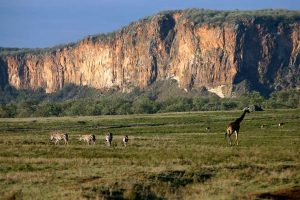
Of course, wildlife should never be treated as part of the climbing equipment. Keep a sensible distance, follow park rules and listen to local guides and rangers.
The same principle applies to the environment. Climbing takes place in fragile natural spaces, so climbers should avoid damaging vegetation, leave no litter and respect restrictions around nesting birds or sensitive areas. At Lukenya, for example, certain climbs can occasionally be closed when eagles are nesting.
How to Make Rock Climbing Part of a Kenya Trip
You do not necessarily need to plan an entire holiday around climbing.
For many visitors, it can work beautifully as one active day within a larger itinerary.
If you are staying in Nairobi, Lukenya can provide an introduction to outdoor climbing without requiring a long journey. A trip to Naivasha can combine Hell’s Gate with Lake Naivasha and other attractions in the Rift Valley. More experienced climbers can dedicate several days to a technical Mount Kenya expedition.
This also makes climbing a good option for travellers who have already experienced the traditional safari circuit and want something different.
Imagine spending several days watching wildlife from a safari vehicle, then trading the vehicle for a climbing harness and standing beneath the volcanic walls of Hell’s Gate. The contrast is exactly what makes travelling through Kenya so rewarding.
Safety Should Come Before the Summit
The most important part of rock climbing is not reaching the top. It is returning safely.
Climbing should always be approached according to your experience level, the conditions and the difficulty of the route. Beginners should learn from qualified or experienced climbers rather than trying to teach themselves technical rope systems on a cliff.
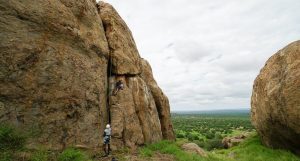
Mount Kenya demands even greater caution. Altitude, rapidly changing weather, difficult terrain and technical climbing requirements can turn a beautiful mountain adventure into a serious situation very quickly. The Mountain Club of Kenya advises climbers to use appropriate equipment, avoid climbing beyond their abilities and understand the hazards of high-altitude climbing.
For national parks, follow Kenya Wildlife Service regulations and local guidance. For privately managed or club-owned climbing areas, check access requirements before travelling.
And perhaps most importantly, respect the mountain or cliff you are climbing. A route will still be there tomorrow. There is no prize for taking an unnecessary risk today.
Why Try Rock Climbing in Kenya?
Kenya does not immediately come to mind when most people think about world climbing destinations, and perhaps that is part of its charm.
Here, climbing can take place against landscapes that are difficult to imagine from an indoor climbing wall: the volcanic cliffs of the Great Rift Valley, the granite faces of Lukenya and the immense technical peaks of Mount Kenya.
There is something wonderfully physical about experiencing these places this way. Instead of simply taking a photograph of a cliff, you learn its cracks, feel its texture beneath your fingertips and slowly work your way upwards.
And when you finally reach the top of a route and look across the landscape, the view feels different because you have earned it one movement at a time.
For adventurous travellers, rock climbing in Kenya offers a chance to see the country from an entirely new angle. You can begin close to Nairobi, venture into the Rift Valley or, for experienced climbers, take on some of the country’s most demanding mountain routes.
The safari may show you Kenya’s wild side. Climbing lets you become part of it.
Experience Kenya Beyond the Ordinary with Bison Safaris
Kenya has far more to offer than the traditional safari experience, and rock climbing is one of the most exciting ways to discover that side of the country.
Whether you want to explore the dramatic cliffs of Hell’s Gate, spend an active day at Lukenya or plan a more ambitious Mount Kenya adventure, the experience can be combined with other destinations and activities to create a trip that feels uniquely yours.
At Bison Safaris, we can help you build an itinerary around the experiences you actually want to have, from mountain adventures and Rift Valley exploration to classic wildlife safaris across Kenya. Contact us today to start planning your next adventure.
Sometimes the best way to see Kenya is not from behind a vehicle window. Sometimes, you need to climb a little higher.


