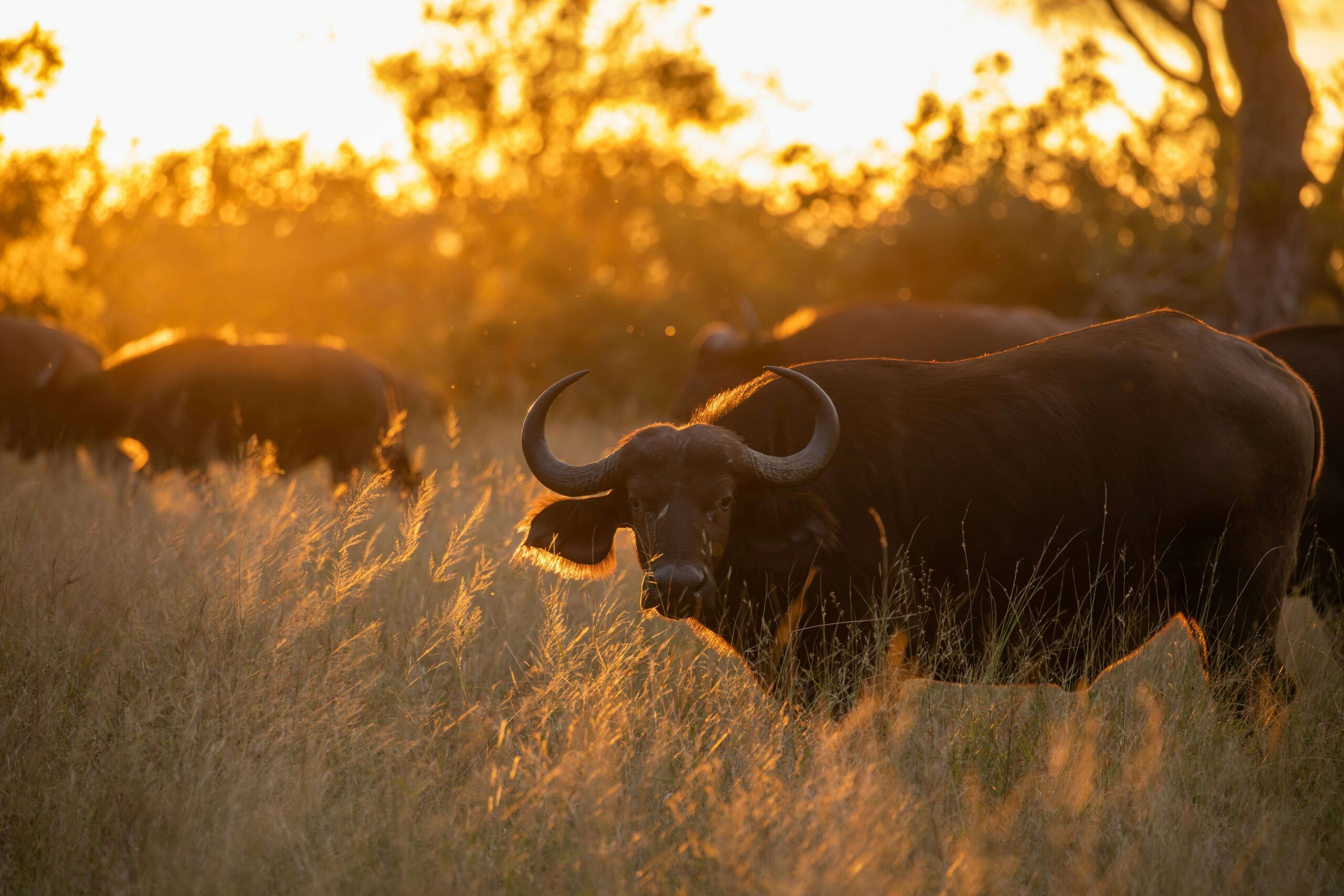
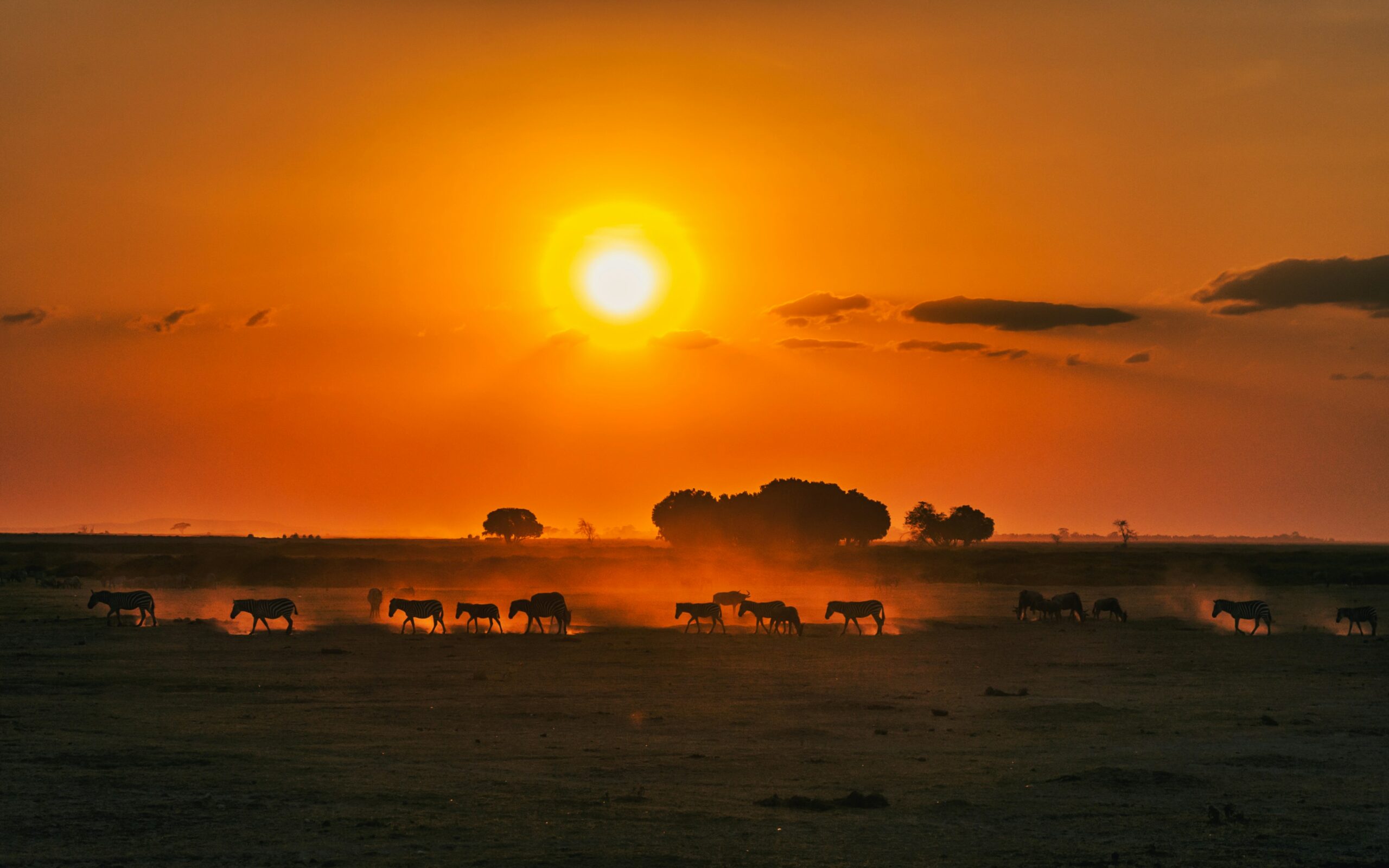
For someone who has never been on safari, it can be surprisingly difficult to imagine what the experience is actually like. You may have seen photographs of lions lounging beneath acacia trees, elephants crossing golden grasslands and safari vehicles parked beside a cheetah. You may have watched documentaries where every few minutes seems to bring another extraordinary wildlife encounter.
But what happens between those moments?
What do you actually do all day? What does a game drive feel like? How close do you get to wild animals? Do you get out of the vehicle? What happens when you don’t see anything for an hour? And is a safari all excitement, or are there quieter moments too?
If you’ve ever wondered what is a safari really like, the honest answer is that it is a mixture of anticipation, discovery, patience, beautiful scenery, unexpected encounters and plenty of moments when nature simply refuses to follow a schedule.
A safari is not a wildlife theme park where animals appear on cue. It is an opportunity to enter their world and spend time observing it. And that is exactly what makes it special.
Your Safari Begins Before the First Animal Appears
One of the biggest misconceptions about safari is that the experience begins when you spot your first lion.
In reality, it begins much earlier. It might start with waking before sunrise, when the camp is still quiet and the air has a noticeable chill. You grab a quick cup of coffee or tea, put on a warm layer and step outside into the darkness.
Somewhere beyond the camp, you may hear birds beginning to call. Perhaps there is a distant hyena vocalizing or the unmistakable sound of a lion somewhere in the darkness.
You haven’t seen anything yet. But suddenly, you understand that you are not simply going on a drive. You are entering the bush at a time when the animals are beginning their day.
That anticipation is one of the most memorable parts of what is a safari really like.
What Does a Typical Safari Day Look Like?
There isn’t one universal safari schedule because every itinerary, lodge, camp and destination is different. However, a typical day often revolves around game drives, meals and time spent relaxing at your accommodation.
A common pattern looks something like this:
- An early breakfast or coffee before the morning game drive
- A morning game drive lasting several hours
- Time back at camp or lodge for breakfast, lunch and relaxation
- An afternoon or evening game drive
- Dinner followed by an evening around the camp or lodge
Some safaris also include walking safaris, cultural experiences, boat trips, nature walks or other activities depending on the destination.
The important thing is that you are not necessarily sitting in a vehicle from sunrise to sunset. There is usually a rhythm to safari life. The bush is most active during certain periods of the day, while the hotter middle hours often provide an opportunity to rest.
The Early Morning Game Drive Is Something Special
If you’ve never been on safari, you might wonder why guides are so determined to get you out of bed before sunrise. The answer becomes obvious once you’re there.
The temperature is cooler. The light is softer. Many animals are active before the heat of the day arrives, and nocturnal animals may still be moving before disappearing into hiding places.
There is also something almost magical about watching the landscape change as the sun rises. The darkness slowly gives way to silhouettes of trees and hills. The grass begins to glow. Birds become more noticeable. Mist may linger over parts of the landscape.
And then, perhaps, your guide suddenly slows down. “Look over there.” That might be the moment you discover your first elephant herd, lion, giraffe or herd of zebra. You might also discover something much smaller.
A secretary bird walking through the grass.
A dung beetle rolling a ball across the road.
A tiny bird perched on a branch.
A fresh set of tracks in the dust.
Safari rewards people who are willing to look beyond the obvious.
How Do Guides Actually Find Animals?
This is where a good safari guide can completely change your experience.
To an inexperienced visitor, a stretch of grassland can look empty. To a knowledgeable guide, it can tell a story.
Tracks in the soil can indicate which animals have passed recently. Birds can behave differently when a predator is nearby. Herds of antelope may suddenly become alert. Vultures circling in the distance may suggest something has happened on the ground below.
Experienced guides also understand animal behavior, habitats, water sources and the terrain. That doesn’t mean they can magically predict where every animal will be. Wildlife remains unpredictable. Instead, good guiding increases your chances of being in the right place at the right time.
This is one reason the safari guide is such an important part of the experience. What appears to be an ordinary patch of bush can become fascinating once someone explains what you are actually looking at.
How Close Do You Get to Wild Animals?
This is one of the questions almost every first time safari traveller eventually asks.
The answer is, sometimes surprisingly close. You could find yourself watching an elephant only a short distance from your vehicle, or sitting quietly while a lion walks past. But there is an important distinction.
You are close because the animal has accepted the presence of the vehicle, not because the vehicle is chasing or confronting it.
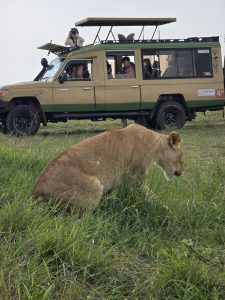
Responsible guides maintain appropriate distances and follow park regulations. They also understand when to stop, when to wait and when to move away.
And sometimes the best sighting isn’t the closest one. Watching a lion from a respectful distance as it moves naturally through its territory can be far more rewarding than trying to force a dramatic photograph.
Do You Get Out of the Safari Vehicle?
Not usually during a standard game drive in a national park. The safari vehicle provides both a safe way to move through the wilderness and an excellent viewing platform. Staying inside is an important part of responsible wildlife viewing.
However, safari doesn’t always mean remaining inside a vehicle for your entire trip.
Depending on the destination and the type of safari you choose, you may have opportunities for guided nature walks, walking safaris, cultural visits, boat excursions or other activities.
These experiences allow you to experience the landscape differently. A walking experience, for example, changes your perspective completely. You start noticing footprints, insects, plants, sounds and small details that might be overlooked from a vehicle.
What Happens If You Don’t See the Animal You Came For?
This is perhaps the hardest thing for first time visitors to understand. You cannot order wildlife.
If you have come hoping to see a leopard, there is no guarantee that one will appear simply because you have entered a famous leopard habitat. The same applies to lions, cheetahs, rhinos and even elephants. Wild animals have their own routines, territories and priorities.
Sometimes you can spend hours searching for an animal and never find it. And sometimes you can turn a corner and find yourself looking directly at one. That uncertainty is part of the magic.
A safari becomes much more enjoyable when you stop treating wildlife like items on a checklist and start paying attention to the entire ecosystem.
A herd of elephants bathing in a muddy pool can be just as memorable as a lion sighting. So can a spectacular sunset, thousands of flamingos on a lake or a family of warthogs disappearing into the grass.
Safari Is Not Nonstop Action
Wildlife documentaries have a way of compressing reality. A documentary can show a lion hunt, a leopard kill and a wildebeest crossing within a few minutes.
Real life is different. There will be quiet stretches. You may drive for some time without seeing a large animal. You may stop to watch birds. You may simply travel through a beautiful landscape while your guide explains the ecosystem.
And then something happens. Perhaps a herd of elephants appears around the next bend. Perhaps your guide notices movement in a distant tree. Perhaps a lion suddenly walks across the road.
Those quiet stretches make the exciting moments feel even more extraordinary. The waiting is part of the experience.
What Is the Safari Vehicle Like?
For many travellers, the safari vehicle becomes almost a second home during game drives.
Depending on the operator and destination, you may travel in a specially designed safari Land Cruiser, van or another purpose built vehicle.
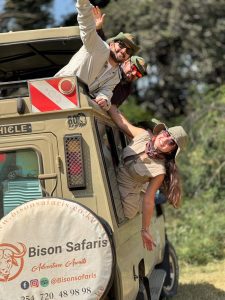
The vehicle usually provides elevated views, large windows or an open-sided design, depending on the model and location. But don’t expect a perfectly smooth ride. Safari roads can be dusty, rocky and uneven. Some routes are little more than tracks across the wilderness. You may bounce around. You may get dusty. You may occasionally need to hold onto your camera carefully.
And you will probably find yourself staring out of the window much more than you expected. That is safari.
What Do You Do Between Game Drives?
One of the nicest surprises for first time safari travellers is discovering that the entire trip isn’t about rushing from one sighting to another.
After a morning game drive, you may return to your lodge or camp for breakfast and some downtime. You might read a book, sit overlooking the landscape, take a nap or simply watch animals moving near the property. At some camps, the experience continues even when you’re not on a game drive.
Monkeys may move through the trees. Birds may visit the waterhole. Antelope might graze nearby. The wilderness doesn’t stop because your game drive has ended.
What Is Safari Accommodation Really Like?
Safari accommodation varies enormously.
You could stay in a simple tented camp where the sounds of the bush are remarkably close, a comfortable mid-range lodge surrounded by wildlife habitat, or an elaborate luxury camp with spacious tents and exceptional views.
The important thing is that safari accommodation is often part of the experience rather than simply a place to sleep.
Imagine waking up and stepping outside to see open grasslands stretching toward the horizon. Or sitting around a campfire after dinner while the sounds of the night surround you. That is very different from staying in a conventional city hotel.
And it is one of the reasons choosing accommodation that matches your expectations matters.
What Do You Eat on Safari?
If you’re imagining surviving on trail mix and sandwiches, relax.
Safari lodges and camps generally provide proper meals, and the quality can be surprisingly good.
Depending on where you stay, meals might include fresh vegetables, meat, rice, pasta, bread, fruit, soups and a range of local and international dishes.
Some camps also offer bush breakfasts or sundowners in carefully selected locations.
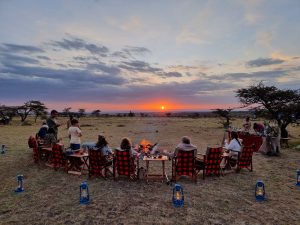
There is something memorable about eating breakfast outdoors after a morning game drive, surrounded by the landscape you have just spent hours exploring.
What About Phones, Wi-Fi and Electricity?
This depends heavily on where you stay.
Many safari lodges and camps have electricity and some level of Wi-Fi, while remote properties may have limited connectivity or scheduled power.
That can initially feel inconvenient, especially for travellers accustomed to being constantly connected. But it can also become one of the unexpected pleasures of safari.
There is a difference between sitting in a vehicle watching an elephant herd and watching the same scene through a phone screen. Sometimes putting the phone away is the best way to experience the moment. Take your photographs, of course. Just remember to look up.
Is a Safari Tiring?
It can be.
Early mornings, long game drives, rough roads, changing temperatures and hours of concentration can leave you tired. But safari is not necessarily physically demanding in the way a hiking holiday might be.
The bigger challenge is adjusting to the rhythm. You may wake early, have a busy morning, rest during the middle of the day and head out again in the afternoon.
That slower rhythm is part of safari life. And after a few days, many travellers find themselves enjoying it.
What Should You Wear on Safari?
Comfort matters more than fashion.
Temperatures can change considerably between early morning and afternoon, so layers are useful. Neutral, comfortable clothing is generally practical, particularly for game drives.
A warm jacket or fleece can be surprisingly useful during early-morning drives, even in places that become very hot later in the day. Comfortable shoes, sunglasses, a hat and sun protection are also useful.
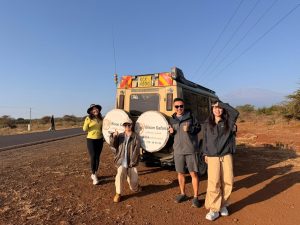
And don’t underestimate dust. Safari roads can be dusty, so clothing that you don’t mind getting a little dirty is often a sensible choice.
Is a Safari Safe?
A well organized safari with a professional guide and responsible operator can be a very safe experience. But it is still important to remember that you are visiting a wild environment. Animals are not domesticated.
That means following your guide’s instructions, remaining inside the vehicle when required, avoiding sudden movements or loud behavior and respecting park regulations are essential.
The most important safety rule is simple: listen to your guide. Your guide understands the environment far better than a first time visitor does.
The Moments You Can’t Plan For
This is where what is a safari really like becomes difficult to explain with a checklist.
You can plan your destination. You can choose your accommodation. You can decide how many days to spend in the bush. But you cannot schedule the moment.
Maybe it is a lioness appearing with tiny cubs. Maybe it is a herd of elephants crossing directly in front of your vehicle. Maybe your guide switches off the engine and everyone sits silently as a family of giraffes moves across the horizon. Maybe it is nothing dramatic at all.
You could simply find yourself sitting in the vehicle at sunset, looking across an enormous landscape while the sky changes colour.
Those moments are difficult to photograph properly because they are about more than what you see. They are about where you are.
A Safari Is More Than Seeing the Big Five
For many first time travellers, the Big Five are the ultimate goal. There is nothing wrong with that.
Seeing a lion, leopard, elephant, rhino or buffalo in the wild can be extraordinary. But the longer you spend in the bush, the more your definition of a good sighting tends to change. You begin noticing birds. You become fascinated by tracks. You start recognizing different antelope. You watch elephants interacting with one another rather than simply counting them. You become interested in the landscape itself. And eventually, you realize that a safari isn’t really about collecting animal sightings.
It is about learning how an ecosystem works.
So, What Is a Safari Really Like?
It is exciting, but it is also quiet.
It is comfortable in some moments and dusty in others.
It involves early mornings, long drives, unexpected sightings and periods of waiting.
It is the sound of an engine stopping because your guide has spotted something.
It is the sudden silence inside the vehicle when everyone realizes a wild animal is nearby.
It is breakfast in the middle of the wilderness.
It is watching the landscape change with the light.
It is accepting that nature doesn’t work according to your itinerary.
Most importantly, what is a safari really like cannot be reduced to a list of animals you will see.
A safari is an opportunity to slow down and observe a world that operates according to its own rules.
You may arrive hoping for a photograph of a lion.
You may leave remembering the elephants at sunrise, the bird your guide helped you identify, the smell of rain on dry earth, or the evening you sat quietly beneath an African sky.
That is the beauty of safari. You can plan the journey, but the wilderness writes the story.
Ready to Experience the African Bush?
The best safari is one that matches the way you want to travel, from the destinations you visit and the pace of your itinerary to your accommodation, activities and budget. Whether it is your first safari or the latest of many, taking the time to choose the right experience can make all the difference.
At Bison Safaris, we help travellers experience Kenya and East Africa through thoughtfully planned safaris designed around their interests, time and travel style. Because the best safari isn’t simply about seeing more. It is about experiencing the wild in a way you will remember long after you return home. Contact us today, to help you answer the question, what is a safari really like.