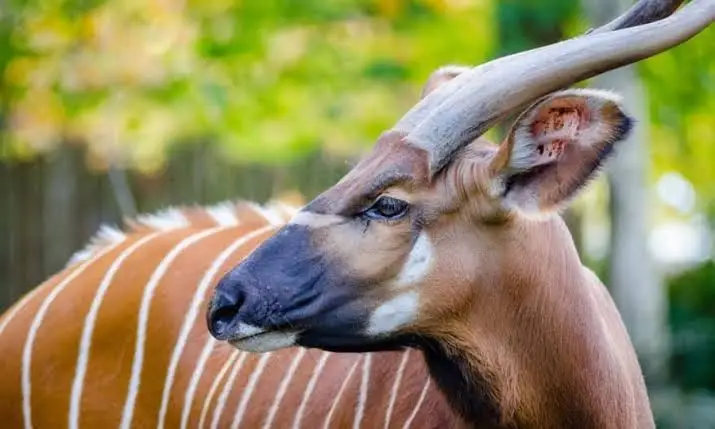
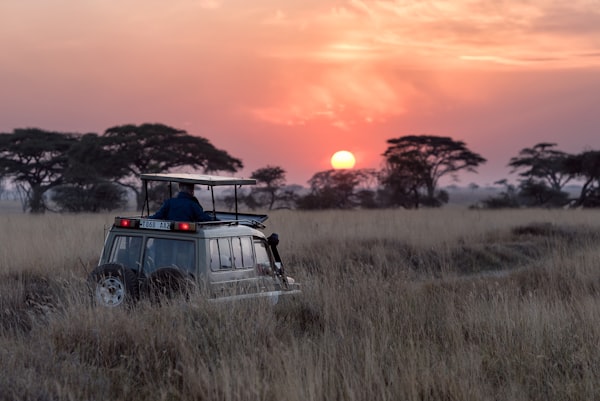
Wildlife corridors and safari tourism are closely connected. While safari travelers often think about national parks, game drives, iconic animals and spectacular landscapes, the movement of wildlife beyond protected areas is equally important. Wildlife corridors provide safe routes that allow animals to move between habitats in search of food, water, breeding grounds and seasonal grazing areas.
In Kenya, where wildlife tourism is a major part of the country’s tourism industry, protecting these natural movement routes is essential. Kenya’s wildlife conservation framework recognizes the importance of protected areas, community conservancies and wildlife dispersal areas in maintaining healthy ecosystems.
But how exactly do wildlife corridors affect safari tourism? From improving wildlife viewing opportunities to supporting local communities and protecting the future of iconic safari destinations, corridors can have a major influence on the quality and sustainability of a safari.
What Are Wildlife Corridors?
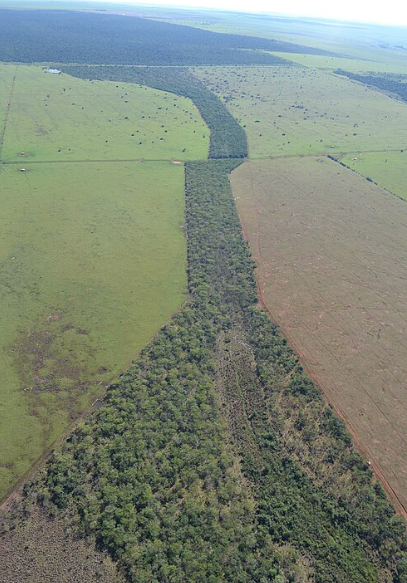
A wildlife corridor is an area of land that connects separate wildlife habitats and allows animals to move between them. Corridors can occur between national parks, reserves, conservancies, forests, wetlands and other important ecosystems.
Kenya’s Wildlife Conservation and Management Act defines a corridor as an area used by wild animals when migrating from one part of an ecosystem to another. The law also recognizes wildlife conservation easements that can help create or maintain migration corridors and dispersal areas.
Animals do not recognize human boundaries between parks and private land. Elephants, zebras, wildebeest, giraffes, predators and other species may travel considerable distances outside protected areas.
This means that a safari destination is often much larger ecologically than the national park or reserve shown on a map.
Why Wildlife Corridors Matter for Safari Tourism
Safari tourism depends on healthy wildlife populations and functioning ecosystems. Visitors travel to destinations such as the Maasai Mara, Amboseli, Tsavo and other Kenyan wildlife areas because they want to experience animals in natural surroundings.
Wildlife corridors help maintain the ecological conditions that make these experiences possible.
When animals can move freely, they can access seasonal resources and maintain connections between different populations. When those routes are blocked by roads, fences, settlements or other development, wildlife movement can become increasingly difficult.
Kenya’s national conservation planning has specifically identified securing wildlife corridors and migratory routes as important for maintaining wildlife’s contribution to the tourism sector and reducing human-wildlife conflict.
Wildlife Corridors Improve Wildlife Viewing Opportunities
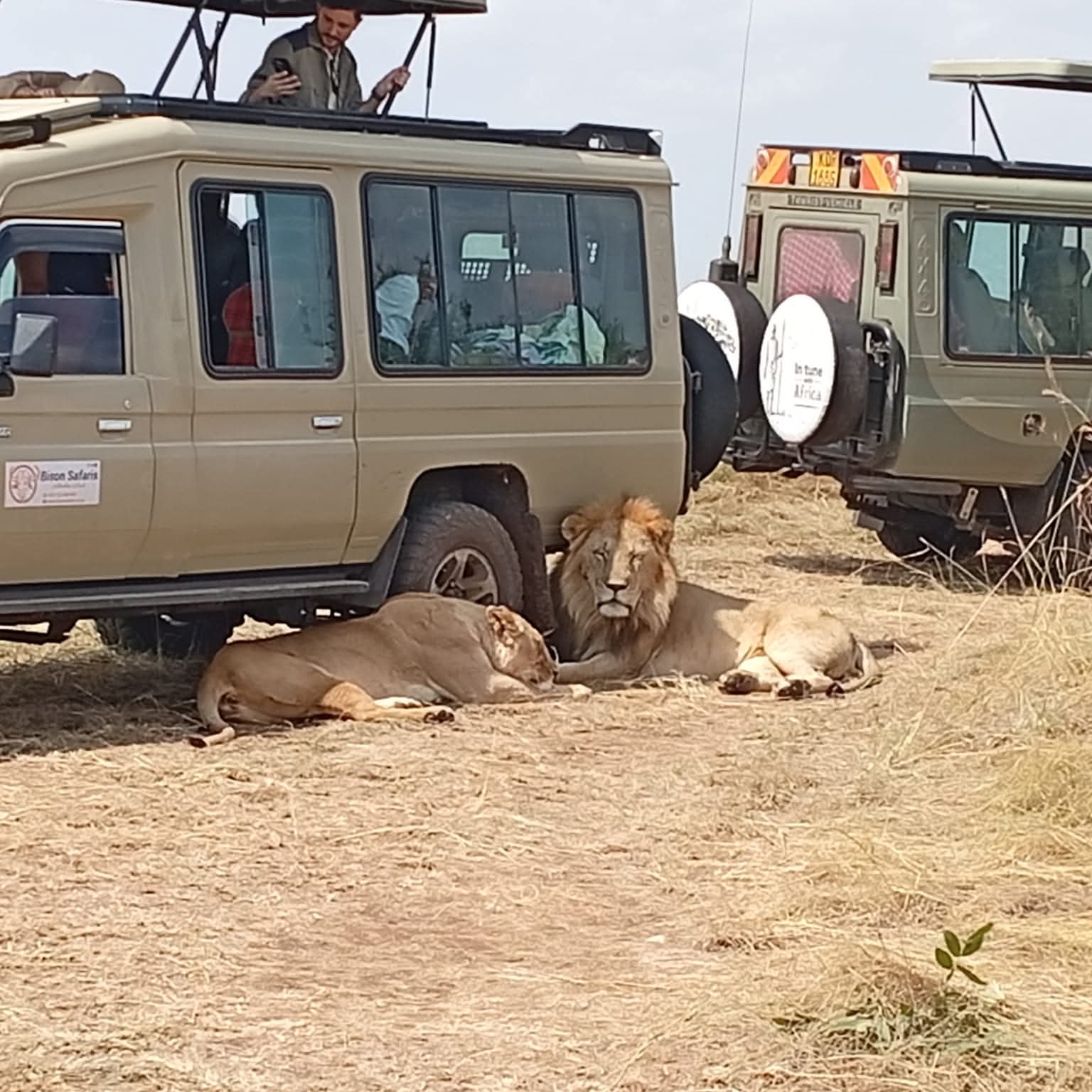
One of the most direct ways wildlife corridors affect safari tourism is through wildlife availability and movement.
Animals rarely remain in one location throughout the year. They move according to rainfall, vegetation, water availability, breeding cycles and other ecological conditions.
For safari travelers, this natural movement can create memorable encounters.
A corridor connecting different habitats may allow elephants to move between feeding areas, predators to follow prey and herbivores to search for fresh grazing. These movements can spread wildlife across a larger landscape rather than confining animals to isolated protected areas.
Research on wildlife tourism in African savannah ecosystems has found that visitor numbers can be influenced by the probability of seeing predators, particularly lions and leopards, while natural landscapes and infrastructure also affect tourism.
Healthy corridors therefore help maintain the natural landscapes and wildlife populations on which high-quality safari experiences depend.
Corridors Support Animal Migration
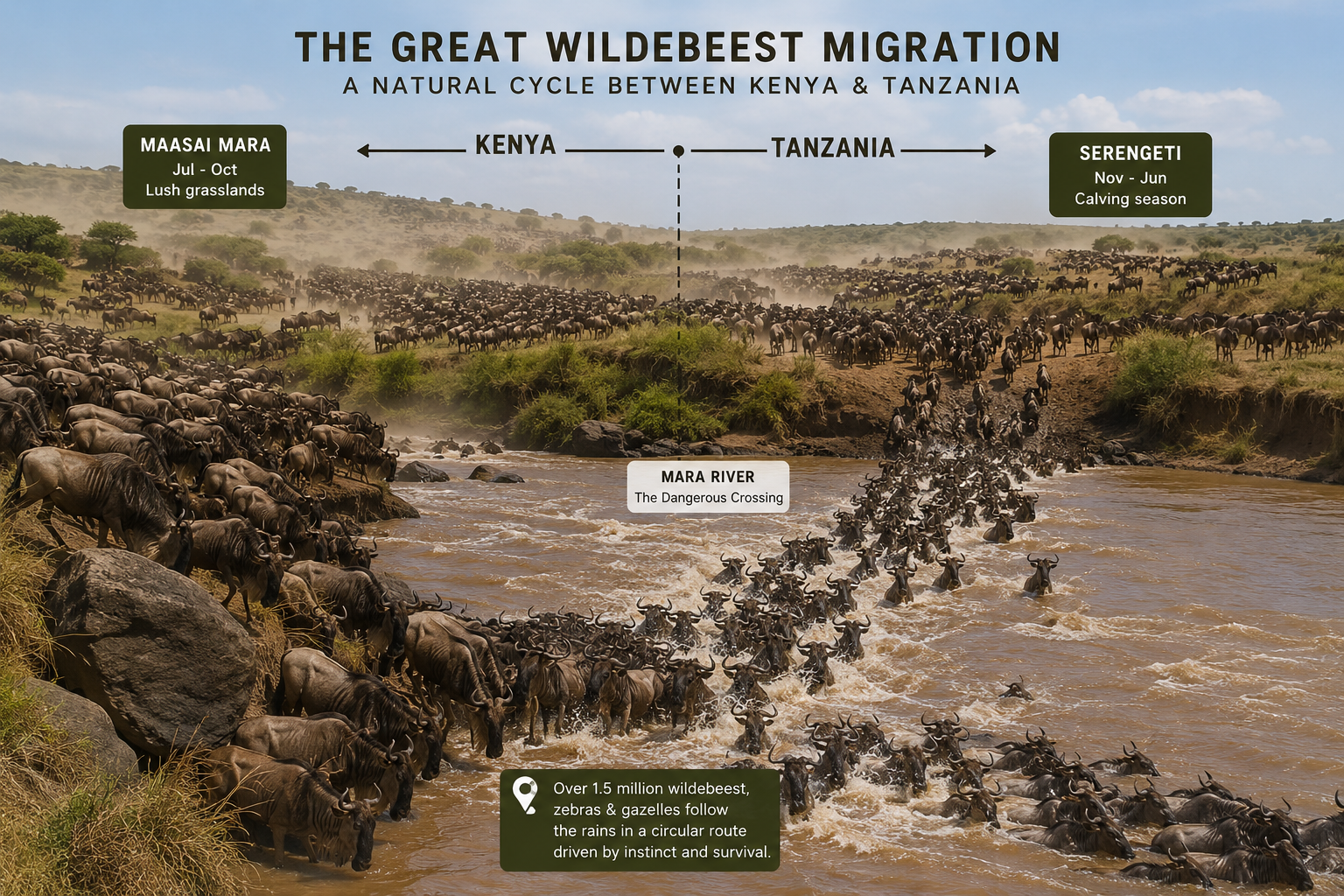
Migration is one of Africa’s most spectacular wildlife experiences.
The famous wildebeest migration associated with the Maasai Mara and Tanzania’s Serengeti ecosystem demonstrates why landscape connectivity matters. Large herds move according to seasonal conditions rather than national borders.
Wildlife corridors and migration routes allow animals to travel between important habitats. Without adequate connectivity, seasonal movements can become increasingly restricted.
For safari operators, successful migration means opportunities to offer travelers experiences involving large herds, predator-prey interactions and changing wildlife concentrations.
This makes protecting migration routes important not only for conservation but also for the long-term attractiveness of safari destinations.
Wildlife Corridors Help Protect Biodiversity
A successful safari industry needs more than a few famous species.
Tourists may come to Kenya hoping to see lions, elephants or cheetahs, but the overall safari experience depends on a much wider ecosystem containing birds, reptiles, insects, plants, herbivores, predators and smaller mammals.
Wildlife corridors can help connect fragmented habitats and support ecological processes across larger landscapes.
When habitats become isolated, wildlife populations may face increased pressure because animals have fewer places to move, feed and reproduce. Maintaining connectivity can therefore contribute to healthier and more resilient ecosystems.
For safari tourism, this means preserving the biodiversity that makes Kenya’s wilderness destinations distinctive.
Corridors Can Reduce Human-Wildlife Conflict

When traditional wildlife movement routes are blocked, animals may move through farms, settlements or other areas where encounters with people are more likely.
This can result in crop damage, livestock losses, property damage and risks to both people and wildlife.
Kenya’s conservation planning identifies securing wildlife corridors and migratory routes as one strategy for reducing human-wildlife conflict.
Reducing these conflicts is important for tourism because communities living around wildlife areas are essential partners in conservation. When communities see tangible benefits from protecting wildlife and habitat, long-term conservation can become more sustainable.
Wildlife Corridors Support Community-Based Tourism
Some of Kenya’s most important wildlife landscapes extend beyond national parks.
Community conservancies and private conservation areas can provide important habitat and movement routes while creating opportunities for local people to benefit from tourism.
Kenya’s Ministry of Tourism and Wildlife highlights community-based conservancies as a way of supporting healthy ecosystems while addressing community needs. It also recognizes partnerships between government, communities, conservation organizations and the private sector.
This creates an important connection between wildlife corridors and safari tourism.
Tourism revenue can support employment, accommodation, guiding, conservation programs and community enterprises. In return, communities can have stronger incentives to maintain wildlife habitats and protect important movement routes.
Corridors Make Safari Tourism More Sustainable
Sustainable safari tourism is not simply about taking visitors into a national park.
It involves protecting the ecosystems that support wildlife while ensuring that tourism provides long-term benefits to local communities.
Wildlife corridors contribute to this broader approach because they encourage conservation at a landscape level.
Instead of viewing a national park as an isolated island of wildlife habitat, conservation planners can consider the surrounding ecosystem, migration routes, dispersal areas and community lands.
Kenya’s Ministry of Tourism and Wildlife identifies sustainable wildlife resources as a foundation for a vibrant tourism industry.
Protecting corridors is therefore an investment in both conservation and the future of tourism.
Corridors Can Create New Safari Experiences
Wildlife corridors are not only important for animals. They can also create opportunities to diversify tourism.
Conservation areas outside traditional national parks can support activities such as:
- Guided nature walks
- Birdwatching
- Cultural tourism
- Photography safaris
- Community tourism
- Horseback safaris in appropriate areas
- Conservation-focused experiences
- Scenic and landscape tours
This can reduce pressure on heavily visited destinations while spreading tourism benefits to a wider area.
Kenya’s national tourism portal already highlights community-managed conservation areas such as Mwaluganje Elephant Sanctuary as wildlife tourism destinations.
Wildlife Corridors Help Maintain the Authentic Safari Experience
Modern safari travelers increasingly want more than simply seeing animals from a vehicle.
They want to understand ecosystems, conservation and local communities.
A functioning wildlife corridor allows visitors to see animals behaving naturally within a larger connected landscape. Elephants can move across territories, predators can follow prey and herbivores can respond to seasonal changes.
That sense of natural freedom is a fundamental part of the safari experience.
If wildlife becomes restricted to increasingly small and isolated areas, the character of the traditional African safari could change dramatically.
Roads, Fences and Development Can Threaten Corridors
Although wildlife corridors are valuable, they face significant challenges.
Road construction, agricultural expansion, urban development, fencing and other forms of land-use change can fragment important wildlife routes.
Kenya’s national wildlife corridor assessment identified human activities as a major pressure on migratory routes and corridors and noted that the degradation or loss of connectivity can harm wildlife, communities and ecotourism.
Infrastructure does not automatically have to be incompatible with conservation. Careful planning, wildlife crossings, appropriate fencing and land-use management can help reduce impacts.
The challenge is finding a balance between economic development, community needs and wildlife conservation.
Wildlife Corridors Strengthen the Future of Kenya’s Safari Industry
Kenya’s safari industry depends on the continued existence of healthy wildlife populations and attractive natural landscapes.
If wildlife habitats become increasingly fragmented, the consequences could extend beyond conservation. Fewer animals, disrupted migrations and increased human-wildlife conflict could eventually reduce the quality of safari experiences.
Protecting corridors provides an opportunity to address these challenges before they become more difficult to solve.
Kenya’s conservation system already combines national parks, reserves, sanctuaries, community conservancies and other conservation approaches. KWS describes its protected-area management system as one that balances conservation, tourism, community engagement and sustainable development.
Examples of Wildlife Connectivity in Kenya
Kenya has several landscapes where wildlife movement extends beyond individual protected areas.
Maasai Mara–Serengeti Ecosystem
The Maasai Mara forms part of the larger Mara-Serengeti ecosystem, where wildlife movement crosses the Kenya-Tanzania border. Protecting connectivity across this landscape is essential for migratory wildlife and the tourism experiences associated with the ecosystem.
Amboseli Ecosystem
The Amboseli landscape demonstrates the importance of areas surrounding protected land. Wildlife can move between Amboseli and neighboring community and private lands, making landscape-level conservation important for both elephants and tourism.
Tsavo Ecosystem
The Tsavo landscape covers a large area and is connected to other important wildlife habitats. Maintaining connectivity helps support large-ranging species and the broader ecological processes that make the region attractive to safari travelers.
Northern Kenya
Northern Kenya contains extensive community conservation landscapes where wildlife, livestock and people share large rangelands. These areas demonstrate how community-based conservation can contribute to habitat protection and tourism.
Coastal Kenya
Wildlife corridors are also important in coastal ecosystems. Areas such as the Mwaluganje landscape demonstrate how community-managed conservation can combine wildlife protection with tourism opportunities.
The Role of Safari Operators
Safari companies can contribute to wildlife corridor conservation in several ways.
Responsible operators can:
- Support community conservancies.
- Educate visitors about wildlife movement and conservation.
- Encourage responsible behavior around wildlife.
- Work with conservation organizations.
- Promote low-impact tourism.
- Support locally owned tourism businesses.
- Include conservation areas in appropriate safari itineraries.
Tourists can also contribute by choosing responsible safari operators and accommodation providers that demonstrate genuine support for conservation and local communities.
How Travelers Can Support Wildlife Corridors
Travelers can make better conservation choices during their safari.
Consider choosing:
- Community-owned or community-supported conservancies
- Responsible safari companies
- Eco-conscious accommodation
- Conservation-focused experiences
- Local guides and community tourism initiatives
- Operators that support habitat restoration and wildlife protection
Travelers should also respect park regulations, avoid disturbing animals and follow their guide’s instructions.
A responsible safari is not only about what you see. It is also about helping protect the landscapes that make the experience possible.
The Future of Wildlife Corridors and Safari Tourism
The future of wildlife corridors and safari tourism will depend on cooperation between governments, conservation organizations, communities, landowners and the tourism industry.
Kenya has already recognized the importance of securing wildlife corridors and migratory routes. The country has also participated in larger landscape initiatives, including the South of Kenya, North of Tanzania transboundary conservation program, which seeks to support wildlife corridors and dispersal areas while improving local livelihoods.
Technology can also contribute to the future of corridor conservation. GPS collars, camera traps, satellite imagery and geographic information systems can help researchers understand where animals move and identify areas that require protection.
Better information can lead to better land-use decisions.
Conclusion
Wildlife corridors affect safari tourism in powerful ways. They help animals move between habitats, support migration, maintain biodiversity and reduce some forms of human-wildlife conflict. At the same time, they help protect the natural landscapes and wildlife populations that attract visitors to Kenya.
For safari tourism to remain successful over the long term, conservation cannot stop at the boundaries of national parks. Wildlife needs connected landscapes, and communities need meaningful opportunities to benefit from conservation.
Protecting wildlife corridors is therefore more than an environmental responsibility. It is an investment in Kenya’s wildlife, communities and tourism future.
When travelers experience elephants crossing open landscapes, predators following prey or herds moving across vast plains, they are witnessing the results of a much larger ecological system. The future of safari tourism depends on keeping that system connected.
FAQ: Wildlife Corridors and Safari Tourism
What is a wildlife corridor?
A wildlife corridor is an area of land that connects separate wildlife habitats and allows animals to move between them for feeding, breeding, migration and access to water.
How do wildlife corridors affect safari tourism?
Wildlife corridors help maintain animal movement, healthy ecosystems and biodiversity, all of which contribute to quality safari experiences. They can also support community-based tourism and reduce human-wildlife conflict.
Why are wildlife corridors important in Kenya?
Many Kenyan wildlife species move outside national parks and reserves. Corridors and dispersal areas allow animals to access seasonal resources and connect different habitats.
Can tourists visit wildlife corridors?
Some corridors are located within conservancies or tourism areas where visitors can participate in guided wildlife experiences. Access depends on the specific conservation area and its management rules.
How can tourists support wildlife corridors?
Travelers can support responsible safari operators, community conservancies and conservation-focused accommodation while following wildlife-viewing regulations and respecting local communities.
Do wildlife corridors help local communities?
Yes. When properly managed, corridor conservation can support community-based tourism, employment, conservation partnerships and other local economic opportunities. Kenya’s wildlife policy framework emphasizes collaboration between communities, government, conservation organizations and tourism stakeholders.