If there is one bird in Africa that can make you stop and stare in disbelief, it is the shoebill stork. At first sight, many people are not even sure what they are looking at. It stands tall and motionless, with a massive shoe shaped bill and piercing eyes that seem to follow every movement around it.
Seeing one in the wild is not just a birdwatching moment , it is an unforgettable safari experience.
What Exactly Is a Shoebill Stork?
The shoebill stork is one of Africa’s most unusual birds. Despite its name, it is not a true stork. Scientists have found that it is actually more closely related to pelicans.
But classification aside, what truly defines the shoebill is its presence. It is calm, quiet, and almost statue-like. Unlike many birds that are always active and vocal, the shoebill prefers silence and stillness. It blends perfectly into its swampy environment, making it both mysterious and difficult to spot.
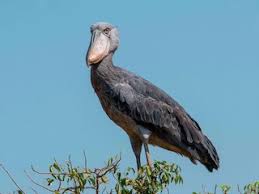
Its scientific name is Balaeniceps rex, which loosely translates to, whale headed king, a fitting name for such a strange and powerful looking bird.
Where You Might Find One
Shoebills live in remote freshwater wetlands where human activity is minimal. They prefer slow moving waters surrounded by thick reeds, where they can hunt undisturbed.
- If you are lucky, you might find them in:
- The Mabamba Swamp in Uganda
- The Sudd Swamps in South Sudan
- Bangweulu Wetlands in Zambia
- Akagera Wetlands in Rwanda
- Lake Victoria’s Marshes (Tanzania & Kenya)
But even in these regions, sightings are never guaranteed. Many travellers spend hours quietly scanning the reeds without seeing one. This unpredictability is part of what makes the encounter so special.
Fascinating Things About the Shoebill Stork
It looks like it walked out of the past
Many people describe the shoebill stork as prehistoric. When you see it standing completely still in the reeds, it is easy to understand why. It looks like it belongs in another era.
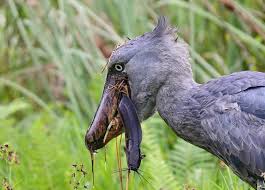
Its beak is built for precision
That massive bill isn’t just unusual, it is practical. The shoebill uses it like a powerful trap to catch fish. When it strikes, it is sudden and extremely accurate.
It can stand still for a very long time
One of the most impressive things about this bird is its patience. It can stand motionless for what feels like forever, waiting for the perfect moment to catch its prey.
It is surprisingly quiet
Unlike many birds, shoebills don’t sing. They are mostly silent. Instead, they communicate by clattering their beaks, especially during breeding or when interacting with each other.
It prefers to be alone
Shoebill storks are not social birds. You are more likely to find one standing alone in the swamp than in a group. They value space and silence.
It is becoming harder to see
Shoebills are not common. Their habitats are shrinking, and they are sensitive to disturbance. This makes every sighting feel even more special.
Why Seeing a Shoebill Stork Feels So Special
Unlike elephants or lions that you might see on many safaris, the shoebill stork is rare. Finding one feels like being let in on a secret part of Africa that not many people get to experience.
It is quiet, slow, and almost meditative watching it in its natural habitat.
When to Look for Them
Early mornings or late afternoons are usually the best times. That is when the wetlands are calm, and the shoebill is most likely to be hunting.
But even then, nature does not make promises.
The shoebill stork is not loud, flashy, or dramatic. Instead, it captivates through stillness, mystery, and presence. For wildlife lovers, it represents one of Africa’s most unique birding experiences , and a reminder of how wild and untouched nature can still be.
Spotting a shoebill often involves a boat ride through quiet wetlands, guided by experienced local guides who understand its behaviour and hiding places. At Bison Safaris, such experiences are part of what makes wildlife travel special. It is not just about ticking animals off a list, but about slowing down and truly connecting with nature.