Lake Oloiden is one of the most fascinating lakes in Kenya’s Great Rift Valley. Located beside the famous Lake Naivasha, Lake Oloiden has experienced dramatic changes in its water levels, ecology and salinity over time. For many years, Lake Oloiden was known as an alkaline and saline lake, attracting flamingos and supporting species adapted to salty water. However, rising water levels in neighbouring Lake Naivasha eventually connected the two water bodies, allowing large volumes of freshwater to enter Lake Oloiden and dramatically reduce its salinity.
The transformation of Lake Oloiden into a freshwater or much less saline ecosystem is a remarkable example of how changing rainfall, lake levels and natural hydrological connections can transform an entire ecosystem. The history of Lake Oloiden also shows that the lake is highly dynamic. Scientific studies indicate that its salinity has changed repeatedly over the past, depending largely on its connection with Lake Naivasha. More recently, the expansion and merging of the two lakes has created a more complex mixture of freshwater and saline water rather than a permanently fixed freshwater condition.
Where Is Lake Oloiden Located?
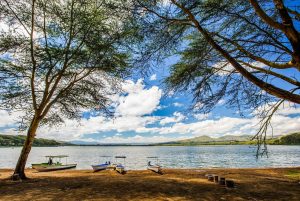
Lake Oloiden lies in Kenya’s Great Rift Valley, close to Lake Naivasha in Nakuru County. It is situated within the wider Lake Naivasha basin, an area famous for spectacular scenery, wildlife, birdlife, flower farms and freshwater wetlands.
For a long time, Lake Oloiden was separated from the main body of Lake Naivasha by a relatively narrow strip of land and shallow wetlands. Although the two lakes are close to each other, their water chemistry developed differently. Lake Naivasha is famous as one of the major freshwater lakes in Kenya, while Lake Oloiden historically became increasingly saline during periods when it was isolated.
This difference between two neighbouring lakes made Lake Oloiden especially interesting to scientists. The changing relationship between Lake Oloiden and Lake Naivasha has played the biggest role in determining whether Lake Oloiden becomes more saline or receives enough freshwater to reduce its salt concentration.
The Early History of Lake Oloiden
The story of Lake Oloiden began with the geological history of the Great Rift Valley. Millions of years of volcanic activity, tectonic movement and changes in the landscape helped create the basins and depressions that now contain Kenya’s famous Rift Valley lakes.
Scientific research into sediments from Lake Oloiden shows that the lake has experienced major environmental changes for centuries. At different times, Lake Oloiden has been shallow and saline, while at other times it has received enough freshwater from Lake Naivasha to become much fresher.
Historical research found that Lake Oloiden experienced an earlier freshwater phase when it was connected with Lake Naivasha from approximately the late nineteenth century into the first half of the twentieth century. During this period, freshwater entering the lake helped flush dissolved salts from the basin. The ecosystem changed, with freshwater vegetation and different aquatic communities becoming more important. When the lakes later became separated again and water levels fell, salinity increased once more.
This history is important because it demonstrates that the transformation of Lake Oloiden is not a completely new event. Lake Oloiden has naturally shifted between saltier and fresher conditions as water levels and hydrological connections have changed.
Why Was Lake Oloiden Originally Saline?
To understand how Lake Oloiden became fresher, it is important to understand why it became saline in the first place.
Lake Oloiden developed characteristics of a closed or poorly drained basin when it became separated from Lake Naivasha. Water could enter the lake through rainfall and other limited sources, but there was little opportunity for dissolved minerals and salts to be flushed away.
In such a system, evaporation plays an important role. Water evaporates into the atmosphere, but many dissolved salts and minerals remain behind. Over long periods, this process can increase the concentration of salts in the remaining water.
Research from the early 2000s described Lake Oloiden as an alkaline-saline lake, with water chemistry and plankton communities different from those of freshwater Lake Naivasha. During this period, Lake Oloiden had higher salinity and supported organisms adapted to alkaline conditions.
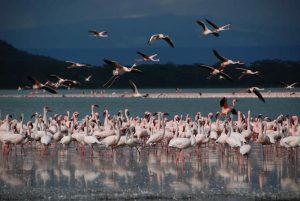
The lake’s saline conditions also helped make Lake Oloiden attractive to flamingos. Flamingos are strongly associated with alkaline and saline Rift Valley lakes because these environments can support the microscopic organisms that form part of their food supply.
For years, therefore, Lake Oloiden was best known as a small saline lake beside the much larger freshwater Lake Naivasha.
Rising Water Levels Changed Lake Oloiden
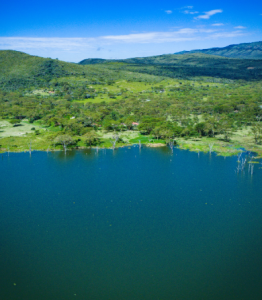
The major transformation of Lake Oloiden occurred when water levels in Lake Naivasha began rising significantly.
Periods of increased rainfall across the region contributed to higher water levels in Lake Naivasha. As the main lake expanded, water moved into areas that had previously been dry or separated by narrow land barriers. Eventually, the physical separation between Lake Oloiden and Lake Naivasha was reduced, allowing the waters to connect.
This connection was extremely important.
Lake Naivasha contains freshwater supplied by rivers, including the Malewa and Gilgil river systems, as well as other water sources within its catchment. When the rising freshwater of Lake Naivasha reached Lake Oloiden, it began diluting the more saline water in the smaller lake.
In simple terms, the transformation happened through a process of freshwater dilution and mixing. The larger volume of freshwater entering the Lake Oloiden basin reduced the concentration of dissolved salts.
Research has documented that increasing water levels and the merging of freshwater and saline ecosystems created a salinity gradient between the Lake Naivasha and Lake Oloiden areas. This means the transformation was not necessarily an instant switch from completely salty water to completely freshwater. Instead, water chemistry changed as freshwater and saline water mixed.
How Lake Oloiden Became Fresher
The process through which Lake Oloiden became a freshwater lake can be explained through several important stages.
1. Increased Rainfall Raised Lake Naivasha
The first major factor was increased rainfall within the Lake Naivasha catchment and surrounding region.
More rainfall meant more water entered rivers, streams, wetlands and the lake basin. Lake Naivasha began expanding as water levels rose.
The higher water levels changed the shape of the shoreline and submerged areas that had previously formed barriers between different parts of the lake system.
2. Lake Naivasha Expanded Toward Lake Oloiden
As Lake Naivasha expanded, it moved toward Lake Oloiden. The land and shallow areas that had helped separate the two water bodies became flooded.
Eventually, the water connection allowed Lake Naivasha’s freshwater to enter the Lake Oloiden basin.
This was the turning point in the modern transformation of Lake Oloiden.
3. Freshwater Diluted the Saline Water
Once freshwater began flowing and mixing with Lake Oloiden, the concentration of salts was reduced.
Imagine adding a large quantity of freshwater to a smaller container of salty water. The salt does not necessarily disappear immediately, but its concentration becomes lower because there is much more water.
A similar process occurred in Lake Oloiden. The freshwater connection reduced the dominance of the saline conditions that had characterised the lake.
4. The Lake’s Ecology Began Changing
Water chemistry has a direct influence on plants, fish, algae and other living organisms.
As Lake Oloiden became fresher, the ecological conditions changed. Some organisms that thrive in highly alkaline or saline water became less dominant, while freshwater species gained an opportunity to expand.
Reports have described changes in birdlife as the lake became fresher. Flamingos, which had been closely associated with the saline conditions, declined, while freshwater birds such as pelicans, African fish eagles, kingfishers, herons and storks became more prominent in the wider ecosystem.
The Impact on Flamingos
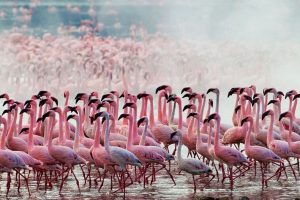
One of the most visible signs of the changing conditions at Lake Oloiden was the change in flamingo numbers.
Lake Oloiden was once popularly associated with flamingos because its saline and alkaline water supported ecological conditions suitable for the organisms on which flamingos feed.
However, when freshwater from Lake Naivasha diluted the lake, the environment began changing.
The reduction in salinity affected the aquatic ecosystem and reduced the suitability of some areas for the enormous flamingo populations associated with highly alkaline Rift Valley lakes. As a result, flamingo numbers declined and the composition of birdlife changed.
This is one of the clearest examples of how the transformation of Lake Oloiden into a fresher lake affected wildlife.
The disappearance or movement of flamingos should not necessarily be viewed as meaning the ecosystem became less important. Instead, Lake Oloiden changed from one type of ecosystem into another. As conditions became fresher, different species became more suitable for the area.
Fish Returned to Lake Oloiden
The freshwater connection also created opportunities for changes in fisheries.
When Lake Oloiden was strongly saline, its conditions limited the types of fish that could survive successfully. However, the lowering of salinity created conditions more favourable for freshwater fish.
Reports on the changing Lake Naivasha ecosystem note that fishing later began taking place in the Lake Oloiden area as the water became less saline and ecological conditions changed.
This demonstrates how a change in water chemistry can affect not only wildlife but also human activities and local livelihoods.
The transformation of Lake Oloiden therefore had ecological, economic and social implications.
Lake Oloiden and the Great Rift Valley’s Rising Lakes
The changes at Lake Oloiden are part of a wider environmental story affecting several lakes in Kenya’s Great Rift Valley.
Over recent years, several Rift Valley lakes have experienced significant rises in water levels. Increased rainfall and broader climate-related changes have contributed to the expansion of lakes and flooding of surrounding land.
Lake Naivasha has been among the lakes affected by this trend. Satellite observations published by NASA in 2026 showed that Lake Naivasha had expanded substantially since 2010, with major increases in both surface area and water level. NASA also reported that Lake Oloiden, once a separate lake, had effectively merged with Lake Naivasha.
This recent development adds an important detail to the story: Lake Oloiden should not be described as having permanently and completely changed into a freshwater lake. Instead, its history is one of fluctuating salinity. Rising water and freshwater inflow made the lake substantially fresher, but continued merging and mixing can create a complex freshwater-saline system.
Scientific research has similarly described a salinity gradient after the saline and freshwater ecosystems came into contact.
Is Lake Oloiden Completely Freshwater Today?
The most accurate answer is that Lake Oloiden’s water chemistry is dynamic.
Historically, the lake has shifted between saline and fresher phases. During periods of isolation and low water levels, salts became concentrated and Lake Oloiden developed strongly alkaline-saline conditions. During periods when it connected with Lake Naivasha, freshwater diluted and flushed the salts, making the lake much fresher.
The dramatic rise of Lake Naivasha in recent years has again connected or effectively merged the two water bodies. However, the mixing of formerly saline water with freshwater means that water chemistry can vary across the system.
Therefore, when discussing how Lake Oloiden became a freshwater lake, it is more scientifically accurate to say that rising Lake Naivasha waters greatly reduced Lake Oloiden’s salinity and transformed it into a much fresher aquatic environment. The exact conditions can continue changing depending on rainfall, water levels, evaporation and the degree of mixing between the two lake systems.
Why the Transformation of Lake Oloiden Is Important
The story of Lake Oloiden provides an important lesson about Kenya’s changing environment.
First, it shows that lakes are not always permanent and unchanging features. Their size, depth, shoreline and water chemistry can change dramatically over time.
Second, Lake Oloiden demonstrates the importance of rainfall and hydrology. A change in water level can reconnect lakes, flood land and completely alter an ecosystem.
Third, the transformation of Lake Oloiden shows the close relationship between water chemistry and biodiversity. As salinity changed, the lake’s algae, fish, birds and other organisms were affected.
Finally, the changes at Lake Oloiden provide valuable information for conservation and water management in the Lake Naivasha basin. The area supports wildlife, tourism, fishing, agriculture and local communities. Understanding the connection between Lake Naivasha and Lake Oloiden is therefore essential for protecting the wider ecosystem.
Lake Oloiden as a Tourism Destination
Beyond its scientific importance, Lake Oloiden remains one of the most beautiful and interesting destinations around Naivasha.
The lake and its surrounding landscapes offer beautiful views of the Great Rift Valley. Visitors can enjoy birdwatching, scenic photography and nature experiences while exploring the wider Naivasha region.
The transformation of Lake Oloiden has also made it a fascinating destination for travellers interested in nature and environmental change. Visitors are able to see an ecosystem shaped by one of nature’s most powerful forces: water.
A visit to Lake Oloiden can also be combined with other attractions around Lake Naivasha, including boat excursions, wildlife viewing and birdwatching.
Conservation Challenges Facing Lake Oloiden
Despite its beauty, Lake Oloiden faces environmental challenges connected to the wider Lake Naivasha basin.
Rapidly changing water levels can flood homes, farms, roads and tourism facilities. Rising water can also alter wetlands and wildlife habitats.
At the same time, human activities within the catchment can influence water quality. Agriculture, water abstraction, catchment degradation and pollution can affect the health of the Lake Naivasha and Lake Oloiden ecosystem.
Because Lake Oloiden is closely connected to Lake Naivasha, environmental changes affecting one water body can influence the other.
Protecting forests, rivers and wetlands within the catchment is therefore important for the future of Lake Oloiden. Sustainable water use and careful land management can also help protect this remarkable Rift Valley ecosystem.
Conclusion: The Extraordinary Transformation of Lake Oloiden
The story of Lake Oloiden becoming a freshwater lake is one of the most remarkable environmental transformations in Kenya’s Great Rift Valley. For many years, Lake Oloiden was known for its saline and alkaline water, flamingos and unique ecosystem. However, rising water levels in Lake Naivasha reconnected the two lakes, allowing freshwater to dilute the saline water and dramatically transform Lake Oloiden.
The result was a major ecological change. Salinity decreased, the flamingo-dominated environment changed, freshwater birds became more prominent and conditions became more suitable for freshwater fish and other species.
However, the history of Lake Oloiden also teaches us that nature is constantly changing. The lake has moved between saline and fresher phases in the past, and recent research shows that the expanded Lake Naivasha system has created continuing mixing between freshwater and saline water.
Today, Lake Oloiden stands as a powerful example of the changing landscapes of Kenya. Its transformation reminds us that rainfall, climate, hydrology and human activities can reshape lakes and ecosystems in extraordinary ways. For travellers, conservationists and nature lovers, Lake Oloiden remains one of the most fascinating hidden gems of the Great Rift Valley—a lake whose remarkable journey from saline conditions toward a much fresher ecosystem continues to tell the story of Kenya’s ever-changing natural world.
If you are planning to explore the changing landscapes of Kenya’s Great Rift Valley, a Lake Naivasha safari with Bison Safaris offers an opportunity to discover Lake Naivasha, Lake Oloiden and the region’s remarkable wildlife and birdlife.