In the travel and tourism market there are many opportunities for child friendly cultural interactions while traveling. Children on safari, in local communities that participate in cultural tours and activities within countries can experience and learn about different cultures in safe, engaging and educational ways.
There are however many opportunities and not all will be as effective as others therefore is key to responsible tourism interactions.In the travel and tourism market there are many opportunities for child friendly cultural interactions whilst traveling.
Children on safari, in local communities and participating in cultural tours and activities within countries can experience and learn about different cultures in safe, engaging and educational ways. There are however many opportunities and not all will be as effective as others therefore is key to responsible tourism interactions.
Why child friendly cultural experiences matter

By encountering different cultures, children gain knowledge on global awareness, sensitiveness and appreciation of human diversity all over the world. In a culturally very diverse country such as Kenya children can learn about these aspects in various ways.
For example through stories, local traditional music as well as through contacts with local communities in order to create added value for Educational Tourism as well as Family Travel.
What works in child friendly cultural interactions?
Interactive cultural activities
Children learn best by participating in activities and experiences that are delivered in a variety of ways, such as through traditional dance, storytelling, beadwork and local games, and other activities where children can experience culture firsthand.
In many situations children can take part in a simple traditional dance with a local community or even make a simple beadwork bracelet such as a wristband to take back to class to share with fellow students and to display. This makes the experience enjoyable and fun to recollect.
Age appropriate learning.
Using simple and relatable examples ensures children have a great learning experience while using their cultural guides and facilitators to explain how to adapt to different age groups.
For example, instead of going into a complex explanation of cultural history the cultural guide or facilitator can explain the cultural traditions by comparing to children’s everyday life. Such a celebration in your culture is like having a birthday party or a school celebration.
Visual and hands-on experience.
Kuds buthaan faro sa jewan sa color deng mangihataryo such as relics, costumes, tools for music and local handcrafts. They can put on the costumes for local kids of different ages. They can hold and play simple tools for music. They can watch the way local handicrafts are being made.
Storytelling and cultural narratives.
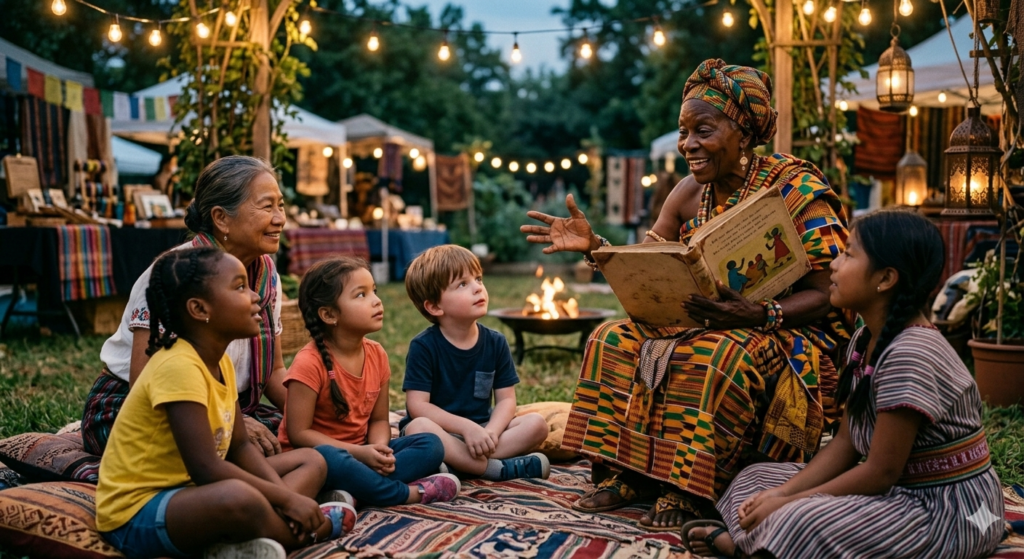
Stories are great tools for teaching culture. When folktales and legends are shared as well as the person’s real life experiences and traditions with the children, they will be able to gain so much from them and remember them.
For example, a local guide can share folktales with children that include animals, heroes and traditions and help teach children important cultural values.
What does not work in cultural experiences for children.
Information overload
Too many facts or too much information can also confuse children. Keep the cultural learning simple, fun and in small bits for them to digest.
Stereotyping and misinterpretation
Most people already feel that trying to summarize a culture or community can lead to confounding tourists who then experience tourism of very poor quality. By seeking out quality cultural tourism experiences, tourists seek out authentic, culturally diverse, unique tourism products that clearly reflect the real differences of the communities and do not get confused with stereotypes found in many parts of the world.
Passive learning methods.
Long lectures and sessions that are not interactive cause children to lose interest. For them to learn, they need to participate in an active way.
Forcing participation.
Some children may not immediately be ready for completing activities or projects but should be able to explore at their own pace without being forced to complete.
Lack of cultural sensitivity.
Interactions with local communities can be planned poorly to show disrespect or discomfort to them. We therefore encourage Responsible tourism practices.
Best practices for family friendly cultural tourism.
Create cultural tours ‘designed for families & child friendly’. Activities should appeal to children as well as the adults traveling with them.
Train up tour guides on child engagement. Ensure that guides are able to interact and engage with children in a fun and simple manner.
Make sure educational activities are also fun for children. Learning should be fun!
Ensure that ethical Child friendly cultural interactions take place and respect is given to the local communities. No exploitation should take place.