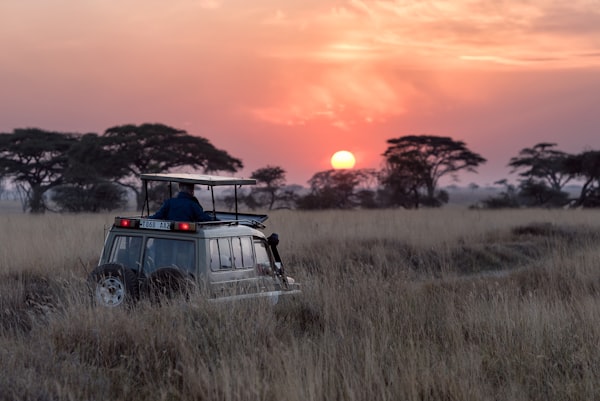
Nothing can quite prepare you for the breathtaking dawn of the Masai Mara kenya safari guide . Silently traversing the plains in your safari vehicle with your guide for the day, he is only likely to speak and give you directions and issue warnings as required.
Until the first light of the dawn starts to creep across the trees in front of you, at which point the rumbling of the lions on the floor of the vehicle will bring you to your first encounter with the true wilds, the raw and powerful force of nature on a grand scale. And what an encounter it is, a start to an incredible and action packed journey through what is arguably one of the greatest wildlife reserves in the world.
Planning your Masai Mara kenya safari guide can be fun but also very overwhelming when considering all of the different options available. The safari destination and experience is just the start of things and the big issue of where and when to go can cause a lot of stress and worry. The more experienced safari traveler may even lose sleep over what to pack for their safari and in particular what to wear for the evening’s sundowner drinks.
All of this stress and worry can make you feel further away from your ideal holiday and make you feel that you are not fully prepared for your dream safari holiday.
Insider tips to help make the most of your first Masai Mara kenya safari guide, and time in the Masai Mara as a first time visitor. We’ve taken the guess work out of planning your safari, and created this definitive guide to the Mara and its surrounding area. In this post we will discuss what makes the Mara so special, a guide to the different types of safari accommodation that we offer, and a guide to what you should be packing for your trip to Kenya.
II. Why the Masai Mara? The Unmistakable Allure
TheMasai Mara kenya safari guide is Africa’s most famous safari destination. Every year millions of people are exposed to images of Africa’s incredible wildlife on the TV screen during favourite wildlife documentaries. The scenes are often filmed right here in the Masai Mara and viewers’ eyes are opened to the beauty of incredible landscapes and unparalleled diversity of wildlife.

Many travellers have seen images of Africa’s incredible wildlife on TV as a child and dreamt of going on a kenya safari guide. Even the most seasoned traveller can’t resist returning to this premier wildlife destination. The Masai Mara is often the highlight of any Kenya safari and its enduring appeal is a question that many are keen to answer.
It’s not just one, it’s a combination of a number of extraordinary variables that make up the ecosystem here like no place else on the planet.
The Undeniable Draw of the Big Five
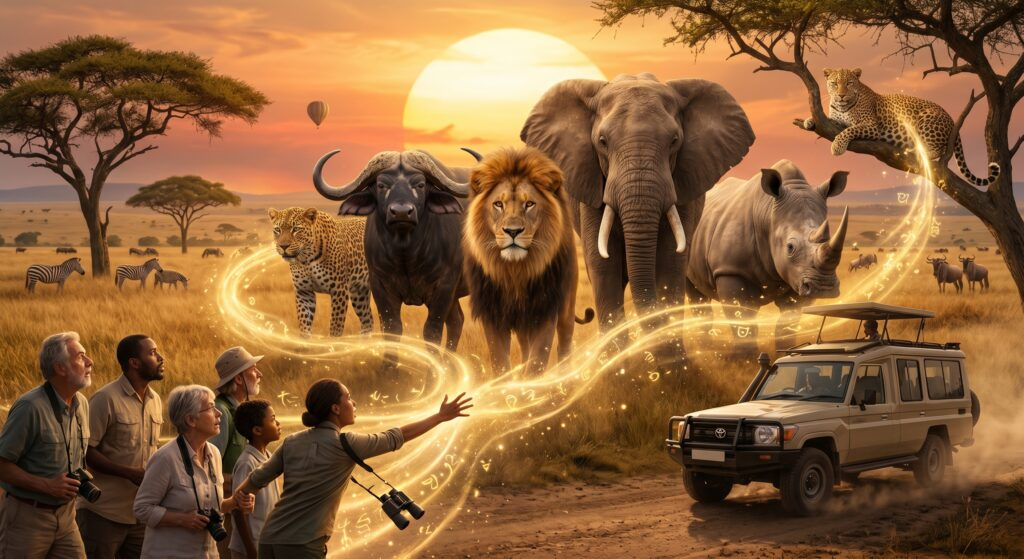
For first time visitors to Kenya, there is often one overarching aim for their safari: to see The Big Five. Also known as the ‘king’s bag’, this term was originally used by big game hunters to denote the five most difficult animals in Africa to hunt.
These were considered to be the lion, leopard, elephant, rhinoceros (either black or white) and Cape buffalo. Of course, for the vast majority of people now visiting on a photography safari, the idea of tracking down these iconic species is far more rewarding than shooting them.
The Masai Mara has one of the highest density of lions in the world and with a high concentration of prey there is a good chance that one may witness part of the Pride’s dynamics in action – playing cubs, assertive young males trying to test their muscle and bite, or indeed the raw hunting action in which not all may return.
While rhinos are somewhat rarer and require a little luck and a sharp eye on the part of your guide, there is far more going on with the elephants ripping off branches from acacia trees, large buffalo herd after large buffalo herd wallowing in the mud, and those elusive, solitary leopards dozing in the branches of a sausage tree for spectacular viewing. There is just no other place on earth quite as good for seeing wildlife as the Mara.
The Great Migration: Nature’s Greatest Spectacle
But why has the Mara become synonymous with the ultimate Masai Mara kenya safari guide experience and not say the highly diverse and spectacular Southern part of Serengeti? One reason could be the northern part of the Mara, specifically the area known as the “crossing” being the northern stage of the Great Migration.
Known to many as the greatest wildlife show on Earth, the Migration is the continuous circuiting of over two million wildebeest, hundreds of thousands of zebras and countless thousands of Thomson’s gazelles as they move in never-ending waves of animal across the landscape in search of fresh pastures and water. These incredible animal nomads are directed by the rains and follow the seasonal rains from south to north across the Savannah.
This time of year the herds of Wildebeest & Zebra do not migrate into the Masai Mara from their Serengeti National Park home in neighboring Tanzania. The highlight of their & the migration’s year is crossing of rivers & none as popular as the crossing over the Mara River. Here hundreds of thousands of Wildebeest’s congerate in a huge mass of animals only to burst down steep bank’s into icy swirling eddys of water below.
The air is often heavy with a red dirty haze of dust & every now & then a calf will call out in despair for its separated mother & a few minutes later the rest of the group will be screaming as they’re swept underwater by an unseen crocodile.
As June and July is considered to be the main time of the Great Migration and the majority of the river crossings occur then, other times of the year can offer excellent wildlife activity and indeed it is like this for the whole of the year in the Mara. The great herds of Zebra and Wildebeest never actually leave the valley or the plains of the Mara and as such there is always plenty of life about.
A Landscape Carved from Dreams
But it’s not just the wildlife that draws you to the Mara – the landscape is enchanting too. The name Mara literally means ‘spotted’ in Maa language, and this is perfectly reflected in the way the patchwork of the landscape appears from the air – vast expanses of shimmering, undulating grass streaked with single, towering acacia trees, clumps of bush here and there, and dark veins of riverine forest.
Space makes you feel very small, yet also incredibly alive. In Kenya, the sky is huge and therefore the sunsets are of massive proportions and full of strong colors.
And at night, it is very dark which is perfect for observing stars in space because of no light pollution. The views are so spectacular that even the Milky Way can be seen traveling overhead in the night sky. And the endless horizon is something to get used to rather quickly and that already in itself is powerful.
The Cultural Heartbeat: The Maasai People
A Kenya safari – what is ‘true’? For most people on holiday in Kenya the idea of a safari is closely associated with wildlife and spending time on safari in Kenya is just like going on a big wildlife holiday. But for many Kenya safari operators a real safari is also about people – and the way they live. On safari in the Masai Mara (and other parts of Kenya) there are many two legged creatures as well as four, living there.
Of all the cultures of people in Kenya, perhaps there is the most known, the semi-nomadic pastoral Maasai who for centuries have lived in this part of Africa. By visiting the local Maasai Village you can learn more about this unique and very special culture and see how they live, their dress, jewelry and music etc.
Living in the land and the wildlife is what these guys exist in. Visiting a traditional Maasai boma (village) can be an insightful and intriguing encounter with an evolving culture in today’s world. Often however the more meaningful encounter is to find a lodge or camp that uses local Maasai as their safari guides.
They have excellent tracking skills, have a huge knowledge of animal behavior and a great respect for the environment that they call home. They take you on a journey of discovery, reading the bush for you and painting a picture of what is going on, from the call of a bird to the rustle of a leaf.
III. When to Go: Timing Your Kenya Safari
As soon as people found out we were going on a Masai Mara kenya safari guidethe first question was “when are you going?”. I was very focused on the timing of our safari as the timing of your safari is determined by the rains and how they affect the whole ecosystem.
The Masai Mara is one of the few places in Africa that is great for a safari all year round, but circumstances and costs vary greatly with the seasons.
The seasons come & go but there are windows for travel in every season – so pick the best one for your safari!!!
your home!
The Dry Season: The Great Migration and Peak Drama (June to October)
This is the time to see the Great Migration if that is what is on your ‘Wish List’. By July large sections of the Migration begin to make their way into the NCR as the herds seek to find grazing areas in Tanzania’s Serengeti National Park.
The low season ‘dry’ conditions present few disadvantages when it comes to wildlife viewing. The thinned out scrub allows for greater visibility and many species seem to be easier to see. And with water in short supply, huge numbers congregate around the handful of water courses including the mighty Mara River where a great game viewing spectacle takes place. It is eruptive.
This is the single busiest month for visitors at Kruger and there are many reasons for this, particularly as it is also possibly the single best month for wildlife action.
The crowds do come with a hefty price tag, the biggest being that the reserve is very crowded and at the odd river crossing you can barely see the animals in front of and behind your vehicle as there are so many other similar vehicles, it can be all rather frenetic and lots of dust is kicked up by all the 4×4 driving.
So long as you are up for all that then this is the ultimate experience of the great variety of animals of Kruger.
The Secret Season: Predators and Newborns (January to February)
Although it is one of the best times for viewing wildlife and is short – lasting only for a few weeks in between the short and long rains – this period is often forgotten by the first time visitor to Africa’s savannahs. The short dry season period brings a blanket of short grass over the green and lush, rainfall-soaked plains, providing excellent visibility.
The period also sees the reserve’s massive population of plains game give birth to their young, and where there is an abundance of newborns – wobbly and fragile as they are – there are also predators – in the form of lions, cheetahs and leopards – that are actively on the hunt.
And in August when the park is swarming with Masai Mara kenya from around the world it’s here that you can enjoy these heart-stopping encounters with the reserve’s big three in the near-empty bush.
.
The Long Rains: The Green Season’s Solitude (March to May)
April and May see loads of rain in East Africa. Many operators, including some high end safari companies, advise their clients to avoid booking a Masai Mara kenya safari guide during this time due to some lodges/camps closing for the season. However, for the adventurous and poetic traveller the ‘Green Season’ can be a truly remarkable time to experience the beauty of the wildlife arena.
With the Mara painted in green the landscape is fresh and anew. The skies are dramatic in colour, fantastic for back-lights and landscape photography and, better still, there is no dust at all. And did I mention the incredible discounts for off-season prices.
We have recently been out on Masai Mara kenya safari guide and it is amazing how few people are there during this time, literally being the only vehicle for miles on end!
My Recommendation for First-Timers
I’d personally argue the best time for a newbie’s first trip would be late September/ early October – you can catch the end of the migration, whilst the peak summer crowds have started to disappear. Conversely, February is an amazing time for all the top predators, without the usual premium of being during migration.
Wild camping makes all sorts of amazing spots feel ‘home’. The tricky thing is working out what will make a good shelter – but don’t worry, it’s really not difficult.
As I traveled around Kenya recently planning Masai Mara kenya safari guide for our travelers to take later this year, I was presented with an seemingly endless array of hotel options.
I stayed in all sorts of hotel rooms on my trip to Kenya- all of them with very comfortable mattresses, I mean who doesn’t want a comfortable mattress? In planning safaris for our travelers to take later this year, however, the options for where you can stay on safari are more complex than choosing between comfortable mattress hotel rooms.
The Big Decision: The Main Reserve vs. Private Conservancies
One piece of advice we had was to understand how the Greater Masai Mara is split. It is divided into two main types of areas, the National Reserve itself, and the larger area of privately managed conservancies.
The Masai Mara National Reserve is the public section of the wildlife ecosystem managed by the relevant county governments.
This is where the famous Mara River crossings take place during the migration season. The benefit of this public reserve is that anyone with a park fee pays to come in, meaning that during the peak season sightings of big cats can be incredibly busy with dozens of vehicles jostling for a viewing position.
Additionally, the tourist authorities have imposed a policy whereby vehicles are not allowed to leave the marked trails, which can mean missing out on viewing animals such as a sleeping cheetah that is stationary and out of sight if too far away. As such, binoculars are an essential item for many game viewing situations.
There are also the Private Conservancies (such as Mara North, Naboisho or Olare Motorogi) which surround the Reserve. These vast tracts of land are leased from Maasai landowners by a small number of safari operators, and allow luxury safari companies to offer a very different Kenya safari experience.
(The main difference to game viewing within the Reserve itself is that there is no restriction on the number of beds – and so number of guests – that may be offered within a Conservancy; and certain practices are permitted within Conservancies that are banned within the Reserve.) Numbers are strictly controlled (to preserve both the landscape and the wildlife) but guests can enjoy all day game viewing with a minimal presence of other vehicles – you might only see two other cars all day.
Guides are also allowed to drive off-road to get closer to their quarry; to do a night drive; or to conduct a walking safari should the situation arise. These Conservancy lodges offer an unparalleled Masai Mara kenya safari guideexperience – one that is very premium priced indeed.
Tents vs. Lodges: Finding Your Comfort Zone
There is also the decision about what type of tent to bring on your camping adventure.
A Luxury Lodge is a permanent structure with solid walls and glass and offers a resort type of pool and spa with large verandas off the rooms. There are several dining areas and it is the ultimate in luxury and comfort and suits people who are nervous of sleeping in the bush as it feels a little remote from nature.
I think the Tented Camps are where to start when looking for the true safari experience and they have nothing to do with small dome tents that one thinks of when they say camping. The structures are made of heavy canvas but have proper beds and then topped with mosquito nets, wooden floors, 24 hour lighting and fully plumbed bathrooms with showers and toilets. All hot water 24/7 and everything flushes.
The sounds of the African wild in the night are the best bed time lullaby – the roar of the lions, the crunching of the hippos moving about at night, the whoop of the hyenas. Tented camps offer the perfect balance of luxury and true camping out in the African wilderness with only canvas between you and the wild.
Other than Mobile Camps, which roam the landscapes seasonally in search of the Great Migration, the few, rustic tents that make up other Camps in the African Wilderness are immersing one in Nature and that simple‘wilderness way of life’ is best catered to by hardened safari ‘veterans’, – the odd ball hardened African Nature enthusiast and hardened trekkers, to name a few of Earth’s few remaining enthusiasts from this special earth space- – Others could well do with the luxury to the maximum of man made camps for comfort, not looking for raw African Nature or simply Earth Wilderness Space (‘wilderness life’, a life totally within free Nature without any man-made intervention), such would certainly NOT be out of place on say.
beautiful Maasai Mara’s luxurious camp grounds with fully luxurious, four-star to high end five-star tents including pools of their own to jump into, from bathrooms complete with hot-power-shower, wash-basin and fluffy white towels etc!-; It’s Earth’s few truly Wilderness grounds- as in original African non-intervention and raw wild natural African settings, that Mobile and these camps offer!- with no humanity intervention whatsoever; totally wild in all respect.
V. Crafting Your Daily Routine: What to Expect
This Masai Mara kenya safari guidelife takes no prisoners and will dictate your days in the field. Everyone before me went on this fantastic vacation and were told to take it easy and relax. Not a moment of it. Until you actually go on safari you have no idea how your days will be spent but once you get into the safari swing, it’s so natural and so beautiful.
The Early Wake-up Call and Morning Drive
Our Wake-up Call is scheduled for 5:30 a.m. right in front of your tent! The Early Morning Wake-up Call already is so much fun and so great for starters as it takes place outside of your own tent!
Around 5:30 am your guide greets you outside your tent with a Jambo, and hands you a local coffee or tea with some biscuits to have while you board your vehicle. Yes, it is dark and it is chilly but, that is half the fun of being on Safari and getting up for a morning game drive is definitely worth getting out of bed for. Depending on where your camp is, you will depart for your drive around 6:00 am / 6:30 am.
This is the time when big cats are usually out hunting for their evening meal, as the cool air of the morning has not yet been overcome by the heat of the sun. It is an ideal time for both the wildlife enthusiast and the photographer, as the light is superb. The mornings begin with a wonderful glow as the sun rises slowly above the trees, casting a superb display of pinks and oranges across the plain, with the grasslands stretching out before you.
Bush Breakfasts and Leisure Time
At around 9:00 am, the early morning wilderness calls are answered. The morning game drive has been a very successful one and, after returning to the Camp, clients take a break for breakfast. It is typical for safari tours to set up a “bush breakfast” in the wild. In some cases this will be on the car’s hood; sometimes a pulled up table and mantel are set up with acacia branches, on a river bend, at the foot of a lone tree, and so on.
Hippos usually cruise by and peck their curiosity about what’s on the menu – usually more of the same stuff that’s for breakfast in your typical household: bacon, eggs and some fruit, all eaten in the wilds of the wonderful Mara countryside and under the brilliant blue skies.
After a late morning lunch at camp, and as it is in the middle of the day the animals are all sleeping, due to the highest temperatures of the day. I had a great time catching up on some rest at my tent, with a hot shower, a snooze, reading a book, or just relaxing around the pool or from the veranda of my tent with my binoculars scanning the plains for wildlife.
The Afternoon Drive and Sundowners
The late afternoon tea break generally is taken around 3:30 pm or 4:00 pm and serves as a reminder and incentive to get back on the animals’ track for the second part of the day’s safari. It’s quite amazing how, as the light softens and the temperature drops from the day’s heat, the whole of the bush comes alive for a second burst of activity and viewing. And then, just as before, your safari guide brings the day to a close with a sundowner.
This classic part of any safari is found in as many locations as there are guides and can take many forms, from clambering up rocky outcrops to setting up in a suitable spot to drink in the view, and to sample a gin and tonic or chilled Tusker beer while the light closes down to a kaleidoscope of colors – greens, blues and violets giving way to reds, oranges and even crimson.
Nights in the Bush
Life in the safari camp at night can be very pleasant. After a long day in the field, following the animals in the hot sun, the camp can be a real haven. There are bears and some other animals that are active at night and your guide will probably try to find some of these using a spotlight. Even some of the larger genetic cats are around at night. The communal aspect of life in the safari camp is great and in the evenings there is a lot of laughter, stories are told and photos from the day are looked at.
Dinner is eaten outside under the stars and after an early start in the morning it is not long before you are off to sleep at 9:30 pm, in your bed in the camp, surrounded by the sounds of wild animals.
VI. Beyond the Game Drive: Elevating the Experience
For those looking for an extra dimension to their safari, getting off road in 4×4 in the Mara is a big part of the experience. However, the following activities can all add an extra layer of quality to the experience of your safari and, at heart, they all center around the act of staying at an extremely exclusive camp, which will increase the dimension and quality of your overall safari experience to that of once in a lifetime.
The Ultimate Splurge: A Hot Air Balloon Safari
Getting up at the crack of dawn to take to the skies in a hot air balloon safari experience over the savannah was another expense and an early start but pure magic! Seeing from down low the course of rivers and their tributaries, individual animals scattered across the Savannah and a huge view of the Mara as a whole from a different perspective.
And to top it off a champagne breakfast cooked whilst we landed on a grassy strip – as over the top as it was, it was certainly the most decadent experience of my travels!
Feeling the Earth: Guided Bush Walks
Staying in a private conservancy gives you the opportunity to do a guided bush walk, which I cannot recommend enough. Leaving the 4×4 behind really makes you appreciate where you are staying. The armed Maasai guide was amazing and more interested in teaching us how to read animal tracks, where different types of ‘poo’ come from and how to use the plants medicinally, than hunting down lions. Truly amazing.
Connecting with the Community: Cultural Visits
To fully appreciate the Mara it helps to appreciate the Maasai people who call it home. Many safari camps include visits to local villages, some more staged than others, but a good cultural exchange can give a glimpse into their way of life, their incredible beadwork and how they are managing the challenges conservation brings in conjunction with protecting the wildlife.
A New Perspective: Photography Hides
For the photo nuts, many of the camps have built sunken hides next to the waterhole, at eye level with the water. It’s so rare that an elephant will come down to drink during the day but when they do, you’re literally sitting right there, right next to them which can make for incredible and intimate photography.
VII. Packing Practicalities: Your Safari Toolkit
When planning your safari to Kenya it can look like packing for your trip will become your full time job for Masai Mara kenya safari guide. Reading through a fellow traveler’s packing list can in fact result in you sitting surrounded by stacks of khaki clothes on the floor of your living room whilst questioning the huge amount of luggage you will be taking with you on your adventure. However packing for your safari needn’t be that stressful, follow a few simple rules and you’ll be fine! Here’s what to pack for your safari.
The Strict Rules of Luggage
Note: There are many airlines operating flights into the Masai Mara from Nairobi, and all of these flights are referred to as ‘bush flights’ and involve small planes (carrying 12 to 15 passengers) with restricted space and weight for your luggage.
Each airline stipulates rules regarding how much and what sort of luggage can be brought on these very small planes, however as a general guideline: 1 main bag of 33lbs max, plus 1 small bag with you (e.g. hand luggage), plus 1 camera bag plus a daypack with essentials and your camera of course. So it really does make sense to pack light, only bringing what you actually need for the duration of your safari.
You also need to check with your airlines for space and weight restrictions on luggage as most of the ‘bush flights’ used for transfers to safari locations are small planes with 12 to 15 seats and strict rules as to weight and space for passengers’ luggage. Generally this is 1 large bag of 33lbs (15kg) max, 1 small bag which you can hold in your lap, and 1 camera bag.
And please be realistic as to how much you actually need to take as you can always have things washed and be re-issued with anything needed.
And remember your main bag MUST be a soft duffel type, no framed or wheeled suitcases please! These simply won’t fit into the tiny pods of the planes and will have to be unpacked at Wilson airport and all your clothes, etc. re-packed into a soft duffel bag for you. Therefore it is suggested that you purchase a good quality canvas or nylon duffel bag for your safari!
The Safari Uniform: Mastering the Art of Layers
It’s obvious to bring safari clothing. For the days on safari (which in the Mara are all the days) it’s obviously best to wear the same sort of clothes that other safari goers wear.
This is the attire of travelers Masai Mara kenya safari guide. It’s designed for safari, for traveling through the bush in a hot place. Clearly safari clothing must be suitable for its intended use. And in this case, it clearly is. The design of a safari suit makes sense when actually on safari in a place like the Masai Mara.
The temperature fluctuations here at this time of year are so extreme. At 6am this morning it was freezing (well it felt like it) in the open-topped jeep but by 11am it was shorts and a short sleeved top sort of weather. I therefore now refer to the various layers that one adds as “peeling the onion” – as one piece after another is peeled off as the temperature increases! In order to cope with the extremes of temperature then it is sensible to choose a couple of simple rules – firstly the clothing must be stable enough to enable the wearer to move freely, yet not so cumbersome as to create a problem when the temperature increases; secondly the simpler the color the better. No-one wants to draw attention to the attention of beasts and reptiles everywhere the bright garb of a tourist.
When choosing what to take on Masai Mara kenya safari guide try to stick to two main rules: the clothes have to be stable enough so that you can move around freely, and not so bulky that you will be left vulnerable to the elements. No jeans or mere t-shirts please! For the clothes themselves opt for neutral earthy colors, such as Khaki, olive, tan, brown and white. While white clothes can get dirty very quickly (in minutes often) they are a good choice for safari because they don’t attract attention from the wildlife.
Avoid dark blue and black because these colors will attract tsetse flies which have very painful bites. Tsetse flies are found in many parts of Africa and can be avoided by wearing the correct clothing and by not walking in bushy areas where they are known to reside.
Remember it is a holiday and don’t pack too much. A wash can be done at the camps and lodges. It is much better to bring 3 days worth of clothes and do a wash in between. Most camps and lodges will do a daily wash for you.
As local custom does not allow the washing of underwear they will supply you with washing powder in your bathroom to wash them in the sink. A high impact sports bra is recommended as the dirt tracks in the Mara are affectionately known as the African massage!
Footwear: Keeping It Simple
Of course when thinking of good footwear to bring on safari the obvious first choice would be to consider stiff, tall and rigid hiking boots, similar to those hikers take on long treks through remote mountains and bring for mountain climbing.
But what most people don’t realize about going on safari is that you’ll be spending almost 90% of your time in 4-wheel-drive vehicles traveling between camps and between different locations and so it would actually be silly to bring lots of very heavy footwear with you.
What you will want to consider bringing however are good quality, extremely comfortable, well-worn out sneakers or trail running shoes that enable you easily to enter and exit the vehicles as well as go on longer walking safaris conducted under guide.
Later in the day when returning to your own tent at camp for lunch or simply to rest up between the times of your game-drives you can then switch to a comfortable pair of sandals or flip-flops.
Essential Gear: What Not to Forget
Whilst traveling to Kenya for your safari holiday you will be remote and completely out of reach. If you are visiting for a Safari Holiday then you forget it and bring it with you!
The most important single piece of equipment to bring along on your wildlife viewing safari is going to be a good pair of binoculars.
While it is possible to share a single pair of binoculars between two people on safari, it is not suggested. You will want to get a better look at most of the things that you see on your safari, and so it would be best to buy the best pair of binoculars you can afford to bring along on your holiday.
For a couple on safari, a pair of 8×42 or 10×42 power binoculars would be ideal. They will offer you the best of both magnification and field width, and also provide you with the most light gathering ability to give you the best view of the animals that you see.
Note though that for viewing landscapes it will be just fine to take pictures with your modern smartphone. It is much better for this type of view than were older cameras to be compared side-by-side with your modern Smartphones. Wildlife images, however, present a whole different challenge.
Here very often a minimum 300mm telephoto will be required to be able to get a clear and well-focused image. Certainly images taken with Smartphone’s available telephoto-lenses are nowhere near as good in this respect.
Many eco-camps are extremely remote. Activities within the camp tend to cease late in the afternoon and then the camp as a whole ‘switches off’ in total darkness.
Thus for those who want to upload all your wonderful pictures from the day’s wildlife viewing whilst out on long game drives, or even just keep family and friends back home up to speed with your latest safari adventures, it is wise to bring: 1. a high quality power bank (able to be charged up from time to time by your 4 wheel drive vehicle’s 12 volt DC socket); 2. a travel adapter / cable / converter suitable for charging up all your multiple various appliances at the one time (e.g. as Kenyan Type G 3 rectangular-pin sockets are of the UK style as opposed to those used in say Germany, France or Scandinavia of Type K 3-pin round sockets).
Health and Safety Fundamentals
The health of travelers has to be the number one priority when traveling. It is recommended that prior to traveling you pay a visit to your doctor or to a travel clinic. The health risks that are prevalent in the Masai Mara are high and include frequent cases of malaria.
The yellow fever vaccination is required for entry to Kenya for travelers coming from countries with a risk of yellow fever. However for visitors from the US or Europe this is not required. But should you be in transit through any ‘risk’ country then you will require this vaccination as well.
.
Pack some basic supplies too – pain killers, some sort of stomach bug cure for the inevitable travelers diarrhea and any prescription medication. It’s also a good idea to bring some strong sunscreen (high SPF), a hat and some very good quality polarized sunglasses for protection from the sun. And don’t forget the insect repellent, use lots of it and make sure it contains DEET or Picaridin. Spray yourself often and hopefully you’ll avoid most of the bugs.
Comprehensive travel insurance including cover for remote medical evacuation. Increasingly tour operators include temporary membership of the Amref Flying Doctors in the cost of their safari. These people will get you from the middle of nowhere to a fully-equipped modern hospital in Nairobi in the worst case scenario that you should not travel without.
VIII. The Logistics: Getting There and Around
In many ways the logistics of getting to and around the Masai Mara are even more of a journey then the actual time you spend on safari. While the safari itself can be organized in various ways most Kenya safaris start in the capital city of Nairobi.
This bustling travel hub is the perfect place to fly into from all over the world and be in the midst of East Africa in a short amount of time. Jomo Kenyatta International Airport (NBO) is the airport that most people arrive into, and is in fact the third busiest airport in Africa after Johannesburg and Lagos, and is used by travelers heading into all parts of East Africa.
There are also two ways in which you can start your safari to the Masai Mara – by air and by land.
The Bush Flight (Fly-in Safari)
This is the route I traveled, and for me it was the only way to go – it was so fantastic. From your Nairobi Airport of arrival you will drive to the Wilson Airport in the city, and from there depart in a Cessna type aircraft and take a 45 minute or so flight down to the start of the Mara National Park reserve.
You’ll take off from a general aviation airport, and the flight takes you right over the top of Nairobi and then down through the middle of the Rift Valley, and at a particular point in the Valley it opens up, and suddenly you see this huge drop down to the bottom, and on the bottom of that you see the wonderful plains of the Masai Mara stretching out to the horizon – it’s fantastic.
The plane will land on an unfenced dirt airstrip, and at the plane your guide will be waiting for you with your 4 wheel drive, and off you’ll go on the first section of your game drive – straight away from the plane.
The Overland Route (Drive-in Safari)
For those who are planning an African safari on a very strict budget, driving is another great alternative for getting to the Masai Mara. While the flight will cost a pretty penny for those getting off at a dirt airstrip in the middle of nowhere, to travel to the Mara by car costs relatively little in terms of budget.
While the first part of the drive down from Nairobi takes long (rolling hills, getting down to the Rift Valley) the last bit is really quite harsh for Western (Dutch) standards. Packed dirt roads, deep, jagged ruts, an occasionally (big) rock in the way, dusty as all get out! It’s not a trek you will easily forget.
It’s tough, long and very physically demanding on your body and while this isn’t as cheap as staying in very basic budget accommodation, it does take a lot of the ‘guesswork’ out of traveling in a foreign country. And of course for many it will be an entire part of the adventure in itself- the driving through Africa is quite possibly the African massage of choice in itself (to put it mildly!)!
IX. Budgeting for Your Dream
Cost. While it’s always best to be blunt when discussing the cost of a high end safari in Kenya, I have to say initially I was shocked by the costs of planning our trip. However once I had come to terms with why the cost was so high and had discovered the most cost effective way of distributing said funds then I was happy that we were planning a safari that would meet my expectations.
It is better for tourists to realize that the money that they are spending on a high end safari in Kenya is not going to pay for some simple hotel where you can sleep and then go to some tourist attractions. It is really paying for the full support of a very large, remotely-distributed logistical team.
Breaking Down the Daily Costs
Pricing a lodge or camp needs to be broken down on a per night basis for guests to get a handle on the cost of staying in their Luxury Tent or Lodge Room, against the running costs of the Lodge or Camp itself.
While the hotel trade charges guests for the overnight stay in the bedroom, Safari Accommodation is mostly offered up on a Fully Inclusive basis and clients want to know what they are being charged for each night.
Your Luxury Tent or Lodge Room.
Meals. The entire estate is inclusive, for all meals; breakfasts, through to lunch, afternoon teas and multi course dinners, all on an individual basis, as we are exclusively for your private use, during your sojourn.Bottled water and local soft drinks are usually included within the ‘house’ wine and local beer. However, other spirits can be charged for.
Game Viewing:
Two excursions per day, to track animals and to explore their habitats. Expert guides, knowledgeable of the park and its animals, will take you on two thrilling excursions per day from your camp or lodge, in specially designed four-wheel drive vehicles, like the Land Rovers shown.We also provide the services of expert Guides (drivers) and spotters.Transfer to camp from airstrip.
So let’s look at the overall price per day including the charger.The Essential Add-Ons: Park Fees and LogisticsThere are campground fees, and then there are those additional expenses that always seem to pop up when you’re at the campsite.
Here’s a peek into the costs that have accosted us, and a look at how we manage to split all of these bills.The Park and Conservancy Fees are an essential cost for any Kenya safari.
daily conservation fee is charged per person for the Masai Mara National Reserve or the private conservancy of your choice. The cost varies depending on the season and area but is approximately KES 8,000 / USD 80 per person high season, KES 4,000 / USD 40 per person low season, KES 1,200 / USD 12 per person per day for East Africa’s oldest protected area or up to KES 6,400 / USD 207 per person per day for a private conservancy.
The fees are used for anti-poaching, park infrastructure and for the park’s administration as well as for the land lease paid to the local Maasai owners.
Costs for internal flights: For fly-in safaris the cost of the round trip bush flights between Nairobi and the Mara are paid for separately. This could cost from $450 per person for a 3 night stay returning on a different flight to that which departed, to $600 per person for a return flight on the same as that which departed.
Tipping:
On Masai Mara kenya safari guide tipping is expected for good service. It is normal to pay your driver-guide around $15-$20 per person per day.
Additionally you will also tip the rest of the camp staff. This is generally done as a group and a box is left in the guests room for the duration of their stay for them to place their tips in. Your camp will advise of the correct amount to tip before you depart.
Maximizing Your Safari Value
So you’ve got a safari budget that won’t quite stretch to a week of luxury style Mara kenya safari guide staying in different locations each night of your holiday? There are however a number of ways in which you can still get loads of value from your time on safari.
Consider traveling in the Shoulder Season. The Masai Mara kenya safari guide Migration can be seen in the Mara during the shoulder season (just outside of peak) and you can save a lot of money by traveling in June instead of July or August. Late October and November are also good months to travel to the Mara as well as the Secret Season in early February.
Stop Jumping Around: This is definitely one of the best tips for safari value. There are many of our care providers who do not recommend ‘hopping’ from camp to camp every couple of days. By staying in one location for 4 or 5 nights you will save on transfer costs, overnight park fees, and some lodges even offer a ‘stay 4 pay for 3’ special in the off season.
Spend Your Money on Your Guide: So many safari operators waste their budget on white plaster walls, glittering chandeliers, gold taps in the bathroom, loads of flapping mosquito netting. What matters is where you are staying and what you have with you to go exploring with.
Money should be spent on a great guiding team, really good Land Cruisers that can deal with poor roads, and plenty of 4 x 4 support vehicles to carry lots of gear for extended periods as well as transport clients long distances across rough terrain. The guide is the heart of a really successful safari.
They can spend hours searching for animals for you, they have heaps of knowledge on the area’s natural history, and they can impart that knowledge to you during your safari. The heart of your safari is your guiding team.
Yes, going on safari in the Masai Mara is going to cost some pennies. But what an investment in memories, conservation and the support of local communities. A unique experience of getting up close and personal with nature as it really is!
X. The Call of the Wild
Every experience on the safari got filed away in my memory in little single packets, but also I got a number of memories of these memories.
The smell of the crushed wild sage got into the tires of the Land Cruiser, the very deep and seemingly vibrating silence of the plain at dawn was suddenly shattered by the wild and primal energy and beauty of a stunning leopard stepping out of the undergrowth in front of us.
The Mara has a wild and untamed spirit that stays with you after you have left. It can make you aware of your place in the greater ecosystem of nature, and even make you look at landscapes and animals in a new light.
The Masai Mara kenya safari guide is not just a place on the map, it gets into your soul! Life here is on a grand scale – be it the millions of hooves on the plains during migration or the tiny termites that live in a little decaying grass/mud mound, which you find with the help of a Maasai-guided finger. Life here is grand and awe-inspiring and is a strong antidote to our modern life of distractions.
My final piece of advice to anyone going on their first safari in Kenya is – don’t let the safari planning get you down. It is a lot of work, requires a lot of research, a lot of organization, a lot of money and a lot of time spent before you even get to Africa. But believe me when I say it is all worth it the moment the small bush plane lands on a dirt airstrip and you smell that wonderful dry air of Africa.
For those that are drawn to the vast and beautiful lands of Africa there is something calling. The endless plains, stunning lakes and huge open skies along with the roar of a lion under the night stars, the peace that can be found in silence and the breath taking beauty that can rip your heart apart. TheMasai Mara kenya safari guide has called and now it’s time to book that African adventure of a lifetime.