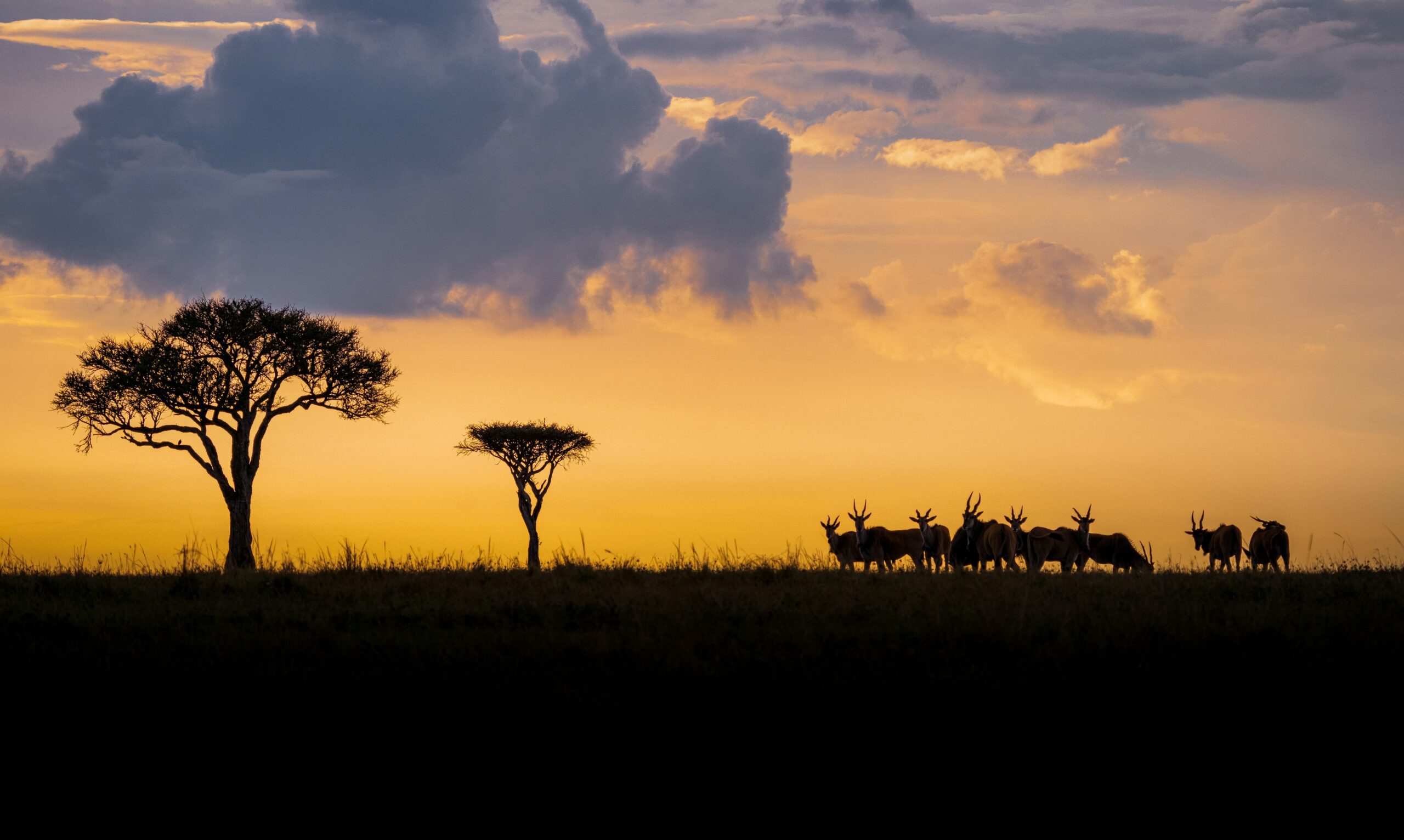
When most people picture the Kenyan savanna, they imagine a giraffe stretching its long neck toward an acacia tree, elephants walking across golden grasslands or lions resting beneath a shady tree. But an acacia tree ecosystem in Kenya is far more complex than this familiar safari scene.
A single tree can become a feeding station, shelter, nesting site, hunting ground and meeting place for numerous species. Giraffes browse its leaves, birds build nests in its branches, insects pollinate its flowers, and ants may defend it against herbivores.
Even animals that never climb into the tree can benefit from it.
Kenya’s acacia woodlands and savanna mosaics are important wildlife habitats. For example, the Kenya Wildlife Service identifies acacia woodland and grassland mosaics as important for browsing, grazing, breeding and wildlife cover in the Amboseli ecosystem.
This means that when you look at one Kenyan acacia, you may actually be looking at a miniature ecosystem.

Acacia is the familiar name traditionally used for many thorny African trees. Some species formerly placed in the genus Acacia are now classified in genera such as Vachellia and Senegalia, but “acacia” remains widely used when discussing the iconic trees of the East African savanna.
These trees are particularly valuable because they provide several resources at once.
They offer:
- Food for browsers
- Shade during hot weather
- Nesting locations for birds
- Shelter for insects
- Protection for small animals
- Flowers and nectar for pollinators
- Habitat for ants
- Perches for birds of prey
- Organic material that eventually enriches the soil
In other words, the tree is not simply vegetation. It is part of the infrastructure that allows an entire community of organisms to survive.
Giraffes: The Most Famous Acacia Browsers

Perhaps no animal is more strongly associated with African acacia trees than the giraffe.
Giraffes use their extraordinary height and long necks to reach vegetation that many other herbivores cannot easily access. Their long tongues also help them negotiate thorny branches while feeding.
Kenya’s wildlife authorities recognize acacia habitats as important for giraffes, while Kenya’s giraffe populations occur across several different ecosystems.
For safari visitors, the sight of a giraffe feeding from an acacia is one of Kenya’s most recognizable wildlife experiences.
But the relationship goes beyond a simple predator-and-prey or plant-and-herbivore interaction.
As giraffes move from tree to tree, they influence vegetation structure by browsing branches and leaves. Other animals then use the changing vegetation in different ways.
This is one reason why acacia tree ecosystems in Kenya are fascinating: animals are not merely living around trees. They are helping shape the habitat.
Elephants and Acacia Trees: A Powerful Relationship
Elephants can have an even more dramatic effect on the acacia trees.
They may break branches, strip bark or push over trees while feeding. In places where elephants are abundant, their activities can influence the structure of the savanna itself.
In northern Kenya, for example, elephants are described as major ecosystem engineers because their feeding activities help maintain open savanna landscapes.
Interestingly, some acacias have their own defenses.
Certain African acacias form relationships with ants that live in or around their swollen thorns. The ants can aggressively defend the tree from herbivores.
Research highlighted by National Geographic describes how ants can deter large herbivores, including elephants, by biting and stinging sensitive areas such as the trunk and eyes.
That creates an extraordinary ecological relationship:
Tree → provides shelter and food → ants → defend tree → tree survives browsing pressure.
It is a tiny example of how cooperation can influence an entire savanna.
Ants: Tiny Guardians of the Acacia
Look closely at an acacia tree and you may discover an entire world that is invisible from a safari vehicle.
Ants can live among the tree’s thorns and branches, feeding on resources provided by the plant while protecting it from some herbivores.
This relationship is one of the best-known examples of mutualism between plants and insects.
Some acacias provide ants with shelter through modified thorn structures and food resources such as nectar or specialized food bodies. In return, the ants can attack herbivores and competing vegetation.
The lesson is remarkable.
A tree that looks defenseless against a massive elephant may actually have thousands of tiny defenders.
This demonstrates why the acacia tree ecosystem in Kenya cannot be understood simply by looking at large animals. Some of the most important interactions occur at a scale much smaller than the safari experience usually reveals.
Birds Turn Acacia Trees Into Busy Neighborhoods

An acacia tree can also become an important bird habitat.
Its branches provide:
- Nesting sites
- Perches
- Protection from some predators
- Hunting positions
- Shelter
- Access to insects and other food
Some acacia trees can appear almost covered with bird nests.
Kenya’s acacia landscapes support an impressive variety of birds, and the Kenya Wildlife Service identifies numerous bird species associated with acacia woodland and grassland habitats in the Amboseli ecosystem.
In some areas, bird nests hanging from acacia branches create one of the most distinctive visual features of the savanna.
Birds also contribute to the ecosystem in return.
They may consume insects, disperse seeds and serve as prey for larger animals. Raptors can use exposed branches as hunting perches, while smaller birds may search the foliage for insects.
One tree can therefore support several different bird species with completely different lifestyles.
Insects: The Hidden Workforce of the Tree
Large mammals attract much of the attention on safari, but insects are essential to the health of the acacia ecosystem.
Bees, butterflies, moths, beetles, flies and other insects may visit flowers, feed on plant material or prey on other insects.
Pollinating insects are particularly important because they help plants reproduce.
Research and field observations in Kenya have documented remarkable insect diversity associated with savanna vegetation. National Geographic, for example, has featured solitary bees photographed beneath an acacia in Laikipia, Kenya.
These tiny creatures are easy to overlook.
Yet without insects, many ecological processes would slow down or disappear.
They help transfer pollen, break down organic material, provide food for birds and other animals, and participate in complex food webs.
So while a giraffe may be the animal tourists notice first, an insect may be performing one of the most important ecological jobs on the tree.
Acacia Trees Provide Shade and Shelter
Kenya’s savanna can become extremely hot, particularly during dry periods.
The broad canopy of an acacia tree can create a cooler microhabitat beneath its branches.
Animals may rest beneath trees during the hottest parts of the day, while birds and smaller creatures use branches and cavities for shelter.
Shade can also influence the plants growing underneath the tree.
The area beneath a mature tree may have different soil conditions, moisture levels, vegetation and animal activity compared with the surrounding open grassland.
This creates a small habitat within the larger savanna.
In this sense, one tree can act like a natural shelter complex.
Predators Also Benefit From Acacia Ecosystems
Predators do not necessarily need to feed directly on an acacia to depend on its ecosystem.
Why?
Because predators depend on prey.
If an acacia provides food or shelter for herbivores, birds and smaller animals, those creatures become part of a larger food web.
A lion may not care about a particular tree itself, but the herbivores feeding nearby can influence where prey animals spend their time.
Leopards may use vegetation for concealment, while birds of prey can use trees as observation points.
The result is a chain of relationships:
Acacia tree → insects and leaves → herbivores and birds → predators and scavengers.
This is why protecting vegetation is also a form of wildlife conservation.
The Tree Is Connected to the Soil
The hidden ecosystem does not stop at the branches.
The roots interact with soil organisms, while fallen leaves, flowers, bark and animal droppings contribute organic matter to the ground.
Insects and microorganisms help break down this material.
Nutrients are then recycled through the ecosystem.
This creates a continuous cycle:
Tree growth → leaves and flowers → animals → waste and fallen material → decomposition → nutrients → new plant growth.
The process may be difficult to notice during a safari, but it is essential to the long-term functioning of the savanna.
Acacia Trees Help Create Wildlife-Rich Landscapes
A single tree is important, but a landscape containing thousands of trees can become a much larger ecological system.
Kenya’s Amboseli ecosystem, for instance, contains a mixture of open grassland, acacia woodland, thorny bushland, wetlands and marshes. These different habitats support different species and allow wildlife to move between feeding, breeding and shelter areas.
This habitat diversity is one reason Kenyan savannas can support such a wide range of wildlife.
It also explains why the loss of individual trees can become significant when it happens repeatedly across a landscape.
Why Protecting Acacia Trees Matters
The disappearance of acacia woodland can have consequences far beyond losing attractive scenery.
When trees disappear, wildlife can lose:
- Food sources
- Nesting sites
- Shade
- Shelter
- Insect habitat
- Feeding areas
- Important landscape structure
Kenya’s wildlife conservation reports have identified habitat loss and activities such as cutting acacia trees for charcoal, firewood and construction as threats affecting some giraffe habitats.
This makes sustainable land management increasingly important.
Protecting trees is not simply about preserving a beautiful African landscape. It is about protecting the relationships between plants, insects, birds, herbivores, predators, soil organisms and people.
What Safari Tourists Can Look For

The next time you are on a Kenyan safari, don’t simply photograph the largest animal near an acacia.
Stop and look at the tree itself.
You might see:
- A giraffe browsing the upper branches
- Birds sitting on exposed twigs
- Weaver nests hanging from branches
- Ants moving around the thorns
- Bees visiting flowers
- Elephants feeding nearby
- Small mammals sheltering underneath
- Birds searching the ground for insects
- Raptors using branches as lookout posts
- Herbivores gathering in the shade
Suddenly, what appeared to be one tree becomes an entire wildlife story.
The iconic acacia is one of the defining symbols of Kenya’s savanna. But its true importance goes far beyond its appearance.
It feeds giraffes, shelters birds, supports insects, houses ants, influences herbivore behavior and contributes to the wider food web. Larger animals can shape the tree’s survival, while the tree provides resources that influence the animals in return.
That is what makes the acacia tree ecosystem in Kenya so remarkable.
A single tree can support dozens of relationships that are difficult to see at first glance. Multiply that one tree across an entire landscape and you begin to understand why Kenya’s savannas are such extraordinary wildlife ecosystems.
So, the next time you see a lone acacia standing against the Kenyan sky, look a little closer.
You may not be looking at one tree. You may be looking at an entire community of life.
Experience Kenya’s Wildlife Up Close
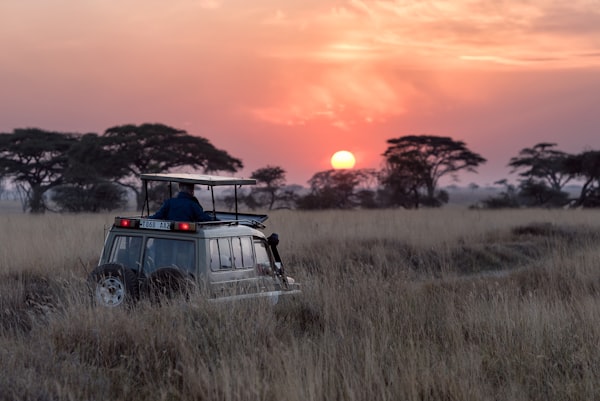
For travelers planning a Kenyan safari, observing these smaller ecological relationships can make a game drive much more meaningful. Instead of only searching for the Big Five, take time to notice the trees, birds, insects, and interactions that make Kenya’s ecosystems function. Bison Safaris can help you experience these fascinating wildlife encounters while exploring Kenya’s diverse natural landscapes.
A safari is not just about seeing animals. It is about understanding the living landscape that connects them. Book your next unforgettable Kenyan safari with Bison Safaris and discover the hidden stories behind Kenya’s incredible wildlife.