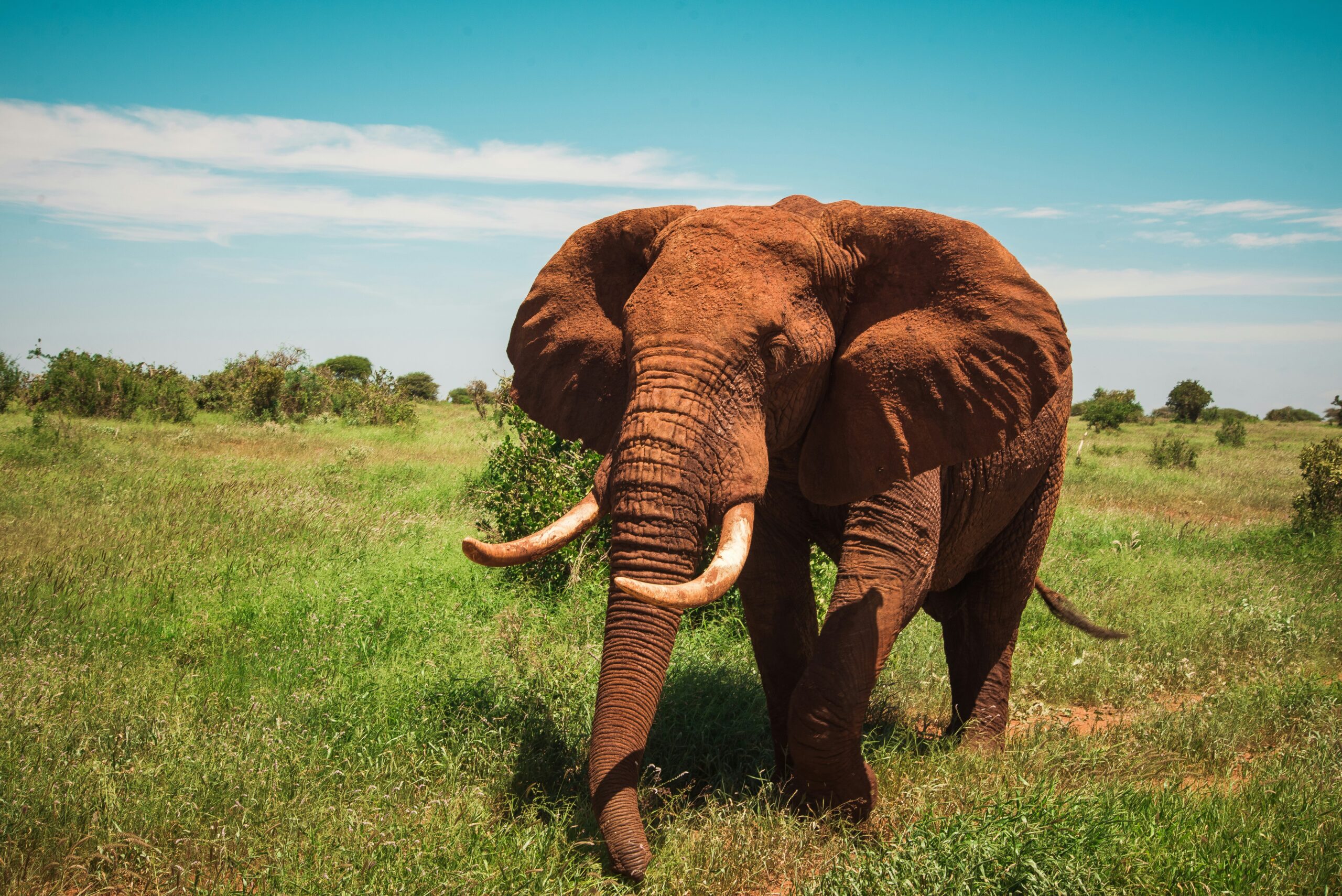
Imagine driving through a vast Tanzanian landscape where enormous baobabs rise from the plains, elephants wander between patches of woodland, and the road ahead seems to disappear into nothing but golden grass and distant hills. There are no dramatic crowds gathering around a single famous sight. Instead, there is space, silence and the feeling that you have entered somewhere genuinely wild.
That is the experience that draws travellers to Ruaha National Park.
While the Serengeti and Ngorongoro often dominate conversations about Tanzania, Ruaha sits much farther south, away from the country’s most travelled safari route. It is enormous, covering more than 20,000 square kilometers, and forms part of the wider Ruaha-Rungwa ecosystem. Within that immense landscape are rivers, rocky hills, open plains, miombo woodland and some of Tanzania’s most interesting wildlife.
Ruaha is particularly rewarding for travellers who don’t want their safari to feel rushed. You may spend a morning following elephants along a dry riverbed, stop to watch a pride of lions resting beneath a tree, and later find yourself staring at a greater kudu that has appeared almost silently from the woodland. The park has a way of making you pay attention to the smaller details, because you never quite know what might be waiting around the next bend.
Where Is Ruaha National Park?
Ruaha National Park is located in south-central Tanzania, in the Iringa Region. Its position puts it well outside the classic northern safari circuit, which is one reason it has retained such a strong sense of wilderness.
Getting there takes more planning than reaching some of Tanzania’s famous northern parks, but the journey is part of what makes Ruaha feel different. As you move away from the busier parts of the country, the scenery becomes increasingly open and remote. Eventually, the enormous landscapes of the park begin to take over.
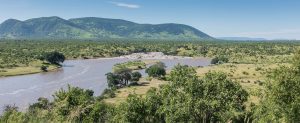
The park gets its name from the Great Ruaha River, which runs through the area and plays an important role in sustaining wildlife, particularly during the dry months. The name comes from the Hehe word Luhava, meaning “river,” a fitting name for a feature that has shaped life in this part of Tanzania for generations.
Why Is Ruaha National Park So Special?
Ruaha’s greatest attraction may not be a particular animal or landmark. It is the combination of landscape, wildlife and solitude.
The park is one of the places where eastern and southern African ecological influences meet, creating an interesting mixture of species. You can encounter familiar safari favorites such as elephants, lions, buffaloes and leopards, but Ruaha also gives you the opportunity to look for animals that are less frequently seen on the usual safari circuit, including greater kudu, lesser kudu, sable and roan antelope.
Then there are the African wild dogs. Watching a pack of wild dogs moving through the bush is one of those experiences that can completely change the direction of a safari. They are fast, social and constantly on the move, so there are no guarantees that you will find them. But their presence is one of the reasons Ruaha has become particularly appealing to wildlife enthusiasts who want to see more than the standard Big Five.
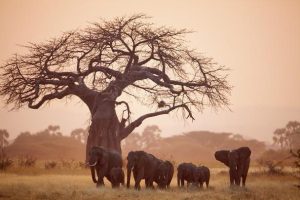
The landscape itself is just as memorable. Baobabs stand among the grasslands and woodland, while rocky outcrops interrupt the otherwise expansive views. During the dry season, the earth takes on warm, dusty colours. After the rains, the same scenery can become lush and green, with fresh vegetation spreading across the plains.
It is difficult to look at Ruaha and feel that you are simply passing through a safari park. The landscape is too large and too alive for that.
Wildlife You Can See in Ruaha National Park
If you come to Ruaha hoping for elephants, you are in the right place. Large herds are one of the park’s defining sights, and the dry season can bring them together around the Great Ruaha River and other remaining water sources.
Watching elephants in Ruaha can be particularly special because of the setting. A herd moving slowly across an open plain with a line of baobabs behind it feels very different from seeing the same animals in a more crowded environment. Sometimes the best thing to do is simply sit quietly and let them pass.
The park is also home to a healthy variety of predators. Lions are among the animals visitors hope to encounter, while leopards and cheetahs can also be seen. Their behaviour changes with the temperature and time of day, which is why an early morning game drive can feel completely different from an afternoon outing.
And don’t overlook the antelope.
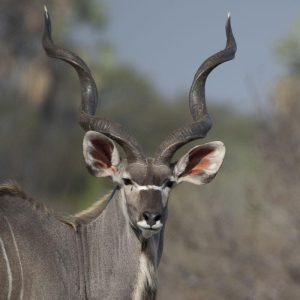
Greater kudu is one of Ruaha’s most sought-after sightings, especially because the males carry those striking spiral horns. Lesser kudu, sable and roan antelope are also among the species that make the park particularly interesting to experienced safari goers. You might not see them on every drive, but that uncertainty is part of the excitement.
Bird lovers have plenty to look forward to as well. More than 570 bird species have been recorded in the park, and the variety of habitats means that birdwatching can easily become part of an ordinary game drive rather than something you have to plan separately.
The Great Ruaha River and Life in the Dry Season
Spend enough time in Ruaha and you begin to understand how closely wildlife is connected to water.
During the dry season, the landscape gradually loses its greenery. Smaller water sources disappear and animals become increasingly dependent on the river and the remaining pools. Elephants may gather at the water, buffaloes arrive to drink and predators know that prey will eventually come looking for the same resource.
This makes the Great Ruaha River one of the most fascinating places to spend time during a safari.
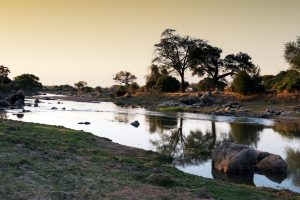
The river is not simply somewhere to stop for a photograph. It helps explain why animals are moving where they are moving. A guide who knows the area can read the landscape and understand what the changing water levels mean for wildlife.
Then the rains arrive and everything changes.
The plains become greener, vegetation returns and birds become particularly active. Animals are no longer as dependent on a handful of water sources, so sightings can become less predictable. For some visitors, that makes the green season just as appealing as the dry months.
Ruaha is therefore a park that changes with the seasons rather than offering exactly the same experience throughout the year.
What Can You Do in Ruaha National Park?
Game drives are the main way to explore Ruaha, and with such a large area to cover, they give you the freedom to see how dramatically the landscape changes from one part of the park to another. Early mornings are usually a beautiful time to be out. The air is cooler, the light is softer and many animals are active before the heat of the day sets in.
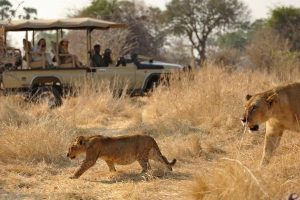
Afternoon drives have their own charm. As the heat begins to ease, animals become active again and the changing light can make the landscape particularly beautiful.
For travellers who want to experience the bush differently, guided walking safaris can bring a completely new perspective. From a vehicle, it is easy to focus on elephants, lions and other large animals. On foot, you start noticing the tracks pressed into the soil, the calls of birds overhead, insects moving through the grass and signs that an animal passed through only moments earlier.
Ruaha is also a rewarding destination for birdwatching. Even people who would not describe themselves as birders can find themselves stopping to admire colourful species along the way, especially during the greener months.
Depending on where you stay and what is permitted in the area, there may also be opportunities for specialist experiences such as night activities. These vary according to the camp, concession and current park regulations, so they are best arranged in advance rather than assumed to be available everywhere.
When Is the Best Time to Visit Ruaha National Park?
For travellers whose main priority is wildlife viewing, the dry season from June to October is generally the most rewarding time to visit Ruaha National Park.
As the vegetation becomes thinner and water becomes harder to find, animals tend to concentrate around reliable sources. This can make them easier to locate and creates some excellent opportunities for watching elephants, buffaloes and predators.
July, August, September and October are particularly attractive if you want to experience Ruaha when wildlife is strongly influenced by the availability of water.
But there is another side to the park that is worth experiencing.
The wetter months bring green landscapes, new vegetation and an abundance of birdlife. The scenery can be spectacular after the rains, and the park feels completely different from the dusty landscapes of the late dry season. Wildlife can be more spread out, however, and heavy rain can make some roads more difficult.
So there isn’t one perfect month for everyone. If you are coming primarily for concentrated wildlife viewing, the dry season is a sensible choice. If you care just as much about scenery and birds and don’t mind less predictable sightings, the green season has plenty to offer.
How Do You Get to Ruaha National Park?
Ruaha’s remote location is both its appeal and the reason you need to plan your journey carefully.
The park can be reached by road from Iringa, with the journey taking several hours depending on the route and conditions. A suitable 4×4 is recommended, particularly when travelling during the wetter months.

Flying is another option and can save considerable time. Flights can connect travellers to airstrips serving the park, including Msembe and Jongomero, after which accommodation providers or safari operators can arrange transfers.
The best choice depends on the rest of your itinerary. If you are already travelling through southern Tanzania, a road journey can make sense. If your time is limited, flying allows you to spend more of it actually exploring the park.
Either way, the sense of remoteness begins to make sense once you arrive. Ruaha was never meant to be the kind of destination you squeeze into a few spare hours.
How Many Days Do You Need in Ruaha?
Three nights is a good starting point for a first visit. It gives you enough time for several game drives and allows you to experience the park in different light and at different times of day.
If you have a particular interest in photography, birds or predators, staying longer is even better. Ruaha’s size means that there is plenty to explore, and giving yourself more time allows your safari to unfold naturally rather than turning every drive into a race to find the next sighting.
That is especially important here because some of the best moments are not necessarily the ones you planned for.
You might spend twenty minutes watching elephants at a waterhole, only for a lion to appear in the distance. You might stop for birds and discover fresh tracks nearby. You might drive through an apparently empty stretch of woodland and suddenly come across a herd of kudu.
The longer you stay, the more chances you have to experience those unexpected encounters.
What Should You Pack for a Ruaha Safari?
A safari in Ruaha calls for practical clothing rather than an enormous suitcase.
Lightweight clothes are useful during the day, while a warm layer is worth packing for early morning drives when temperatures can be surprisingly cool. Comfortable shoes are important if you plan to take part in a walking safari, and a hat and sunscreen will make long hours outdoors much easier.
Insect repellent is also useful, particularly during wetter periods.
Bring binoculars even if you are not an enthusiastic birdwatcher. They are useful for spotting animals in the distance and can turn something that looks like a tiny movement on the horizon into a much more rewarding sight.
And leave a little room for the unexpected. Ruaha has a habit of giving visitors photographs they never planned to take.
Is Ruaha National Park Worth Visiting?
For travellers who want to experience a quieter, wilder side of Tanzania, Ruaha National Park is absolutely worth considering.
It does not have the instant recognition of the Serengeti, and it does not offer the same volcanic drama as Ngorongoro. What it offers is something harder to put into a brochure: space.
There is space for elephants to move across the plains, space for predators to follow their prey, space for birds to fill the woodland with calls and, perhaps most importantly, space for travellers to slow down and actually experience the wilderness around them.
That makes Ruaha particularly appealing to people who have already visited Tanzania’s better-known parks and want something different, but it is just as rewarding for a first-time visitor who would rather trade a famous name for a deeper sense of discovery.
You may come for the elephants or the wild dogs. You may hope to see a lion beneath a baobab or catch sight of a greater kudu disappearing into the woodland. But what you are likely to remember most is the feeling of being somewhere vast, beautiful and wonderfully untamed. That is what makes Ruaha National Park special.
And if you would like to experience this remarkable part of Tanzania for yourself, Bison Safaris can help you plan a safari that brings Ruaha together with other destinations that fit the kind of experience you want from your time in Tanzania.