The dream of an African safari is at the top of most travelers’ bucket lists. But once the excitement settles, the practical questions begin. How do you handle the environment?
You’ve likely already googled the mandatory stuff: yellow fever certificates, malaria prophylaxis, and which bug sprays work best. But at Bison Safaris, we’ve hosted thousands of guests, and we’ve learned that a truly great safari experience isn’t just about avoiding illness, it’s about managing the environment so you can actually enjoy your time instead of constantly troubleshooting your comfort.
Whether you’re heading to the Masai Mara or a private conservancy, here are some safari health and safety tips in the bush, the stuff you won’t find on a standard clinical checklist.
Mastering the Bush Environment: Safari Health and Safety Basics
If there is one thing that defines the African savannah, it is the dust. It is the lifeblood of the landscape, but for a city dweller, it can be a nuisance.
For the Lens Wearers
If you wear contact lenses, the bush can be challenging. Between the fine dust and the intense sun, your eyes will work harder than they do at home. Our advice? Bring your glasses. Not only does it save you from the hassle of lens solution and the risk of eye infections, but glasses provide a slight barrier against wind and debris during high speed game drives. If you must wear lenses, pack double the rewetting drops you think you need, and keep them in a sealed baggie inside your daypack.
The Buff Strategy
You’ll see your guides wearing “buffs” or light, breathable neck gaiters. These are not just for style. When you’re driving between wildlife sightings, the dust kicked up by the vehicle can be intense.
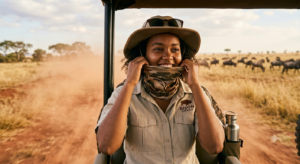
Wearing a breathable neck gaiter is one of the best safari health and safety tip we can offer. It shields your throat and nose, ensuring you feel refreshed rather than gritty by the time you reach your next lodge.
Managing Energy
We often have guests who rely on medical technology, CPAP machines for sleep apnea, insulin pumps, or hearing aid chargers.
The Power Reality
While luxury lodges offer 24/7 power, remote tented camps often rely on solar batteries. Communication is your best health tool. If you have a device that requires specific voltage or 24/7 charging, tell your safari planner before you depart. We can ensure you are placed in camps with redundant solar arrays or silent generators.
Furthermore, don’t rely on a single power adapter. Bring a high capacity power bank. Not only will it keep your phone and camera charged, but it provides a safety net for any small medical device if the camp’s power grid fluctuates.
Hydration
It sounds obvious, but hydration is where most safari goers trip up. The air in the savannah is often incredibly dry. You might not feel sweaty, but you are losing fluids rapidly.
Many travelers wait until they are thirsty to drink water. In the bush, if you are thirsty, you are already dehydrated. Dehydration leads to headaches, lightheadedness, and that mid afternoon crash that ruins your ability to enjoy a late afternoon game drive.
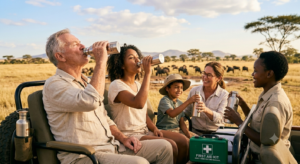
Drink a full glass of water every time you stop. Drink before you leave camp, drink at every coffee stop, and keep a bottle in your vehicle at all times. If you’re prone to electrolyte imbalances, bring a box of flavorless hydration salts. They occupy almost no space in your luggage and can be the difference between feeling lethargic and feeling vibrant on a hot afternoon.
Tummy Trouble: The “Boiled, Cooked, or Peeled” Rule
In the modern safari era, lodges have remarkably high hygiene standards. However, your gut microbiome is used to your home environment. When you travel thousands of miles, even clean local food can cause a temporary upset.
The classic rule remains the gold standard: Boil it, cook it, or peel it. At high end lodges, you can eat the salads, but if you have a sensitive stomach, stick to the cooked buffet options for the first 48 hours. This gives your system time to acclimate to the local environment. Pack a small just in case kit, Imodium, oral rehydration salts, and a simple antacid. If you have any specific dietary requirements, celiac, extreme dairy sensitivity, or severe nut allergies, make sure this is noted in your booking file. We flag these with every kitchen on your itinerary so you don’t have to explain it at every meal.
Wildlife and Personal Safety Protocols
Staying safe on an African safari also means respecting the environment.
Camp Etiquette
If you are at a tented camp, never walk to your tent in the dark. It isn’t because the camp is dangerous, it’s because the animals don’t see tents as buildings, they see them as parts of the landscape. A guide will always be available to escort you. It might feel like overkill to have someone walk you 50 yards to your tent at 9:00 PM, but it is standard safety protocol. Always accept the escort.
Inside the Vehicle
Your guide is your safety officer. When you are near elephants or lions, there is a specific way to behave. Keep your limbs inside the vehicle at all times, not just for safety, but because animals perceive a vehicle as a solid object. When people stick arms or legs out, they change the shape of the vehicle, which can make animals curious or defensive. Stay seated, stay quiet, and let the guide do the maneuvering.
The Bison Safaris Difference: What Happens if Things Go Wrong?
We hope you never have to use them, but the safety nets are there.
All of our vehicles are equipped with radio systems, and in the rare event of a health emergency, we utilize the Flying Doctor Service, which provides air ambulance evacuation to high quality medical facilities in Nairobi.
The greatest safety feature, however, is your guide. Every Bison Safaris guide is trained in first aid and, more importantly, in bush awareness.
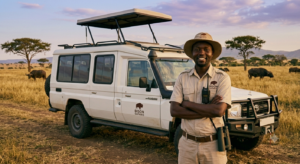
They know exactly when a situation is turning from exciting to tense long before you do. They are your primary point of contact for anything from a blister or a thorn scratch to an unexpected allergic reaction.
Pro Tip: Your Personal Mini Kit
We provide a first aid kit in every vehicle, but carry your own small pouch. Include:
- Tweezers: Essential for acacia thorns.
- Antiseptic Wipes: For minor scrapes.
- Band Aids/Blister Pads: If you’re doing any walking safaris.
- Your own personal medication: Always carry this in your carry on bag, never in checked luggage.
Safety on safari is about awareness, not anxiety. We want you to feel empowered to ask questions. If you are worried about the terrain, the dust, or the food, tell your guide. We’ve seen it all, and we’re here to ensure your only concern is whether you have enough memory space on your camera for the next sighting.
A safari is meant to be a restorative experience. By taking these safari health and safety tips: staying hydrated, communicating your needs, and respecting the rules of the camp, you remove the friction of travel. That leaves you with nothing to do but focus on the magic of the wild.
Ready to start planning your safe, supported, and spectacular African adventure? We’ve built our reputation on helping guests navigate every detail, from medical requirements to the perfect safari itinerary. Browse our current packages or contact us today to start the conversation. Let’s get you out into the bush, safely and comfortably.